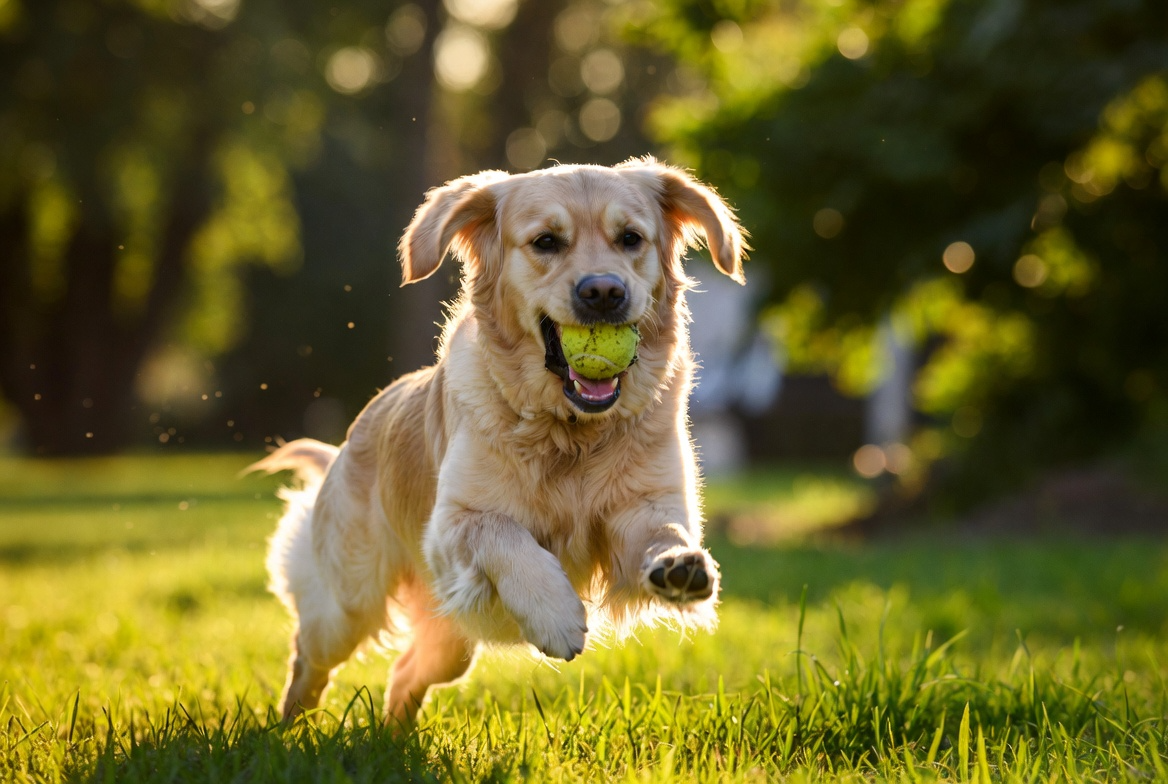
Golden Retrievers steal hearts with that permanent smile and endless willingness to please. They also demand consistent exercise, serious grooming, and smart health monitoring if you want them to stay happy and active for years. Here’s the practical guide that covers what actually matters day to day.
Temperament: The Friendly Powerhouse
Goldens rank among the most people-oriented breeds for good reason. They bond hard with their families, get along with kids and other dogs when properly socialized, and rarely show aggression. That same eagerness to please makes them outstanding training partners.
They also stay somewhat puppy-like well into adulthood. Expect goofy energy and a strong desire to be involved in whatever you’re doing. Leave them alone too long without outlets and you may meet the bored, destructive version of that famous smile.
Exercise and Mental Work They Actually Need
A daily walk around the block will not cut it. Most adult Goldens need 60–90 minutes of real activity split across the day. Fetch, swimming, hiking, and structured play work especially well because they combine physical effort with the retrieving instinct.
Mental stimulation matters just as much. Puzzle toys, scent games, and short training sessions tire them out faster than another lap around the neighborhood. A tired Golden is a well-behaved Golden.
Grooming the Famous Double Coat
That beautiful golden coat sheds. A lot. Expect heavy seasonal blowouts twice a year and steady year-round shedding. Brush several times a week with a slicker brush and undercoat rake to keep mats and loose hair under control.
Baths every 4–6 weeks usually suffice unless they discover mud or something smelly. Dry the ears thoroughly after swimming or baths—Goldens are prone to ear infections because of those floppy ears and love of water.
- Brush 3–4 times weekly minimum
- Trim nails regularly
- Clean ears weekly
- Check for hot spots during shedding season
Coat Care Shortcut
A high-velocity dryer after baths helps remove loose undercoat and cuts down on the hair that ends up on your furniture. Many owners consider it essential once they try it.

Feeding for Steady Energy and Healthy Weight
Goldens love food and will overeat if given the chance. Measure meals and watch body condition closely—extra weight stresses joints and raises cancer risk. Most adults do well on a high-quality food with solid protein levels and controlled calories.
Puppies need carefully managed growth to protect developing joints. Large-breed puppy formulas help keep the growth rate steady. Transition slowly when changing foods and keep treats under 10% of daily calories.
Health Issues Worth Monitoring
Hip and elbow dysplasia appear frequently in the breed. Responsible breeders screen for it, but even well-bred dogs can develop issues. Keep them lean and avoid excessive jumping or repetitive hard impact during the first year.
Cancer rates, especially hemangiosarcoma and lymphoma, run higher than average. Regular vet checks and prompt attention to any lumps, lethargy, or appetite changes help catch problems earlier. Heart conditions and hypothyroidism also show up more often than in some other breeds.
Ear infections and skin hot spots are common nuisances. Stay on top of ear cleaning and coat care to reduce flare-ups.
Training and Socialization That Stick
Start young and keep sessions positive and short. Goldens respond beautifully to praise, play, and food rewards. Harsh methods backfire with this soft-tempered breed.
Socialize early to people, dogs, sounds, and environments. Their friendly nature helps, but proper exposure still builds confidence and good manners. Obedience classes or rally offer great structured outlets for their desire to work with you.
IMO, the biggest training mistake is underestimating how much mental work they need. A well-trained Golden with a job (even just carrying the leash) is a joy. One without direction invents its own entertainment—usually involving your shoes or the trash.
FAQ’s
How much exercise does an adult Golden need?
Most need 60–90 minutes of meaningful activity daily, plus mental work. Swimming and retrieving games rank among their favorites and burn energy efficiently.
Do Golden Retrievers shed a lot?
Yes. The double coat produces steady shedding year-round and heavy seasonal blows. Regular brushing is non-negotiable if you want to keep the hair under control.
Are they good with children and other pets?
Generally excellent when raised and socialized properly. Their patient, friendly temperament makes them one of the better family breeds, though supervision with very young kids is still smart.
What health tests should breeders perform?
Look for hips, elbows, eyes, and cardiac clearances at minimum. Responsible breeders also discuss cancer history in the lines and avoid overbreeding popular sires.
How long do Golden Retrievers typically live?
Average lifespan runs 10–12 years. Keeping them lean, active, and on top of routine vet care gives them the best shot at the higher end of that range.
Related Articles:
- How to Stop a Dog from Jumping on Guests
- Dog Body Language: What Your Dog is Really Saying
- The First 24 Hours With a New Rescue Dog
Give Them the Life They Deserve
Golden Retrievers thrive when they get daily exercise, consistent grooming, smart nutrition, and plenty of positive interaction. Meet those needs and you get a loyal, goofy, deeply bonded companion who lights up every room. Ignore them and you get a bored, shedding, attention-seeking handful. The effort pays off every single day they lean against your leg with that classic Golden grin. Start with solid routines early and you’ll both enjoy the years ahead a lot more.