Your dog sits for half a second then rockets after you the moment you take a step. Sound familiar? Teaching a reliable “Stay” feels impossible until you break it into tiny, winnable pieces. Follow these three clear steps and you will actually see progress instead of endless resets.
Before You Start: The Two Things You Actually Need
A solid sit or down comes first. If your dog cannot hold a sit for three seconds right next to you, stay will fall apart. Practice that until it feels automatic.
You also need a release word. Pick something clear like “Okay,” “Free,” or “Break.” This tells your dog the stay is finished and they can move. Without a release, the dog never learns when the job ends.
Keep sessions short—five to ten minutes max. End while your dog still wants more. High-value treats that your dog goes crazy for make everything easier.
Step 1: Build Duration Right Next to You
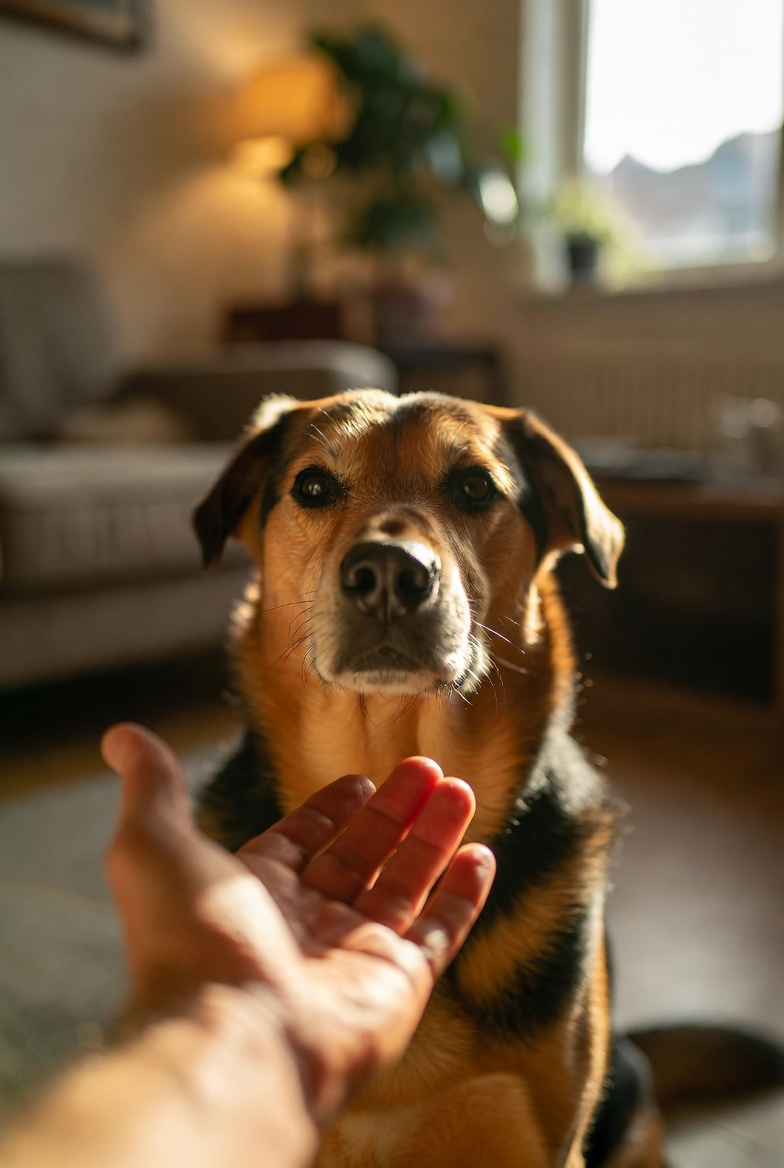
Start with zero distance. Ask for a sit or down. The second your dog settles, say “Stay” in a calm voice and show an open-palm hand signal like a stop sign.
Count one or two seconds, then calmly deliver a treat while they are still in position. Immediately say your release word and encourage them to get up. Praise the movement after the release so the stay itself stays the valuable part.
Repeat. Add one or two seconds at a time only when your dog succeeds several times in a row. If they break early, just reset without drama—lure them back into position and try a shorter count.
Goal for this step: Your dog holds the position for 15–20 seconds while you stand right beside them. That foundation makes everything else possible.
Most dogs need several short sessions across a few days to lock this in. Do not rush.
Why Duration Comes First
Dogs find staying still boring. Building time next to you teaches them that holding the position earns rewards. Jumping straight to walking away usually creates a dog that follows you instead of staying.
Step 2: Add Distance (The Part Everyone Rushes)
Once duration feels solid, introduce movement. Ask for the sit or down, give the stay cue and hand signal, then take one small step sideways or backward.
Immediately return to your dog and reward while they are still holding the position. Release them only after the treat. Returning to reward is the secret—calling them to you teaches the opposite of stay.
Build slowly. One step becomes two, then three. Always go back to your dog to deliver the treat. If they break, reduce the distance on the next try.
Practice moving in different directions and eventually turning your back for a second. Keep the duration short at first while distance grows. You can lengthen the time again once the distance feels easy.
- Start with one step and return immediately
- Reward in position before releasing
- Increase distance only after several successes
- Mix short and slightly longer stays so the dog never predicts the pattern
Step 3: Add Distractions Without Losing Your Mind
Real life is full of movement, sounds, and other dogs. Once your dog can stay with some distance, start adding mild distractions in a controlled way.
Begin in the same quiet room. Have a family member walk past at a distance or toss a low-value toy nearby. Reward heavily for staying put. If your dog breaks, the distraction was too hard—make it easier next time.
Gradually raise the challenge: practice near a window, in the backyard, or with mild household noise. Always return to reward in position. Keep the first distraction sessions short on both time and distance.
Proof the stay in new locations only after it works well at home. A stay that only works in the living room is not a finished stay.
The Real-World Test
When your dog can hold a stay while you walk to the other side of the room, answer the door, or move around the kitchen, you have something useful. That level of reliability does not appear overnight. Consistent short practice wins.
Common Mistakes That Kill Progress
Moving too far too soon tops the list. One successful step is better than five failed ones.
Rewarding the release more than the stay confuses the dog. Always treat while they are still holding the position, then release.
Repeating “Stay, stay, stay” like a broken record weakens the cue. Say it once clearly and then stay quiet.
Getting frustrated and ending the session on a failure teaches the wrong lesson. Reset to an easier version and finish with a win.
IMO, the biggest silent killer is practicing only when you need the stay. Daily two-minute sessions beat weekend marathon attempts.
How to Keep the Stay Strong Long-Term
Once the basics stick, mix things up. Sometimes reward after three seconds, sometimes after twenty. Sometimes stay close, sometimes walk farther. Random reinforcement keeps the behavior sharp.
Practice in real situations: ask for a stay while you put on shoes, while you carry groceries, or while kids move around. Real life is the best proofing ground.
If the stay starts slipping, drop back to an easier level for a few sessions. Dogs do not “forget” on purpose—they simply need a refresher when criteria jump too fast.
FAQ’s
Should I use sit-stay or down-stay?
Both work. Down-stay is often more secure because the dog has farther to go to break position. Many trainers teach both and use whichever fits the situation.
How long does it take to get a reliable stay?
Most dogs show clear progress in one to two weeks of short daily sessions. A stay that holds up around real distractions usually takes several weeks of consistent practice. Puppies and high-energy dogs often need more repetitions.
My dog breaks the stay the second I move. Help?
You added distance too soon. Go back to duration only, right beside your dog, until that feels easy. Then reintroduce one tiny step and return immediately. Success builds confidence.
Can I teach stay without treats?
Food is the fastest and clearest reinforcer for most dogs, especially early on. Once the behavior is strong you can fade to praise, toys, or life rewards, but starting with treats gets cleaner results.
What if my dog knows stay at home but falls apart outside?
The stay is not yet generalized. Practice in slightly harder environments one at a time—backyard first, then a quiet sidewalk, then busier spots. Lower the difficulty (shorter time, closer distance) every time you change locations.
Is a hand signal necessary?
It helps. An open palm is clear from a distance and works when your dog cannot hear you. Pair the verbal cue and hand signal together from the beginning so both become reliable.
Related Articles:
- How to Stop Leash Pulling in 5 Minutes a Day
- 10 Commands Every Dog Should Know (with Hand Signals)
- Crate Training 101: Make Your Dog Love Their Crate
Final Thoughts
A solid stay is one of the most useful cues you can teach. It keeps your dog safe, makes daily life smoother, and builds impulse control that carries over into everything else. Stick to the three steps—duration first, then distance, then distractions—and reward the position, not the release. Keep sessions short, end on success, and your dog will get it. You’ve got this.