
Your dog just ignored the “come” cue for the third time and you feel the urge to raise your voice or give a leash pop. Most of us have been there. The real question is not what feels satisfying in the moment—it is what actually builds a reliable, happy dog without collateral damage. The evidence points clearly in one direction.
What These Words Actually Mean
People throw around “positive” and “punishment” without precision. In training science the terms are exact.
Positive reinforcement means you add something the dog wants (treat, toy, praise) after a behavior, so the behavior happens more often. Negative punishment means you remove something the dog wants (attention, access to you) to decrease a behavior.
Positive punishment means you add something the dog dislikes (leash jerk, verbal scolding, shock) to decrease a behavior. Negative reinforcement means you remove something unpleasant when the dog does what you want.
Most modern force-free trainers focus on positive reinforcement and carefully used negative punishment. They avoid tools and methods that rely on pain, fear, or intimidation.
The goal is clear communication that does not damage trust or create new problems.
Why Punishment Feels Effective in the Moment
A sharp “No!” or a leash correction often stops the unwanted behavior right then. That immediate result feels powerful. Your brain registers success and wants to repeat the strategy.
The problem is that suppression is not the same as learning. The dog may stop the behavior in that second because they are startled or scared, not because they understand what you want instead. The underlying motivation (excitement, fear, frustration) stays the same or grows.
Short-term results trick many owners into thinking the method is superior. Long-term results and side effects tell a different story.
The Hidden Costs Most People Miss
Punishment carries well-documented risks. Studies show dogs trained with aversive methods display more stress signals—lip licking, yawning, lowered body posture, and elevated cortisol—during and after training sessions.
Some dogs become more aggressive or fearful. Others shut down and stop offering any behavior at all because trying feels dangerous. The relationship can erode when the dog starts associating the handler with unpredictable unpleasantness.
Punishment also fails to teach an alternative. You tell the dog what not to do, but you leave a vacuum. A well-timed reward for the right choice fills that vacuum and gives the dog a clear path forward.
IMO, the biggest cost is the loss of willingness. A dog trained primarily with rewards keeps offering behaviors and stays engaged. A dog trained primarily with corrections often becomes careful, hesitant, or avoidant.
How Positive Reinforcement Actually Builds Better Behavior
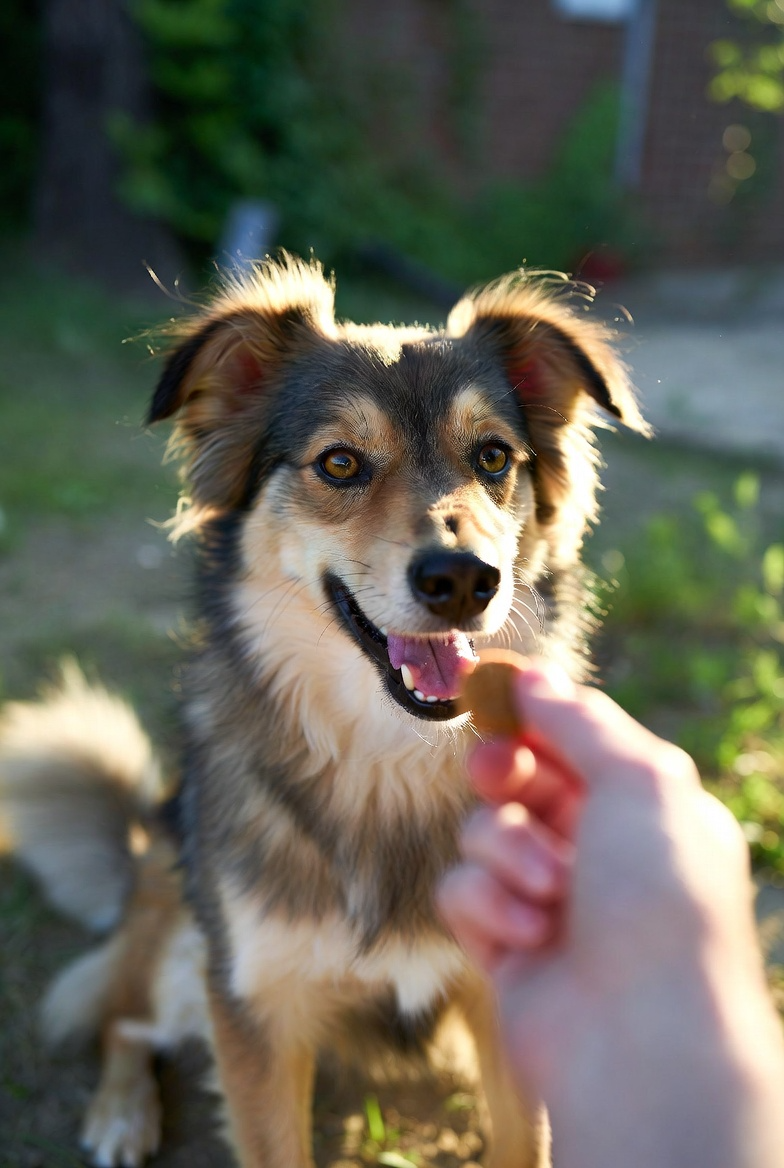
Positive reinforcement works by making the desired behavior the most profitable choice for the dog. Sit earns chicken. Four paws on the floor earns attention. Coming when called earns a jackpot and a game.
Because the dog is actively trying to earn the good stuff, they stay engaged and optimistic. Learning happens faster in this emotional state. Research consistently shows higher obedience rates and fewer problem behaviors in dogs trained with reward-based methods.
You also gain a dog who wants to work with you. That willingness transfers to new situations and harder skills. The training itself becomes something the dog looks forward to instead of something they endure.
Timing and consistency still matter. A treat delivered late confuses the dog just as much as a poorly timed correction. The difference is that the worst outcome of a mistimed treat is mild confusion. The worst outcome of a mistimed correction can be fear or defensive aggression.
What About “Balanced” Training?
Some trainers claim a mix of rewards and corrections is ideal. Current evidence does not support that claim. Studies comparing methods find that the higher the proportion of aversive techniques, the greater the stress and the poorer the welfare outcomes. Adding rewards does not cancel out the risks of the aversive pieces.
What the Science and Major Organizations Say
The American Veterinary Society of Animal Behavior states that reward-based methods offer the most advantages and least harm. Multiple studies show dogs trained with positive reinforcement demonstrate better obedience and lower stress than those trained with aversive or mixed methods.
A 2020 study in Portugal found higher cortisol and more stress behaviors in dogs from aversive-based schools. Cognitive bias tests suggested those dogs viewed the world more pessimistically. Other reviews reach the same conclusion: aversive methods are not more effective and carry clear welfare costs.
Organizations that prioritize evidence and animal welfare have moved firmly toward positive reinforcement as the default.
Practical Ways to Make Reinforcement Work in Real Life
Start with high-value rewards for new or difficult behaviors. Food is usually the clearest and fastest reinforcer. Once the behavior is strong, you can fade to praise, play, or life rewards like access to the outdoors.
Manage the environment so the dog cannot keep practicing the unwanted behavior. Then heavily reinforce the alternative. Jumping stops working when every human turns away, and sitting starts working when it produces attention and treats.
Be generous early. High rates of reinforcement help the dog understand the new rules quickly. You can thin the rewards later once the habit is solid.
If a behavior is dangerous or self-reinforcing, get professional help from a force-free trainer or certified behavior consultant. Some cases need careful management and structured behavior modification plans.
- Reward the behavior you want more of
- Remove attention or access for the behavior you want less of
- Avoid adding pain, fear, or intimidation
- Keep sessions short and successful
- Prioritize the relationship alongside the results

FAQ’s
Doesn’t positive reinforcement just bribe the dog?
No. A bribe is shown before the behavior to lure it. A reward is delivered after the behavior to strengthen it. Once the dog understands the cue, you can ask first and reward after. That is training, not bribery.
What if my dog only works for food?
That usually means the reinforcement history is still thin or the rewards are not meaningful enough in that context. Raise the value, improve your timing, and gradually add other reinforcers. Most dogs expand what they will work for when the training stays fair and clear.
Isn’t some correction necessary for serious problems?
Dangerous behaviors require excellent management and often professional guidance. Adding aversives tends to increase risk rather than reduce it. Modern behavior work focuses on changing the emotional response and teaching incompatible behaviors instead of suppressing symptoms.
Why do some dogs seem fine with punishment?
Individual dogs vary in sensitivity. Some appear to tolerate corrections without obvious fallout. That does not mean the method is optimal or risk-free. Many stress signals are subtle, and long-term effects on trust and optimism are harder to see in the moment.
Can I mix methods if I’m careful?
You can, but the research shows the more aversive the mix, the higher the stress markers and the greater the chance of side effects. Clean positive reinforcement protocols avoid those risks while delivering equal or better results for everyday pet dogs.
How do I handle behaviors that need an immediate stop?
Management first—leash, gate, or removal from the situation. Then teach and heavily reinforce the behavior you want instead. For urgent safety issues, consult a qualified force-free professional rather than improvising with punishment.
Related Articles:
- How to Stop a Dog from Jumping on Guests
- Dog Body Language: What Your Dog is Really Saying
- The First 24 Hours With a New Rescue Dog
Final Thoughts
Positive reinforcement is not soft or permissive. It is precise, science-backed, and highly effective. It teaches the dog what to do, keeps them eager to learn, and protects the relationship you both rely on. Punishment can stop a behavior in the moment, but it often creates new problems and teaches the dog less overall. When you stack the evidence, the welfare data, and the long-term results, reward-based training comes out ahead for the vast majority of dogs and owners. Choose the method that builds a dog who wants to work with you. That choice pays off every single day.