
Your dog just stepped on glass, started choking on a toy, or collapsed in the heat. Panic helps no one. Knowing a few solid first-aid moves can stabilize the situation long enough to get professional help. This guide covers the practical stuff every dog owner should have ready and know how to use.
Build a Real First-Aid Kit Before You Need It
A good kit lives in an easy-to-grab waterproof container at home and a smaller version in the car. Stock these essentials:
- Sterile gauze pads, non-stick dressings, and self-adherent wrap
- Adhesive tape and blunt-tipped scissors
- Saline solution for flushing wounds or eyes
- Digital thermometer and water-based lubricant
- Disposable gloves, tweezers, and a tick remover
- Muzzle or soft cloth for safe restraint
- Emergency blanket, spare leash, and clean towels
- Diphenhydramine (plain Benadryl) with the correct dose written on the bottle
- Hydrogen peroxide (3%, unopened) only for inducing vomiting under veterinary guidance
- Phone numbers for your vet, nearest emergency clinic, and pet poison hotline
Add a printed first-aid card and a copy of your dog’s medical info. Check expiration dates twice a year.
Stay Safe While You Help
Even the sweetest dog can bite when hurt. Approach calmly, speak softly, and muzzle if needed (never muzzle a dog that is vomiting or having trouble breathing). Move an injured dog on a firm board or blanket when possible to avoid making spinal injuries worse.
Check the ABCs first: airway, breathing, and circulation. Look for chest rise, feel for a pulse on the inside of the back leg, and note gum color. Pale, white, or blue gums signal serious trouble.
Stop Bleeding and Handle Wounds
Put on gloves. Apply firm, direct pressure with clean gauze or a cloth for at least three to five minutes without peeking. If blood soaks through, add more layers on top—do not remove the first ones.
Once bleeding slows, flush the wound with saline. Cover with a non-stick pad and wrap loosely enough that you can slip two fingers underneath. Head to the vet for anything deeper than a scrape, any puncture, or bleeding that will not stop.
Styptic powder or cornstarch can stop minor nail-trim bleeds. For larger wounds, pressure and speed matter more than fancy products.
Choking and CPR Basics
If your dog is choking and still conscious, open the mouth and remove any visible object only if you can see it clearly. Never do a blind finger sweep.
For small dogs, hold them upside down and give firm back blows between the shoulder blades. For larger dogs, use a modified Heimlich: push upward and forward just behind the ribcage while the dog stands or lies on its side. Check the mouth again after each attempt.
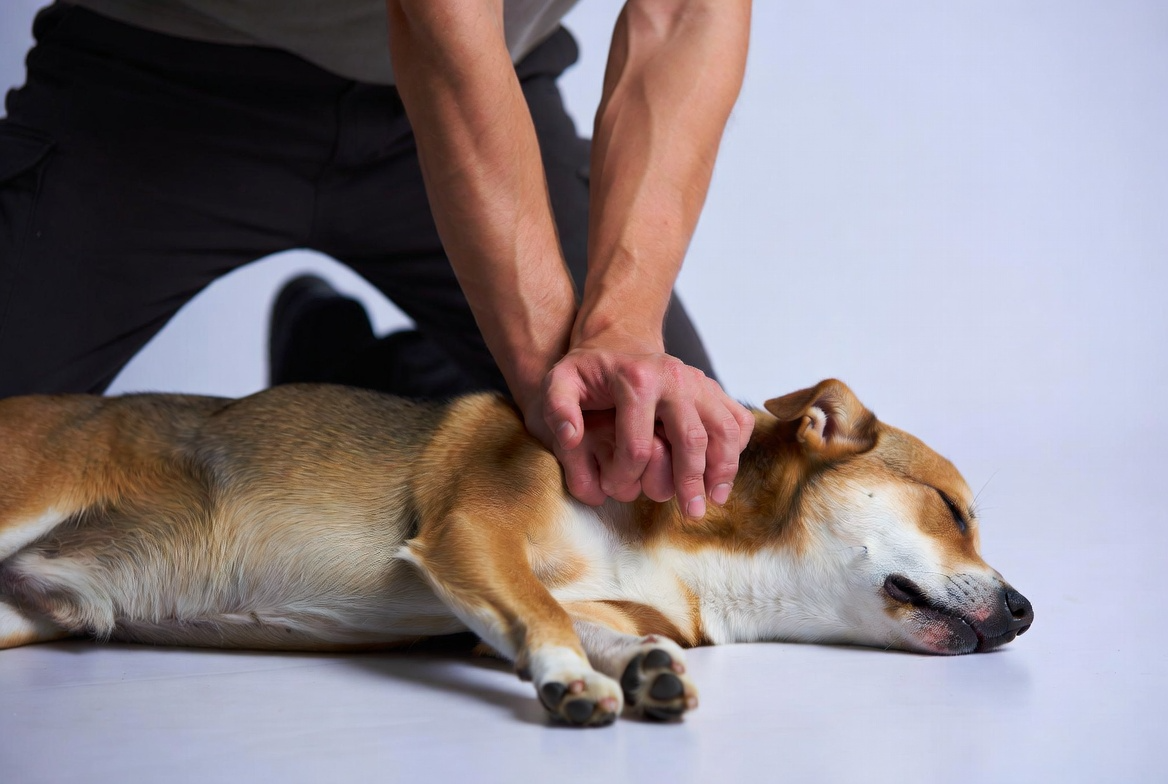
If the dog becomes unconscious and is not breathing, start CPR. Lay most dogs on their side. Place your hands over the heart (roughly where the elbow meets the chest when the front leg is bent). Compress one-third to one-half the depth of the chest at 100–120 times per minute. Give two rescue breaths into the nostrils after every 30 compressions, sealing your mouth over the nose.
Continue until you reach the vet or the dog starts breathing on its own. Have someone call the clinic while you work.
Heatstroke Needs Fast Cooling
Heavy panting, thick saliva, bright red gums, wobbliness, or collapse in hot weather are red flags. Move the dog to shade or air conditioning immediately. Apply cool (not ice-cold) water to the belly, paws, and armpits. Offer small amounts of water if the dog is alert. Get to a vet right away—heatstroke can cause organ damage even after the dog looks better.

Poisoning and Other Common Emergencies
Call a pet poison hotline or your vet before inducing vomiting. Some toxins cause more harm coming back up. Have the product name, amount, and your dog’s weight ready.
For insect stings, remove the stinger if visible and apply a cold pack. Diphenhydramine can help mild allergic reactions, but severe swelling or breathing trouble needs emergency care.
Tick removal is straightforward with a proper tool: grasp close to the skin and pull straight out. Clean the area and watch for signs of illness in the following weeks.
Know When First Aid Is Not Enough
Any of these mean you stop DIY efforts and head to the clinic:
- Difficulty breathing or blue gums
- Uncontrolled bleeding
- Seizures, collapse, or loss of consciousness
- Suspected broken bones or deep wounds
- Known toxin ingestion
- Heatstroke signs
- Inability to urinate
First aid buys time. It does not replace professional care.
FAQ’s
Should I induce vomiting if my dog eats something toxic?
Only if a veterinarian or poison hotline specifically tells you to. Use fresh 3% hydrogen peroxide at the dose they give you. Some substances cause more damage if vomited.
How do I take my dog’s temperature?
Use a digital rectal thermometer with a bit of lubricant. Normal range is roughly 100.5–102.5°F (38–39.2°C). Anything over 104°F or under 99°F needs prompt attention.
Can I use human first-aid supplies on my dog?
Many basic items overlap, but avoid anything with xylitol, certain pain relievers, or combination formulas. Stick to plain products and check with your vet.
How often should I practice these skills?
Review your kit and the main steps every few months. Watching a short veterinary first-aid video once or twice a year keeps the moves fresh without needing live practice on your dog.
What if my dog panics when I try to help?
Stay as calm as possible. Use a muzzle if safe, speak in a low steady voice, and work efficiently. Having a second person to help restrain or call the clinic makes a big difference.
Related Articles:
- How to Make Homemade Dog Treats for Under $5
- Best Dog Food Delivery Services Compared
- 7 Human Foods That Are Actually Good for Dogs
Be Ready, Then Act Calmly
A stocked kit and a few practiced steps turn panic into useful action. Most emergencies still need a veterinarian, but the minutes you buy with good first aid can make the difference between a close call and a crisis. Put the kit together this week, learn the basics, and keep the emergency numbers in your phone. Your dog is counting on you to stay steady when things go sideways.