Your dog freezes over the bowl, lips curl, and that low growl stops you cold. Food aggression is scary and frustrating, but you can turn it around without force or drama. The secret is teaching your dog that you near their food means better things arrive, not that dinner is about to vanish.
What Food Aggression Actually Looks Like
It starts subtle. Your dog eats faster when you walk by. Ears pin back. Body stiffens. Then comes the hard stare, the freeze, the growl, or worse. This is resource guarding, a survival instinct that says “this is mine and I’m keeping it.”
Most cases are fear-based, not some dominance power trip. Dogs who’ve gone hungry, lived in chaotic multi-dog homes, or simply never learned that people bring more food often guard the hardest. The good news? You can change the emotional response.
Watch for early signals instead of waiting for a full escalation. A dog who gulps, stiffens, or blocks the bowl with their body is already talking. Listen early and you avoid bigger problems later.
Safety First: Manage Before You Train
Training only works if everyone stays safe. Stop putting your dog in situations where they feel the need to guard.
Feed in a quiet room or behind a baby gate. Keep kids and other pets completely out of the feeding area. Pick up the empty bowl only after your dog walks away. Never reach toward a full bowl or try to take food mid-meal.
In multi-dog homes, feed separately every single time. Competition fuels the behavior. Free-feeding is usually a bad idea here because it keeps high-value resources available all day.
These management steps are not “giving in.” They’re stopping the rehearsal of the problem so real training can stick.
The Core Method: Make Your Approach Predict Good Things
This is the gold-standard approach used by behaviorists: desensitization plus counterconditioning. You change what your presence means.
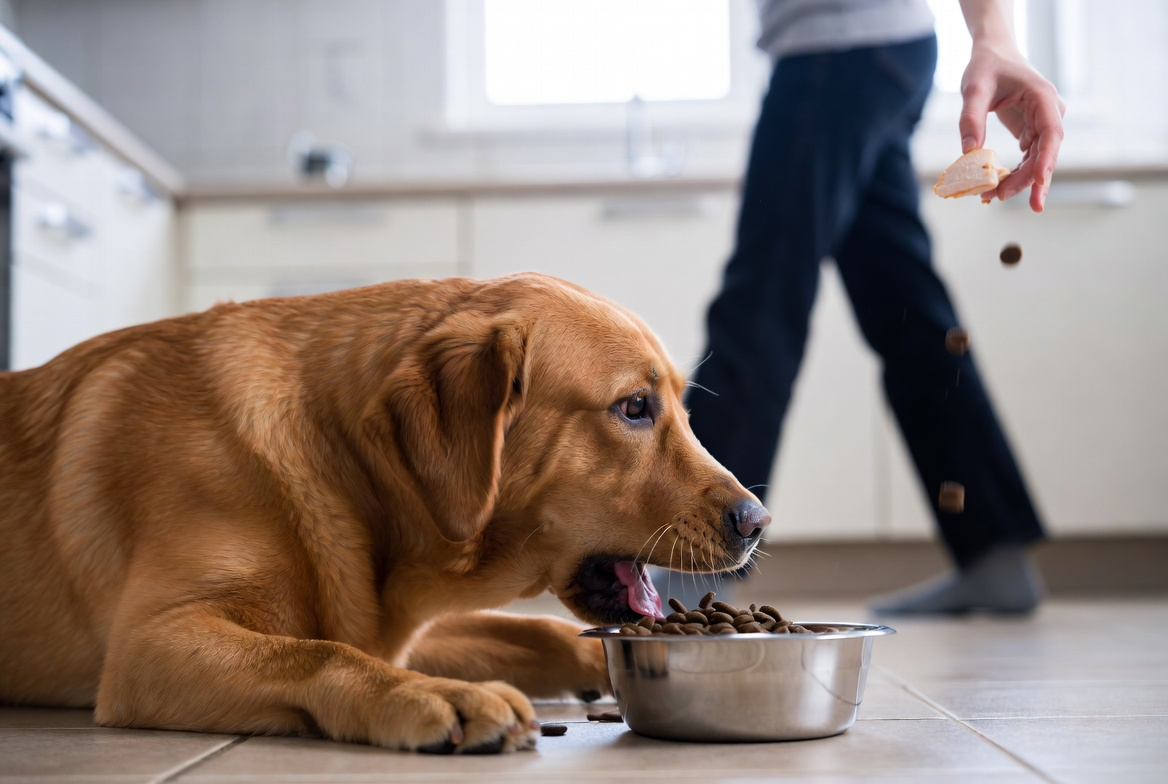
Start at a distance where your dog stays completely relaxed while eating. Walk past and calmly toss a few pieces of something better than their kibble (think chicken, cheese, or hot dog bits). Keep walking. Do not linger or stare.
Repeat this for several meals. Only move closer when your dog stays soft and maybe even looks up hopefully when they hear you coming. If you see any tension, you moved too fast. Back up.
Eventually you reach the point where you can drop the high-value treat right into the bowl and walk away. Your dog learns: person approaches = bonus food appears. The guarding loses its job.
- Find the safe distance where your dog shows zero guarding signals.
- Toss high-value treats while passing by and keep moving.
- Gradually decrease distance over many short sessions.
- Only progress when the dog stays relaxed at the current distance.
Why Distance Matters So Much
Pushing closer too soon is the number-one reason people fail. Your dog’s brain has to stay under threshold. If they stiffen or eat faster, the exercise just practiced the exact behavior you want to erase. Patience here is everything.
Hand-Feeding and the Trade-Up Game
Hand-feeding rebuilds trust fast. For a few days or a week, skip the bowl entirely. Sit calmly and deliver the meal one small handful at a time. Your dog learns that hands near food equal more food, not less.
Once that’s going well, practice trades. Offer something better than whatever they currently have. When they drop or release the item, mark it and give the upgrade. Then give the original item back. This teaches that giving things up is a winning strategy.
Start with low-value items your dog barely cares about. Only move to higher-value ones after the pattern is solid. Never force the trade. If your dog won’t release, the treat isn’t valuable enough or you’re too close to their threshold.
Mistakes That Make Food Aggression Worse
Punishing the growl is the classic error. A growl is information. It means “I’m uncomfortable, please give me space.” Punish that signal and many dogs skip straight to biting next time.
Taking the bowl away “to show who’s boss” teaches the dog that people really do steal food. Same with sticking your hand in the bowl while they eat. Both create more guarding, not less.
Letting kids “test” the dog or forcing multi-dog free-for-all meals is another fast track to escalation. Keep the environment predictable and low-pressure.
IMO, the biggest mindset shift is this: you are not competing with your dog for resources. You are teaching them that more food appears when you show up.
When You Need Professional Help
If your dog has already snapped, lunged, or bitten over food, stop DIY work and call a certified force-free trainer or veterinary behaviorist. Same if the dog guards multiple resources or shows aggression toward people outside the household.
Some medical issues can increase irritability around resources, so a vet check is smart if the behavior appeared suddenly. Pain, dental problems, or hormonal changes can all play a role.
A good professional will create a customized plan and coach you through the steps so you stay safe and progress steadily.
FAQ’s
How long does it take to stop food aggression?
Mild cases often improve in a few weeks of consistent short sessions. Moderate cases can take one to three months. Severe cases need professional guidance and longer timelines. Progress depends on how carefully you stay under threshold and how consistent the whole household stays with management.
Can I still pet my dog while they eat after training?
Only after the dog is completely relaxed with approaches and has a strong positive association. Even then, many trainers prefer to keep mealtime calm and uninterrupted once the guarding is resolved. Test carefully and watch body language.
Should I free-feed or stick to scheduled meals?
Scheduled meals are almost always better for dogs who guard. Predictable times reduce anxiety. Free-feeding keeps high-value food available all day and can increase guarding pressure.
What if my dog only guards high-value chews, not the regular bowl?
Use the same principles. Start with lower-value items, practice trades, and only introduce the high-value chew once the pattern is solid. Many dogs improve faster when you temporarily switch to lower-value long-lasting chews during the training period.
Is food aggression the same as dominance?
No. Modern behavior science has largely moved away from the old dominance model. Resource guarding is usually about anxiety over losing something valuable. Treating it as a “who’s the boss” issue often makes it worse.
Related Articles:
- 7 Superfoods for Dogs (and 3 to Avoid)
- The Best Dog Grooming Routine for Every Coat Type
- How to Give Your Dog a Pill Without Stress
You’ve Got This
Food aggression feels intense in the moment, but most dogs respond beautifully once they learn that people near the bowl equal better food, not less. Manage carefully, move slowly, and keep every session positive. Your dog does not need to be “put in their place.” They need to feel safe.
Start with the distance tosses tonight. Celebrate the small wins when your dog stays soft as you walk by. That quiet progress is how the guarding fades for good.