
Your dog loves you. Like, really loves you. So much so that the moment you grab your car keys, they look at you like you’ve just announced you’re moving to Antarctica without them. But when that love turns into full-blown panic—barking, destruction, and borderline Houdini-level escape artistry—it’s no longer cute. It’s separation anxiety, and it’s a beast. Here’s the thing: your dog isn’t trying to punish you for leaving. They aren’t being “spiteful” or “dominant.” They are genuinely, neurologically freaking out.
So, before you invest in a megaphone to yell at them from the driveway, let’s break down why this happens and—more importantly—how to fix it without losing your mind (or your security deposit). Why Does My Dog Act Like I’m Abandoning Them Forever? Let’s get one thing straight. In the wild, being alone is dangerous. Your dog’s brain is basically hardwired to see isolation as a survival threat. Sure, Fido lives on a memory foam bed now, but deep down in that furry skull, he’s still a pack animal wondering where his tribe went.
Routine Disruption: The Unseen Trigger
Dogs are creatures of habit. They thrive on schedules more rigid than a German train timetable. If you suddenly switch from working from home to a 9-to-5 office grind, your dog’s internal clock starts screaming. They don’t know you got a promotion; they just know breakfast was late, and now you’re gone for *hours*. That confusion is a massive anxiety trigger.
The “Trauma” Factor
Unfortunately, many cases stem from a rough start. If you rescued a dog, there’s a high chance they have baggage. Maybe they were abandoned on a busy street. Maybe they spent too long in a shelter kennel. Whatever it was, the smell of your unwashed laundry on the floor is the only thing making them feel safe. When you leave, that safety net vanishes, and the trauma kicks in like a bad flashback.
Health Issues Masquerading as Bad Behavior
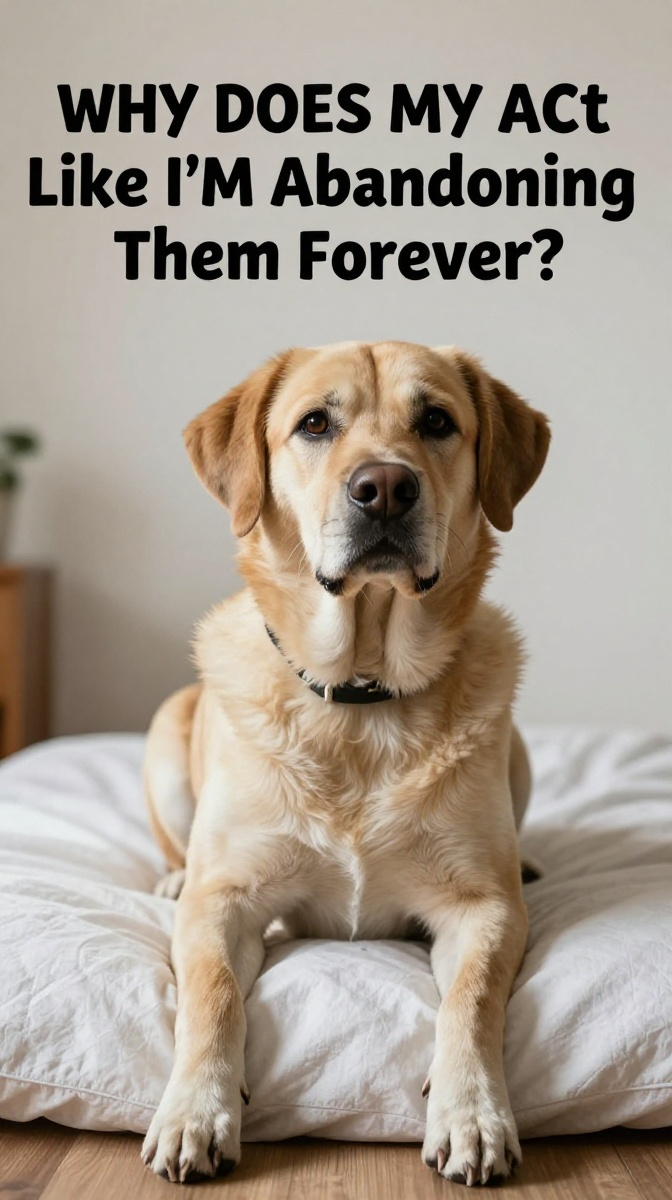
Before we go all Dr. Phil on your dog, let’s talk vet visits. **It is crucial to rule out underlying medical issues.** A urinary tract infection or gastrointestinal distress can cause a dog to panic because they physically can’t hold it. They aren’t destroying the door because they’re mad; they’re destroying the door because they are literally desperate to find a spot to pee. Bad vs. Sad: Reading the Signs of Distress How do you know if it’s just boredom or full-blown anxiety? Boredom is a chewed-up shoe. Anxiety is a crime scene.
The Destruction Derby
If you come home to find your curtains shredded, the doorframe gnawed down to splinters, or your drywall looking like Swiss cheese, you’re dealing with anxiety. These aren’t acts of mischief; they are **extreme escape attempts**. Your dog is trying to tunnel their way back to you.
The Vocal Symphony
Is your neighbor giving you *the look*? If your dog howls like a wounded wolf or barks relentlessly for the first thirty minutes you’re gone, that’s a distress signal. They aren’t just saying “Hello” to the mailman. They are screaming for help.
The “Scatter” Effect
A key sign that often goes unnoticed? **Hyper-salivation**. If you come back to a puddle of drool on the floor (and your dog hasn’t just watched you eat a steak), that’s a physiological stress response. It’s the canine equivalent of having a panic attack. Step 1: The “Crate and Desensitize” Strategy Let’s get one myth out of the way: Crate training isn’t “putting your dog in jail.” Think of it as a bedroom. A safe space. However, if you just shove them in there and slam the door, you’re creating a panic room, not a safe haven. Start by feeding your dog in the crate. Leave the door open. Throw treats in there randomly. The goal is to make the crate the best place ever.
IMO, the biggest mistake people make is only using the crate when they leave. Then the crate becomes a signal for abandonment. You need to mix up the signals so your dog doesn’t associate the crate with you vanishing for eight hours. Step 2: The “Sneaky Parent” Departure Drill Here is where we get tactical. You need to break the “trigger” cycle.
Boring Departures, Boring Returns
If you make a huge fuss when you leave—”Oh my precious baby, I’ll miss you so much!”—you are reinforcing the idea that this is a *huge deal*. Don’t make eye contact. Don’t talk. Just leave. Similarly, when you come back, ignore them for the first five minutes. I know, I know. It’s hard. Their tail is wagging so hard their butt is wiggling, but if you hype them up, you spike their cortisol. Wait until they are calm, then give them love. It’s about teaching them that you leaving and returning is boring, not apocalyptic.
Desensitization: The “Key Jiggle” Game
This is tedious, but it works. Pick up your keys. Put them down. Put on your coat. Take it off. Walk to the door. Turn the knob. Don’t actually leave. Do this until your dog stops reacting to these cues. FYI, this might take a weekend. You’ll look insane to your neighbors, but you are essentially “flooding” the trigger until it loses its power. Once the jingle of the keys doesn’t make them twitch, you’re winning. Step 3: Graduated Departures (The Real Fix) This is the gold standard of separation anxiety training. It’s slow, it’s boring, and it’s the only thing that truly re-wires a dog’s brain.
Start with “Go Out”
Have your dog sit in a down-stay. Walk to the door and close it. Open it immediately and return. Do this 20 times. The dog needs to learn that a closed door doesn’t mean you’re gone forever.
Extend the Time
Day 1: Leave for 1 second. Day 2: Leave for 5 seconds. Day 3: Leave for 20 seconds. *This is a marathon, not a sprint.* If your dog freaks out at 20 seconds, go back to 10. You are finding their “critical threshold” and staying just below it. If they panic, you moved too fast. Note: This requires a lot of patience. You can’t rush this process. If you leave them alone for two hours while they are only comfortable with two minutes, you have just taken a massive step backward.
Step 4: The Ultimate Distraction If your dog is too busy eating a frozen treat to notice you’re gone, you’ve hacked their brain. The Frozen Kong Method: Mix their kibble with peanut butter (xylitol-free, please!), stuff it into a Kong, and freeze it solid. Hand it to them right as you walk out. Why this works: It takes them about 15-20 minutes to finish it. By the time they are done, that initial “separation peak” has passed. Most dogs have a panic spike in the first 15 minutes. If you can get them through that, they usually settle down and sleep.
Step 5: When to Call for Backup Sometimes, we can’t do it alone. If you’ve tried the slow desensitization and your dog is still eating your walls, it’s time to bring in the pros.
Medication: Is it Cheating?
Absolutely not. IMO, it’s cruel to let a dog suffer with severe anxiety if medication can help them relax enough to learn. There are anti-anxiety meds (like fluoxetine) that aren’t sedatives; they just lower the panic levels so your training can actually sink in. Consult your vet. It’s not a forever solution, but it can be a lifesaver.
Dog Walkers and Daycare
If you’re gone 9 hours a day, don’t expect a dog to hold their bladder or their sanity. Hire a dog walker to break up the monotony. Or, better yet, consider doggy daycare a couple of times a week. If your dog is exhausted from playing, they physically won’t have the energy to stress about where you are. The Fixer’s FAQ: Quick Answers to Annoying Questions
Is my dog doing this because they are mad at me?
No. Dogs don’t do “revenge” like humans do. They live in the moment. The destruction is a panic response, not a passive-aggressive note left on the counter. They aren’t mad; they are terrified.
How long does it actually take to fix separation anxiety?
Brace yourself. It takes weeks to months. For deep-seated trauma cases, it might take a year. But here is the good news: if you stick to the desensitization plan (Step 3), you will see small improvements quickly. Celebrate the small wins—like the day they stop crying at 10 seconds.
Should I get a second dog to keep them company?
Only if you want two dogs with anxiety. A second dog can help *sometimes*, but often, the anxious dog just infects the other one with their stress. It’s like getting a second alarm clock because the first one was loud—it doesn’t solve the problem, it just makes it louder.
Is CBD oil a magic cure?
Mildly maybe. The science is shaky. While it can take the edge off for some nervous pooches, it is not a replacement for behavioral training. Don’t rely on the “homeopathic” stuff if your dog is panicking. That is like using a band-aid on a broken leg.
Why is my dog fine when I’m in the other room but panics when I leave the house?
Because they know you’re *gone* gone. The sound of the garage door, the car engine, and the front door locking is a signal that you’ve passed the point of no return. This is exactly why we need to practice “pretend” departures so those cues lose their power.
Related Articles:
- 10 Best Dog Breeds for Families with Kids
- Best Small Dog Breeds for Apartments
- 10 Warning Signs of Cancer in Dogs
Do I need to leave the TV on?
It doesn’t hurt! Classical music (specifically “Through a Dog’s Ear”) has been shown to calm dogs. Talk radio can also mask outside noises that might trigger them. But don’t leave nature documentaries on—that’s just going to make them jealous of all the running deer.
The Bottom Line on the Barking Dealing with separation anxiety is exhausting. It’s frustrating to come home to a mess. It’s embarrassing when your neighbors complain about the howling. But here is the truth you need to hold onto: this is a medical and behavioral issue, not a discipline issue. Yelling at your dog when you get home only makes their anxiety worse. They don’t connect your anger to the destruction that happened 6 hours ago. They just think you’re an angry giant who is unpredictable. That makes the anxiety worse for the next time you leave.
Treat this like a puzzle. You have to figure out what specific trigger is setting them off and systematically dismantle it. It requires time, patience, and a lot of treats (for both of you). You can do this. You just have to be weirder than your dog. Acknowledge the anxiety, build a plan, stick to it, and remember that your dog isn’t giving you a hard time—they are having a hard time.