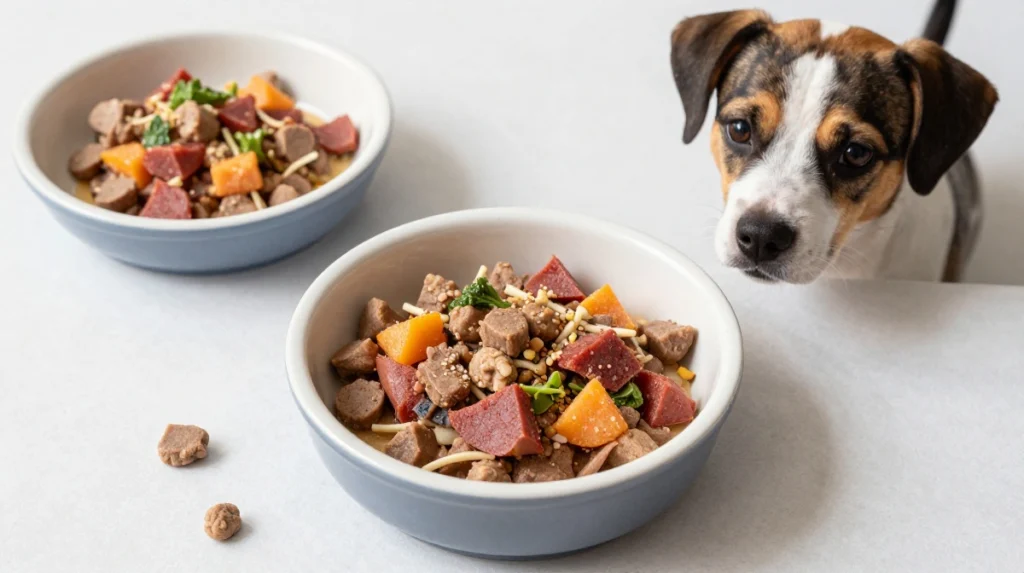
The feeding chart on the bag is only a starting point. Your dog’s ideal portion depends on weight, age, activity level, and metabolism—not a one-size-fits-all number. Get the amount right and you avoid the twin problems of a chubby dog or a constantly hungry one.
Start With the Calorie Math, Not the Cup Measure
Most adult dogs need roughly 25–40 calories per pound of body weight per day, depending on activity. A calm 40-pound dog might do well on 1,000–1,200 calories. A high-energy dog of the same weight could need 1,400 or more.
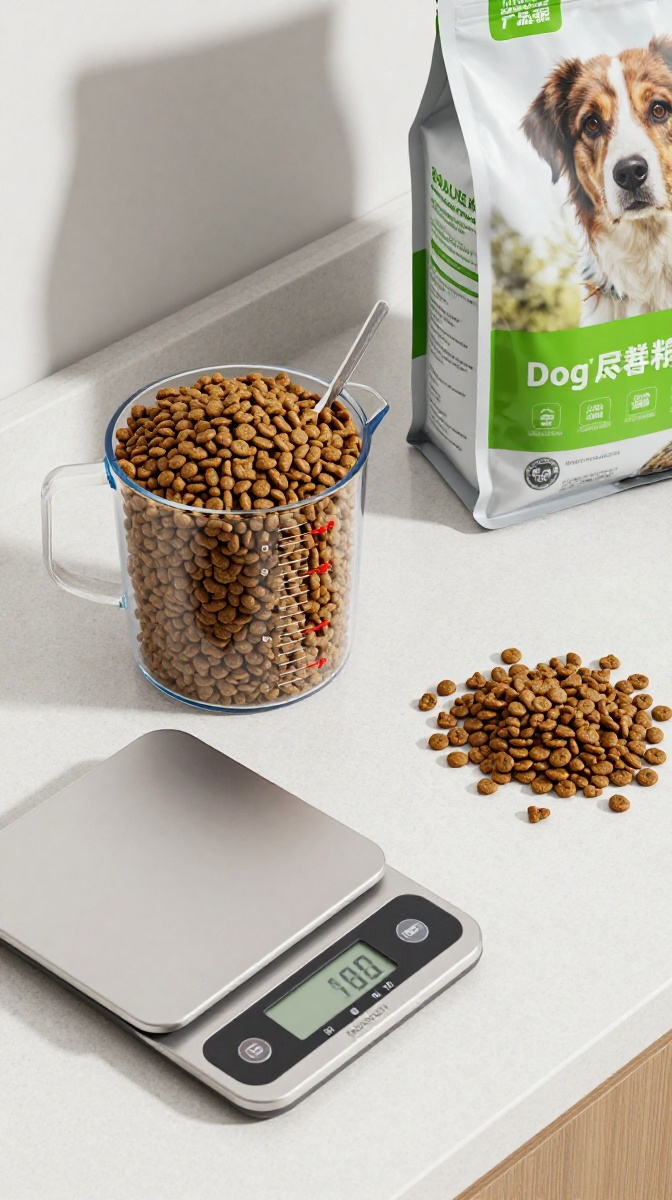
The bag’s cup recommendations assume an average calorie density. Check the kcal per cup on the label first. Two foods that both say “2 cups” can differ by several hundred calories. Always work from calories, then convert to cups or grams.
Use Body Condition Score Instead of the Scale Alone
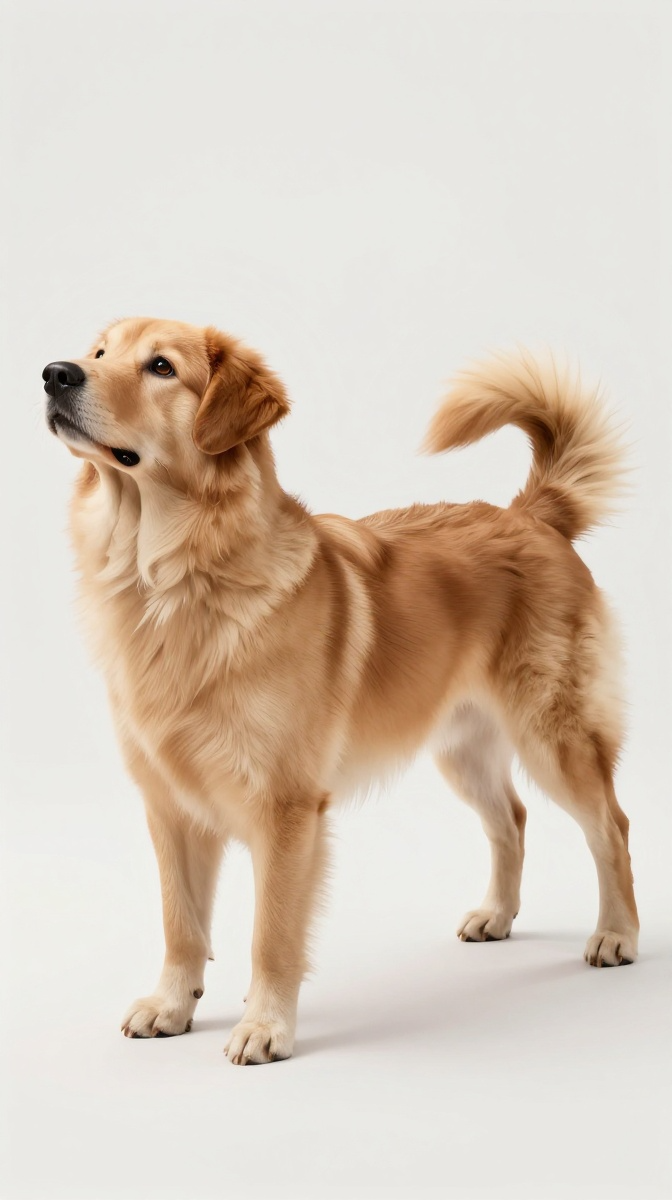
Weight charts help, but the hands-on body condition score matters more. You should feel ribs easily under a thin layer of fat without seeing them. Looking down from above, your dog should have a visible waist. From the side, the belly should tuck up behind the ribs.
A dog at the “ideal” weight on the chart can still be overweight if the body condition looks soft. Adjust food up or down based on what you feel and see every couple of weeks.
Key Factors That Change the Daily Amount
Age makes a big difference. Puppies need more calories per pound to support growth. Senior dogs often need fewer because they move less and their metabolism slows. Neutered dogs typically require 20–30% fewer calories than intact dogs of the same weight and activity level.
Activity level is the biggest variable. A couch potato and a dog that runs five miles a day will never thrive on the same portion. Weather, stress, and even the temperature of the house can shift needs slightly.
- Puppies and highly active dogs need more
- Seniors and less active dogs need less
- Neutered dogs usually need a reduction
- Working or sporting dogs can require significantly higher amounts
How to Adjust Without Guessing
Change the daily amount by only 10% at a time and recheck body condition after two weeks. Sudden big cuts or increases often create digestive upset or rebound hunger. Small, steady tweaks work better.
Practical Feeding Charts by Weight Range
These are rough daily calorie starting points for average adult dogs of normal activity. Always convert to the specific food’s calorie density and then fine-tune with body condition.
- 10 lb dog: 200–400 calories
- 20 lb dog: 350–600 calories
- 40 lb dog: 700–1,100 calories
- 60 lb dog: 950–1,400 calories
- 80 lb dog: 1,200–1,700 calories
- 100 lb dog: 1,400–2,000 calories
Active dogs sit toward the higher end. Sedentary or senior dogs sit toward the lower end. Puppies in rapid growth often need 1.5–2 times the adult amount for their current weight.
Common Mistakes That Throw Off the Numbers
Free-feeding makes it almost impossible to control calories. Measured meals twice a day give you far better accuracy. Treats and dental chews also count. Many owners forget that a few biscuits can equal 10–15% of the daily total.
Switching foods without recalculating is another frequent error. A denser kibble can pack hundreds of extra calories into the same cup volume. Always recheck the kcal per cup when you change brands or formulas.
IMO, the biggest silent calorie source is the “just a little bit” of human food that happens throughout the day. Those extras add up fast.
Special Cases That Need Extra Attention
Dogs recovering from illness, pregnant or nursing females, and those with medical conditions like diabetes or kidney disease often need customized amounts. Work with your veterinarian rather than relying on general charts.
Large-breed puppies require careful calorie control to avoid too-rapid growth that stresses joints. Follow growth-specific guidelines and keep them lean rather than chubby during the first year.
Very small dogs and giant breeds can have different metabolic rates even at the same body condition. Monitor them more frequently than medium-sized dogs.
FAQ’s
Should I follow the bag’s feeding chart exactly?
Use it as a starting point only. Most charts overestimate for average household dogs. Start at the low end of the range and adjust based on body condition every two weeks.
How often should I reassess the amount?
Check body condition every two to four weeks. Weight alone can mislead if muscle or fat composition changes. Hands-on scoring is more reliable than the scale.
Do treats count toward the daily total?
Yes. Keep treats under 10% of daily calories. If you use a lot of training treats, reduce the main meals slightly to compensate.
What if my dog always acts hungry?
Some dogs have big appetites even at a healthy weight. Make sure the food is satisfying (higher fiber or protein can help), rule out medical issues, and stay consistent with measured portions. Free-feeding usually makes the behavior worse.
Is wet food measured the same way?
Yes, but use calories rather than volume. Wet food is less calorie-dense by volume, so the can or pouch amount will look larger than the equivalent dry food portion.
Related Articles:
- How to Socialize an Adult Dog (It’s Never Too Late)
- The Best Dog Training Treats for Picky Eaters
- Separation Anxiety in Dogs: Causes and Solutions
Feed for the Dog in Front of You
The perfect amount is the one that keeps your dog at a healthy body condition with good energy and steady weight. Start with calorie estimates based on weight, then refine by feel and appearance every couple of weeks. Measure consistently, count the extras, and adjust without drama. A well-portioned dog lives longer, moves easier, and feels better every day—exactly what the feeding effort is for.