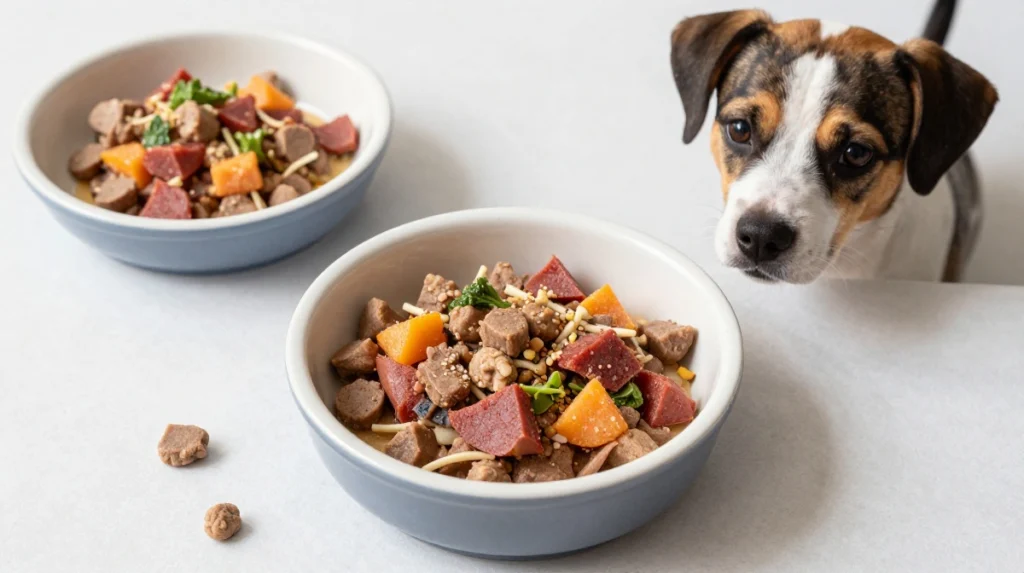
Switching dog food overnight is the fastest way to create a mess on your floor and a grumpy dog. A slow, steady transition keeps the stomach happy and gives the new food a real chance to work. Follow a simple plan and most dogs handle the change without drama.
Why You Should Never Rush the Switch
Dogs’ digestive systems adapt to the specific proteins, fats, and fiber in their current food. Dumping a brand-new formula into the bowl all at once often triggers loose stools, gas, or refusal to eat. A gradual mix lets the gut bacteria adjust and reduces the chance of an upset.
Even high-quality foods can cause temporary issues if you move too fast. Taking seven to ten days costs almost nothing and saves you from cleaning up accidents or dealing with a dog that suddenly turns picky.
The Classic 7-Day Transition Schedule
This timeline works for most healthy adult dogs. Adjust slower if your dog has a sensitive stomach or a history of digestive drama.
- Days 1–2: 75% old food + 25% new food
- Days 3–4: 50% old food + 50% new food
- Days 5–6: 25% old food + 75% new food
- Day 7: 100% new food
Mix the two foods thoroughly in the same bowl so your dog can’t pick out the preferred bits. Keep the total portion size the same as usual. If everything looks good after day 7, stay the course.
Watch for These Signs During the Switch
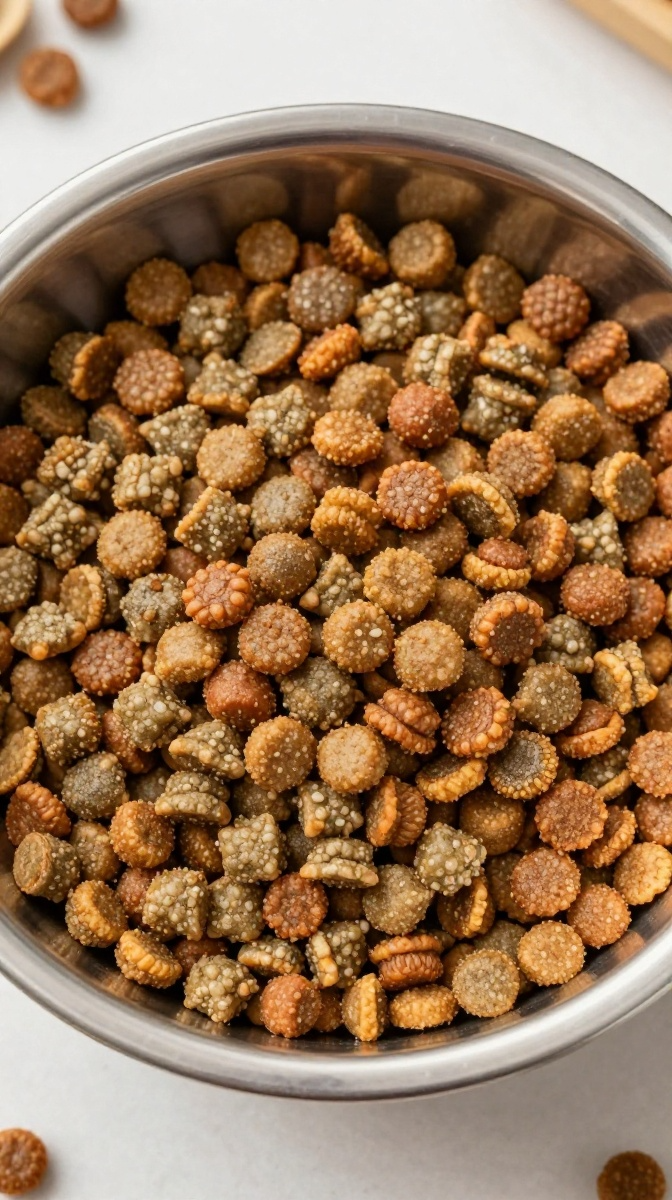
Most dogs sail through without trouble, but keep an eye on a few key things. Soft stool for a day or two is common and usually settles. Watery diarrhea, vomiting, excessive gas, or complete refusal to eat means you need to slow down or pause.
Also notice energy level and appetite. A dog that suddenly becomes lethargic or stops showing interest in meals may need a longer transition or a different formula entirely. Trust what you see more than any rigid schedule.
When to Stretch the Timeline
Puppies, seniors, and dogs with known sensitive stomachs often do better on a 10–14 day plan. Use smaller percentage increases and stay at each stage longer if stools stay loose. There is no prize for finishing fastest.
Tricks for Picky Eaters and Stubborn Dogs
Some dogs notice the new food immediately and stage a hunger strike. Warm the mixed food slightly to boost the aroma. A tiny spoonful of low-sodium broth or a bit of the new food’s wet version can also help the transition along.
Stay consistent. Offering multiple alternatives or table scraps during the switch only teaches your dog that holding out works. Measure portions carefully so you know exactly how much is being eaten.
What to Do If Things Go Sideways
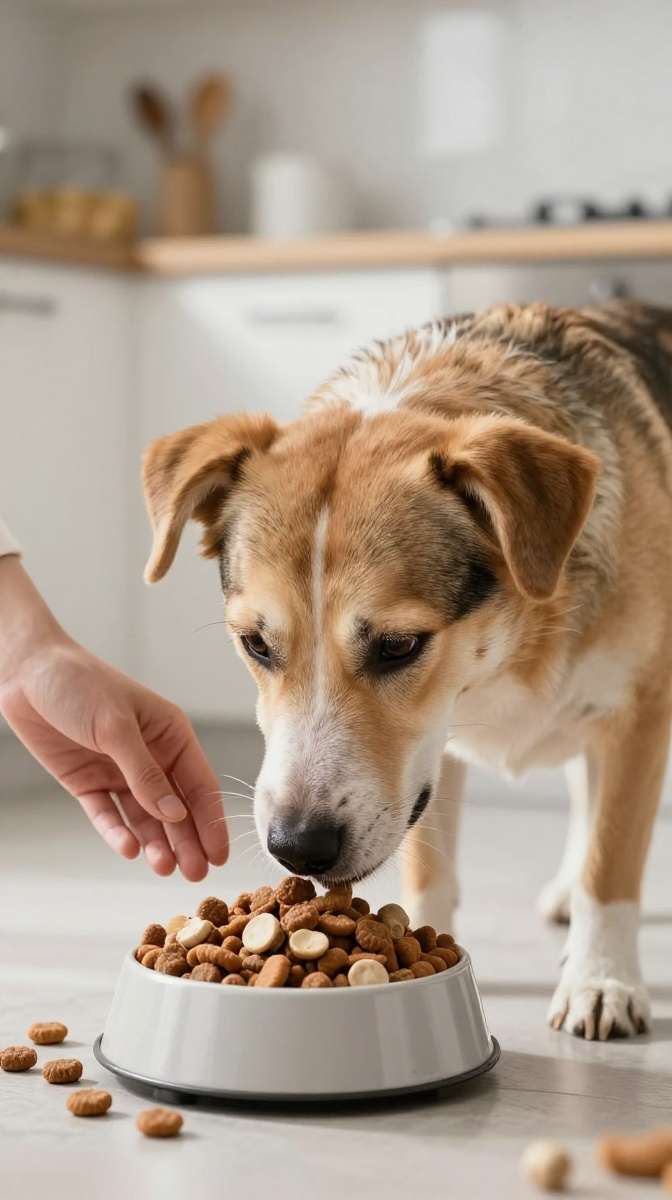
If diarrhea lasts more than 48 hours or vomiting appears, go back to 100% of the old food for a few days until things settle. Then restart the transition at an even slower pace. In stubborn cases, ask your vet about a temporary bland diet or probiotic support.
Never add random “helpers” like milk or greasy leftovers. Those usually make the situation worse. Stick to the two foods you’re transitioning between and keep the rest of the routine steady.
- Return to old food if symptoms appear
- Restart with smaller percentage changes
- Call the vet if vomiting, blood in stool, or lethargy shows up
Special Situations That Need Extra Care
Dogs with food allergies or chronic GI issues often need a longer, more careful switch—sometimes two to three weeks. Work with your veterinarian if the new food is part of an elimination diet trial. The goal is clear data, not speed.
Large breed puppies and dogs with a history of pancreatitis also benefit from a slower pace. Fat content differences between the old and new food can matter more for these groups. Read both labels and compare calorie density before you start.
IMO, the dogs that struggle most are the ones whose owners try to rush because the new bag looks exciting. Patience almost always wins.
FAQ’s
How long should a food transition take?
Seven to ten days works for most healthy adult dogs. Sensitive dogs, puppies, and seniors often need 10–14 days or longer. Watch the stools more than the calendar.
Can I switch foods if my dog has an upset stomach already?
It’s better to wait until the current issue resolves. Adding a new food on top of existing digestive stress usually makes things worse. Stabilize first, then transition.
What if my dog refuses the mixed food?
Warm it slightly, mix more thoroughly, or add a spoonful of the new food’s wet version. Stay consistent and avoid offering alternatives that undercut the plan.
Is it okay to switch between dry and wet food?
Yes, but treat it the same way. Mix increasing amounts of the new texture over the same 7–10 day period. The moisture difference can affect stool consistency, so go slowly.
Should I change the feeding schedule during the transition?
Keep meal times and total daily amount the same. Changing too many variables at once makes it harder to know what’s causing any problems.
Related Articles:
- Potty Training a Puppy in 7 Days: A Step-by-Step Guide
- How to Stop a Dog from Barking Excessively (5 Proven Methods)
- 7 Puppy Training Mistakes New Owners Make (And How to Fix Them)
Slow and Steady Keeps the Peace
A careful food transition is one of the easiest ways to protect your dog’s comfort and give the new formula a fair shot. Stick to the mixing schedule, watch the stools and appetite, and slow down the moment anything looks off. Most dogs handle the change without drama when you give their system time to adapt. Take the extra few days—your floors and your dog will thank you.