Let me ask you something.
Have you ever met a Labrador who didn’t want to eat everything in sight?
Yeah, me neither.
I’ll never forget bringing home my yellow Lab, Maverick. I thought I was prepared. I’d watched all the videos. I’d read all the books. I had the treats ready. And then… well, reality hit.
My adorable little puppy turned into a furry tornado who viewed the entire world as something to chew, eat, or destroy. He’d swallow socks whole, counter-surf like an Olympian, and look at me with those big brown eyes like “What? I’m just a baby!”
The first few weeks were chaos. Pure, adorable, exhausting chaos.
But then I discovered the secret to surviving Labrador puppyhood—teaching the RIGHT commands first. Not the fancy tricks. Not the complicated behaviors. The foundational commands that actually make life with a Lab manageable.
Labs are incredibly smart. They’re also incredibly stubborn and food-motivated. Use those traits to your advantage, and you’ll have a well-behaved dog in no time!
So grab a coffee (or a treat for yourself), and let me share the six essential commands that saved my sanity, my shoes, and probably my relationship with my neighbors!
1. The “Name” Command: The Foundation of Everything
Why This Command Is Absolutely Essential
You know what’s embarrassing? Calling your dog’s name 47 times while they ignore you completely. My neighbor’s Lab, Buster, would completely ignore his name at the park—until his owner pulled out a treat. Labs are smart enough to know when something is worth their attention. Make their name worth responding to, and everything else becomes so much easier!
The Secret Sauce
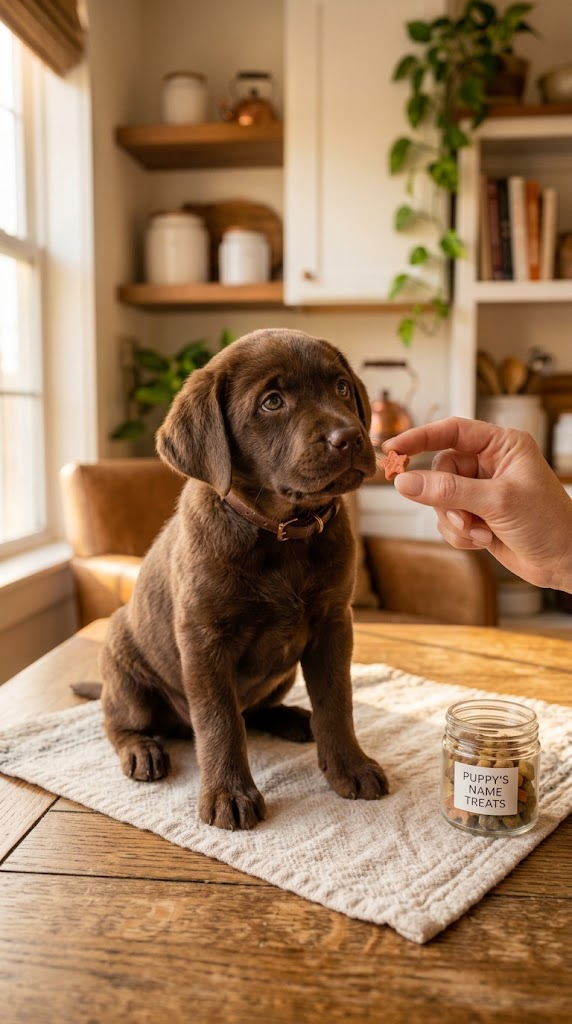
The Goal: Your dog looks at you immediately when you say their name.
Why It Matters: Everything else builds from here. If your dog doesn’t respond to their name, you can’t get their attention for other commands. It’s the foundation of all training.
Step-by-Step Training
- Choose a short name. One or two syllables works best. “Maverick” is great. “Sir Fluffybottom McChewysocks” is not.
- Say the name in a happy, excited tone. No stern voices here!
- The moment they look at you, reward. Treat, praise, play—whatever motivates your pup!
- Practice in different rooms. Start in a quiet room, then move to other parts of the house.
- Add distractions slowly. Start with someone walking past. Then with toys nearby. Then with other people.
- Never use their name in frustration. “MAVERICK, NO!” teaches them that their name means bad things are coming. Not good!
- Practice several times a day. Short sessions are key—2-3 minutes, multiple times daily.
Why You’ll Love This Approach
I made the mistake of using Maverick’s name when I was frustrated, and he started associating his name with negativity. He’d actually cower when I called him! Once I switched to positive reinforcement, he started wagging his tail when he heard his name. Now he comes running every time—and that’s a feeling you can’t beat!
Pro tip: Use a happy, high-pitched voice when saying your dog’s name. It signals “good things are coming!”
2. “Sit”: The Magic Word for Good Behavior
Why This Command Is a Game-Changer
Sit is the command that solves EVERYTHING. Puppy jumping? Ask them to sit. Rushing the door? Sit. Begging at the table? Sit. It’s the ultimate multitasking command, and Labs pick it up super fast because it usually involves getting a treat!
The Secret Sauce
The Goal: Your dog sits on command, holding the position until released.
Why It Matters: Sit is the foundation for other commands like “stay” and “down.” Plus, it’s the easiest way to redirect unwanted behaviors.
Step-by-Step Training
- Hold a treat in front of your dog’s nose.
- Slowly raise the treat up and back over their head. Their nose follows the treat, and their butt naturally lowers!
- As soon as their butt hits the floor, click/reward! Mark the exact moment they sit.
- Add the word “sit” just as they’re about to sit, not before.
- Practice in different locations. Start in a quiet room, then move to the yard, then on walks.
- Add distractions. Have someone walk past, drop a toy, or make noise while you practice.
- Add duration. Once they understand the command, ask them to sit for 1 second, then 2, then 5.
Why You’ll Love This Approach
Maverick used to jump all over guests when they came to visit. I was mortified. Once I taught him “sit,” I could ask him to sit before opening the door. Now he sits calmly, gets a treat, and then greets guests politely. People are always impressed—they think he’s just naturally well-behaved. Little do they know!
Pro tip: Never repeat the command. Say “sit” once, wait, and then help them if needed. Repeating just teaches them to ignore you!
3. “Down”: The Calming Command
Why This Command Is Essential for High-Energy Labs
Labs are energetic. Like, REALLY energetic. They bounce off walls, people, and sometimes furniture. Teaching “down” gives you a tool to encourage calmness. When your Lab is in “down,” they literally can’t jump, run, or cause chaos. It’s magic!
The Secret Sauce
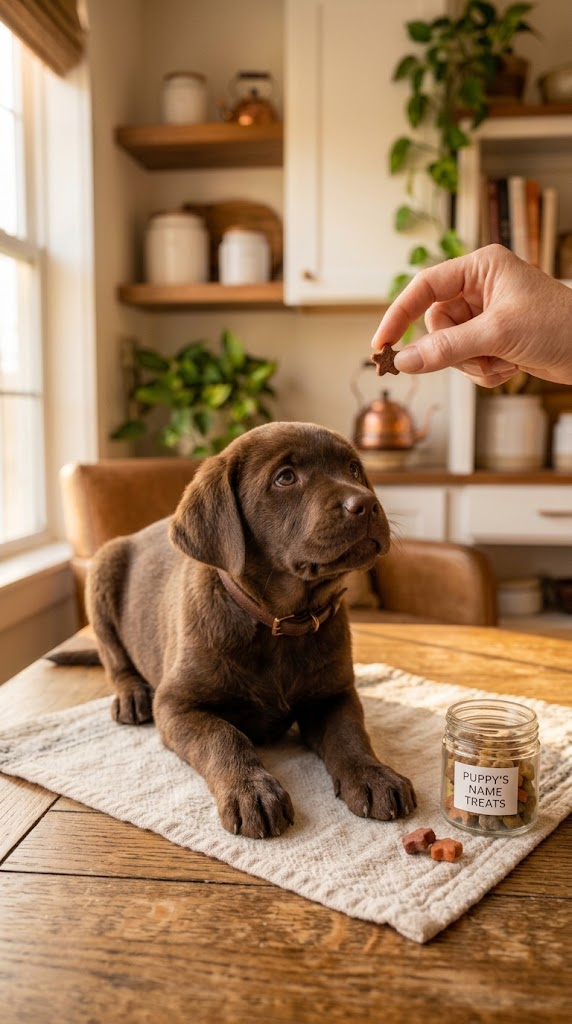
The Goal: Your dog lies down on command, holding the position.
Why It Matters: “Down” is a calming exercise that helps your Lab learn self-control. Plus, it’s required for so many other behaviors—like staying at the vet, lying down during grooming, or just being calm in public.
Step-by-Step Training
- Start with “sit.” Always start from the sit position.
- Hold a treat in front of your dog’s nose.
- Slowly lower the treat straight down to the floor between their front paws.
- Drag the treat forward slightly. This encourages them to slide into the down position.
- As soon as their elbows touch the floor, reward! Mark the exact moment.
- Add the word “down” as they’re going down, not before.
- Practice with different foods. Use high-value treats to keep motivation high!
Why You’ll Love This Approach
Maverick was a wild child as a puppy. I’d come home from work, and he’d be literally bouncing off the furniture. “Down” became my secret weapon. I’d ask him to lie down and calm down before I gave him attention. Now he gets so excited when I come home, but he’ll “down” on command before I even ask!
Pro tip: Make “down” extra rewarding. Use REALLY good treats (like chicken or cheese) for this command because it’s harder for pups!
4. “Stay”: The Self-Control Superpower
Why This Command Is a Lifesaver
Picture this: you’re opening the front door, and your Lab decides it’s time for an adventure. They bolt out, leaving you in the dust. Or worse, running into traffic. “Stay” prevents that from ever happening. It’s literally a lifesaver command!
The Secret Sauce
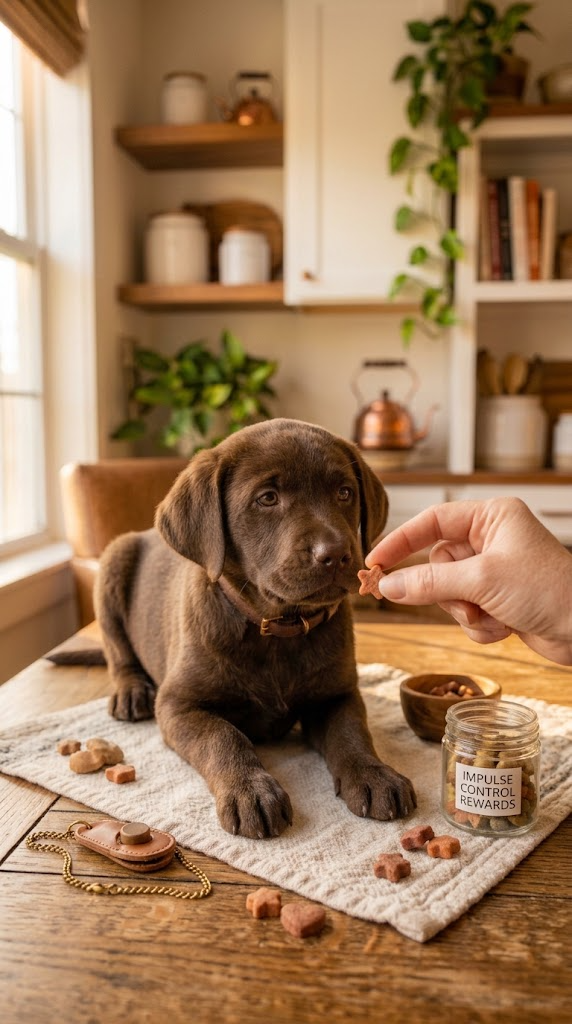
The Goal: Your dog holds their position (sit or down) until released.
Why It Matters: “Stay” teaches impulse control, keeps your dog safe in dangerous situations, and makes everyday life so much easier.
Step-by-Step Training
- Start with “sit.” Always begin with a solid sit.
- Hold your hand up like a stop sign and say “stay” in a calm voice.
- Take one step back. If they stay, reward!
- Gradually increase distance. One step, then two, then three, then across the room.
- Add duration. Ask for 1 second, then 3, then 5, then 10.
- Add distractions. Someone walks past, a toy drops, a door opens.
- Always release with a release word. “Okay,” “free,” or “release” signals that “stay” is over.
Why You’ll Love This Approach
I’ll never forget the day Maverick almost bolted out the front door. The pizza delivery guy was at the door, and Maverick was ready to meet his new best friend. But I asked him to “stay,” and he DID! He stayed sitting while I got the pizza, and then he got a HUGE reward. That was the moment I knew our training was working!
Pro tip: Practice “stay” with feeding time. Ask them to sit and stay before putting down their bowl. It teaches patience and impulse control!
5. “Come”: The Most Important Recall Command
Why This Command Is Non-Negotiable
You know what’s terrifying? Watching your Lab run toward a busy street. Or chase a squirrel into the woods. Or ignore you completely at the dog park. “Come” is the command that brings your dog back to you—no matter what. It’s THE most important command for safety!
The Secret Sauce
The Goal: Your dog comes to you immediately when called.
Why It Matters: Recall can save your dog’s life. Period. End of story. Labs are curious and adventurous, and “come” is your safety net.
Step-by-Step Training
- Start in a quiet, enclosed space. No distractions!
- Use a long line (20-foot leash) so your dog can’t practice ignoring you.
- Say “come” in a happy, excited voice. Like you’re inviting them to a party!
- When they come to you, reward BIG. Like, jackpot reward. Multiple treats! Praise! Play!
- Practice with increasing distance. Start close, then move further away.
- Add distractions gradually. Other people, dogs, toys, and smells.
- NEVER call your dog for something bad. If you need to give medication or end playtime, go get them instead.
Why You’ll Love This Approach
The first time Maverick came back to me at the dog park, I almost cried. He was chasing another dog, clearly having the time of his life, and then I called “come” and he actually turned around and ran back to me. I gave him SO many treats he probably thought it was his birthday. That moment made all the training completely worth it!
Pro tip: Practice “come” with a game! One person holds the dog, another calls them. It’s fun and reinforces the command!
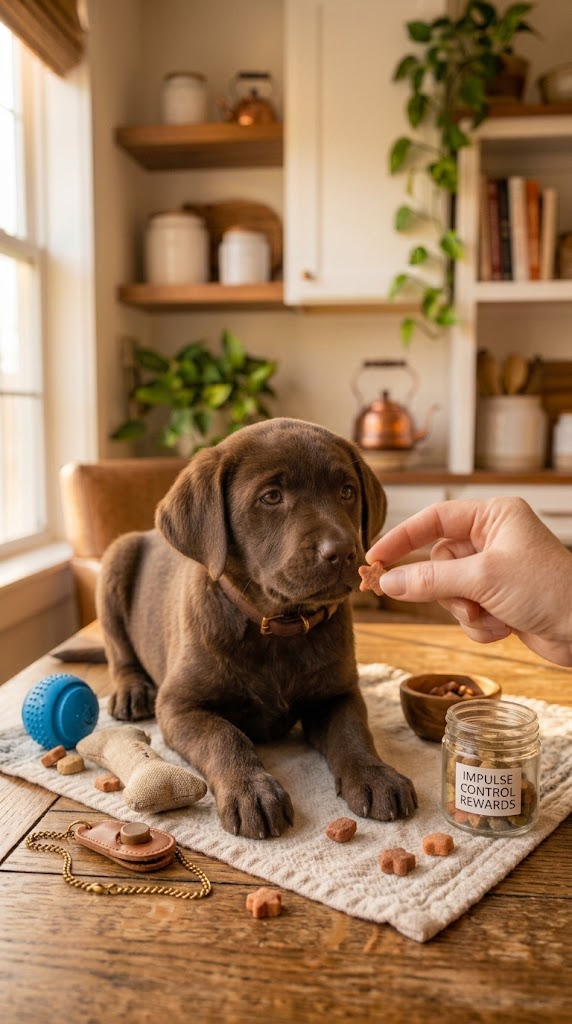
6. “Leave It”: The Ultimate Impulse Control
Why This Command Is Crucial for Safety
Labs eat EVERYTHING. Chicken bones on the sidewalk. Something weird in the park. That piece of chocolate that fell on the floor. “Leave it” literally saves your dog from poisoning, choking, and other disasters. It’s the command you never knew you needed!
The Secret Sauce
The Goal: Your dog ignores something you tell them to leave.
Why It Matters: There’s dangerous stuff everywhere. “Leave it” prevents your Lab from eating, chasing, or interacting with things they shouldn’t.
Step-by-Step Training
- Start with a treat in your closed fist. Let your dog sniff and lick—but don’t open!
- Say “leave it” in a firm voice.
- When they stop trying and look at you, reward! Use a different treat from the other hand.
- Gradually increase the value. Start with kibble, then use a treat, then use something irresistible like cheese!
- Practice with real-world items. Food on the floor, dangerous objects, other dogs, etc.
- Add distance. Ask them to leave it from further away.
- Use it in real situations. On walks, at home, everywhere!
Why You’ll Love This Approach
One day, I accidentally dropped a handful of grapes on the kitchen floor. Grapes are toxic to dogs! I yelled “leave it!” and Maverick stopped mid-pounce. He actually listened! I was able to clean up all the grapes before he got a single one. That command saved him from a very expensive emergency vet visit!
Pro tip: Practice “leave it” with everything! Food, toys, your shoes, and even other animals. The more you practice, the better your dog will get!
The Ultimate Guide to Labrador Training Success
You’ve got the commands, but here’s the secret sauce—my best tips and tricks for making Labrador training work beautifully!
Use High-Value Treats
Labs are food-motivated. Use that to your advantage! Chicken, cheese, hot dogs, and freeze-dried liver are irresistible. Save the best treats for the hardest commands!
Keep Sessions Short
5-10 minutes max! Labs get bored and lose focus quickly. Multiple short sessions are way more effective than one long session.
Be Consistent
Everyone in the household should use the same commands and rules. Inconsistency confuses your dog and slows down progress.
Train in Different Places
A Lab who sits perfectly in the living room might not sit at the park. Generalize commands by practicing everywhere!
End on a Positive Note
Always finish training with a command your dog knows well and a big reward. This keeps training fun and something they look forward to!
Use a Clicker
Clicker training helps mark exact moments. It’s a game-changer for teaching precise behaviors.
Be Patient
Labs are smart, but they’re also stubborn. Some commands take weeks or even months to perfect. That’s completely normal!
Make It Fun
If training feels like a chore, your dog will feel it too. Keep sessions upbeat, celebrate small wins, and don’t take things too seriously!
Practice Daily
Consistency is key. A little practice every day beats a marathon session once a week.
Celebrate Everything
Every small win matters! Celebrate each step of progress, and your Lab will want to keep learning!
Related Articles:
- 6 Things You Should NEVER Do With a Chihuahua
- 6 Golden Retriever Puppy Care Tips Every Owner MUST Know
- 6-training-mistakes-that-slow-down-german-shepherd-progress
Conclusion: Master These Commands, Master Life With Your Lab!
So there we have it—six essential Labrador commands that every owner must teach first!
We’ve covered the “Name” command (the foundation of everything!). “Sit” (the magic word for good behavior!). “Down” (the calming command!). “Stay” (the self-control superpower!). “Come” (the most important recall command!). And “Leave it” (the ultimate impulse control!).
Every single command is essential for safety, sanity, and a happy life with your Lab. Every single one will make your life easier. And every single one will build a stronger bond between you and your amazing dog!
Here’s the thing—training a Labrador is one of the most rewarding things you’ll ever do. Yes, it’s challenging. Yes, it requires patience. Yes, your Lab will test your limits. But the bond you’ll build? The trust? The partnership? It’s absolutely worth every single minute.
Maverick and I have been through it all together. The mistakes, the frustrations, the breakthroughs, and the successes. And through it all, he’s taught me more about patience, consistency, and love than I ever expected. He’s not just a dog—he’s my partner, my teacher, and my best friend.
One last reminder: I’m not a professional trainer, just a Lab mom who’s made every mistake in the book. Always work with a reputable trainer if you’re struggling, and always use positive reinforcement methods.
Now go train that amazing Labrador! Your dog is waiting, and I promise all that hard work is going to pay off big time!
Happy training, consistent practicing, and tail-wagging, everyone! 🐾
This article contains affiliate links that support my dog’s treat addiction. All opinions, training tips, and hilarious mishaps are entirely my own. Maverick personally oversaw every training suggestion (he’s the real expert on being a Lab!).