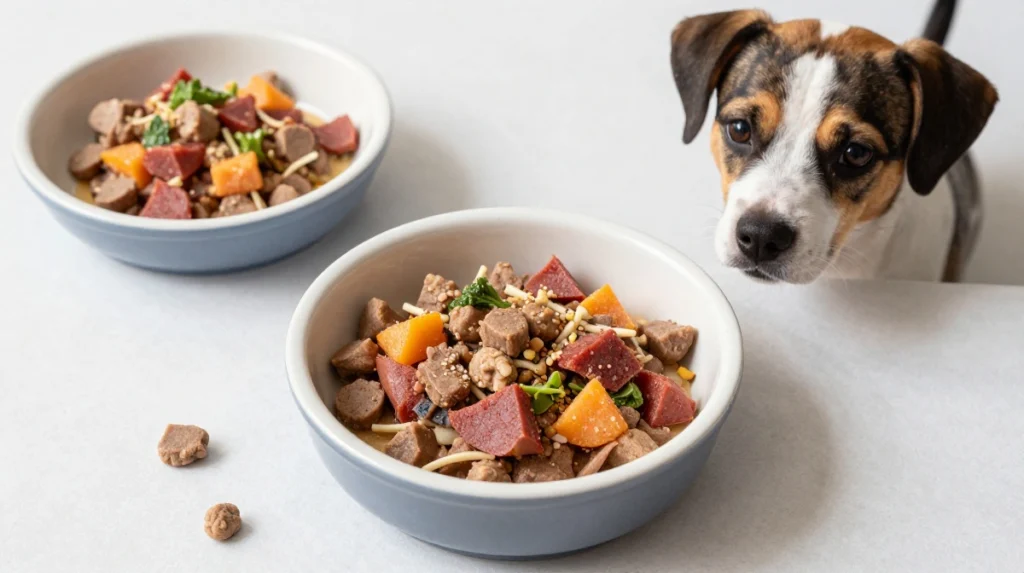
Let’s be honest for a second. If you’re reading this, you probably treat your dog better than you treat yourself. I’m the same way.
I’ll eat leftovers from three days ago, but my golden retriever, Cooper? He gets fresh, human-grade ingredients that I’d happily serve to dinner guests. And honestly? He deserves it.
Human-grade dog food isn’t just a trend. It means every single ingredient meets the standards for human consumption. No feed-grade fillers. No mystery “meat byproducts.” Just real, wholesome food that you’d recognize from your own kitchen.
I remember the first time I made Cooper a human-grade meal. I was standing in my kitchen, cooking chicken and sweet potatoes, and I realized—I was making better food for my dog than I’d eaten all week. That was a wake-up call. Now I meal prep for both of us. (Though I’m not gonna lie, Cooper’s meals often look better than mine.)
The dogs in your life don’t need to ask for better food. They trust you to give them the best. And when you feed them human-grade ingredients, you know exactly what they’re eating. No surprises. No fillers. No weird preservatives with chemical names you can’t pronounce.
Before we dive in, a quick note: Always check with your vet before making major diet changes. Some dogs have specific health needs, and I’m not a veterinarian. But if your vet gives the green light, get ready to make some gourmet meals your pup will go crazy for.
These recipes are good enough for you to eat. (I’m not saying you should, but honestly… you could.) 😊
What Is Human-Grade Dog Food?
Understanding the gold standard of canine cuisine.
The Definition
“Human-grade” means every ingredient in the food meets FDA standards for human consumption. This is the highest quality standard available.
Human-Grade vs. Feed-Grade
- Human-grade – Ingredients you could buy at a grocery store. No rendered meats, no “animal digest,” no mystery parts.
- Feed-grade – Ingredients that meet basic nutritional standards but aren’t necessarily safe or appealing for humans. This is what’s in most kibble.
Why Human-Grade Matters
- Quality control – Human-grade ingredients are subject to stricter safety standards
- Transparency – You know exactly what’s in your dog’s bowl
- Better taste – Dogs prefer fresh, real ingredients (shocking, right?)
- Digestibility – Human-grade ingredients are often easier to digest
- No hidden nasties – No ethoxyquin, BHA, BHT, or other preservatives you can’t pronounce
What I’ve Noticed
Since switching to human-grade ingredients, Cooper’s health has improved across the board. His coat is shinier, his energy is better, and his digestion is flawless. The biggest difference? He actually gets excited about mealtime again. His tail starts wagging the second I pull out the cutting board.
1. Grilled Chicken & Quinoa Harvest Bowl
The classic gourmet meal that’s simple enough for weeknights.
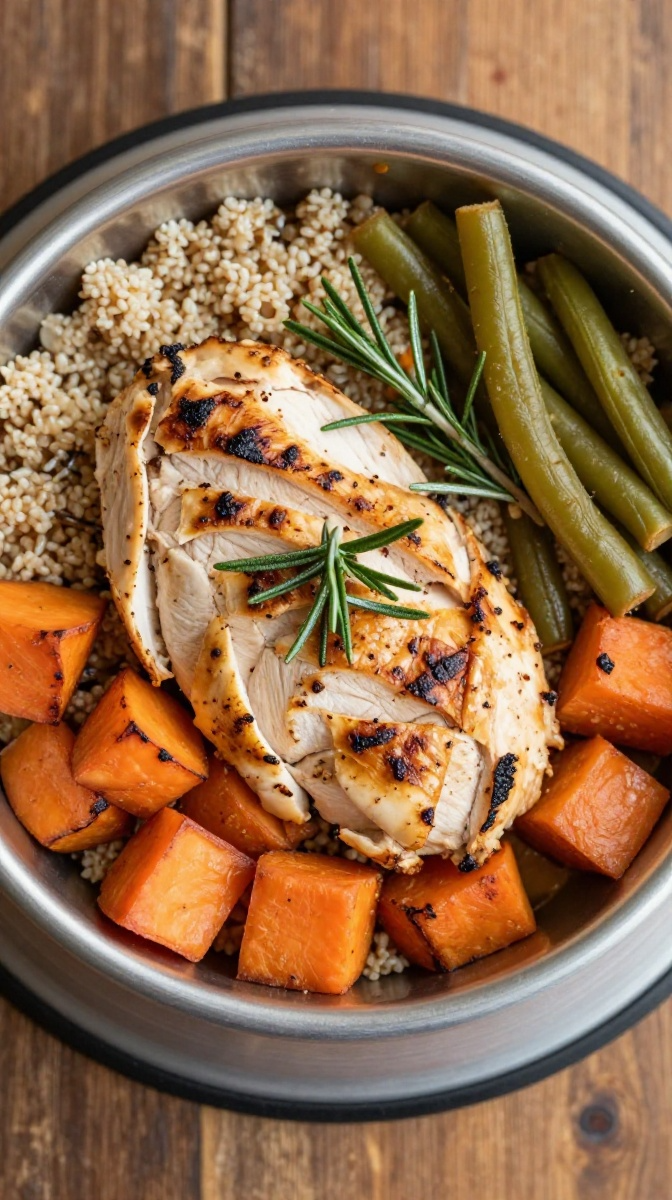
This is the recipe that started my human-grade journey. It’s simple, affordable, and uses ingredients I always have on hand. The quinoa adds protein and fiber, while the grilled chicken provides lean, high-quality protein.
Ingredients
- 2 pounds human-grade chicken thighs (boneless, skinless)
- 1 cup quinoa (organic)
- 2 large sweet potatoes, cubed
- 1 cup green beans, trimmed
- 1 cup carrots, diced
- 2 tablespoons extra virgin olive oil
- 1 teaspoon rosemary (fresh or dried)
- 1 teaspoon turmeric
- Pinch of sea salt (optional—discuss with your vet)
Step-by-Step Instructions
- Cook the quinoa. Rinse the quinoa under cold water. Bring 2 cups of water to a boil, add the quinoa, reduce heat, cover, and simmer for 15 minutes. Fluff with a fork and set aside.
- Roast the vegetables. Preheat the oven to 400°F. Toss sweet potato cubes, green beans, and carrots with 1 tablespoon of olive oil. Spread on a baking sheet and roast for 25-30 minutes until tender and caramelized.
- Grill the chicken. Heat a grill pan or outdoor grill over medium-high heat. Brush chicken thighs with olive oil and season with rosemary. Grill for 6-8 minutes per side until cooked through (165°F internal).
- Rest and slice. Let the chicken rest for 5 minutes, then slice or chop into bite-sized pieces.
- Combine everything. Mix the cooked quinoa, roasted vegetables, and sliced chicken in a large bowl. Sprinkle with turmeric and stir gently.
- Cool completely before serving to your eager pup.
Why You’ll Love It
This recipe is the perfect introduction to human-grade cooking. It’s approachable, affordable, and uses ingredients you probably already have. Cooper loves the smoky flavor of the grilled chicken and the natural sweetness of the roasted sweet potatoes. I’ve even packed this for my own lunch—it’s that good.
2. Salmon, Asparagus & Wild Rice Medley
The omega-3-rich gourmet meal that supports joints and a gleaming coat.
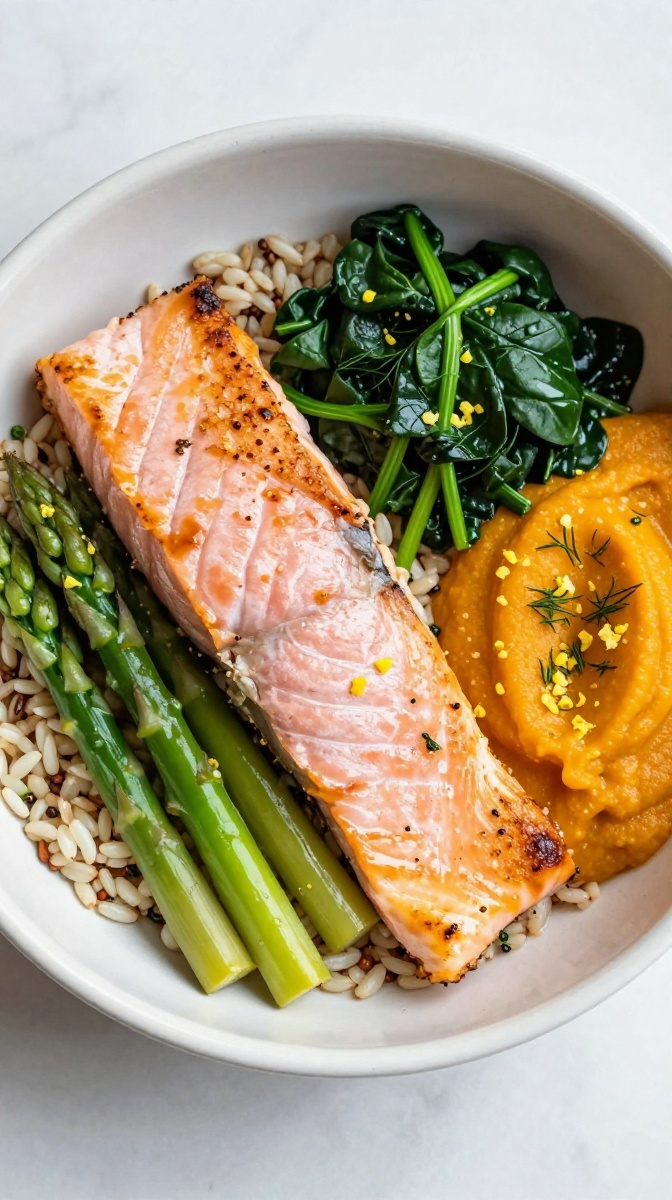
Wild-caught salmon is one of the most nutrient-dense proteins you can feed your dog. Combined with asparagus (a natural diuretic) and wild rice (a complete protein), this meal supports overall wellness.
Ingredients
- 2 pounds wild-caught salmon fillets
- 1 cup wild rice
- 1 bunch asparagus, trimmed and chopped
- 1 cup spinach, chopped
- ½ cup pumpkin puree (plain)
- 2 tablespoons coconut oil
- 1 teaspoon dill (fresh or dried)
- 1 lemon (zest only—no juice for dogs)
Step-by-Step Instructions
- Cook the wild rice. Bring 3 cups of water to a boil, add the wild rice, reduce heat, cover, and simmer for 45-50 minutes until tender. Drain any excess liquid.
- Bake the salmon. Preheat the oven to 375°F. Place salmon on a lined baking sheet, skin side down. Bake for 15-20 minutes until it flakes easily with a fork.
- Sauté the asparagus. Heat coconut oil in a large skillet over medium heat. Add asparagus and cook for 5-6 minutes until bright green and tender-crisp.
- Add the spinach. Stir in the spinach during the last 2 minutes of cooking until wilted.
- Flake the salmon. Remove skin and any bones. Flake the salmon into bite-sized pieces.
- Combine everything. Mix the cooked wild rice, flaked salmon, sautéed asparagus, spinach, and pumpkin puree together. Add the lemon zest and dill, and stir gently.
- Cool completely before serving.
Why You’ll Love It
This recipe is luxury in a bowl. The salmon provides those essential omega-3s that support joint health, brain function, and that glossy coat. The wild rice adds a nutty flavor and a satisfying texture. Cooper practically does backflips for this one—I think he knows it’s special.
3. Beef Tenderloin & Root Vegetable Gratin
The elegant, special-occasion meal that’ll make your pup feel like royalty.
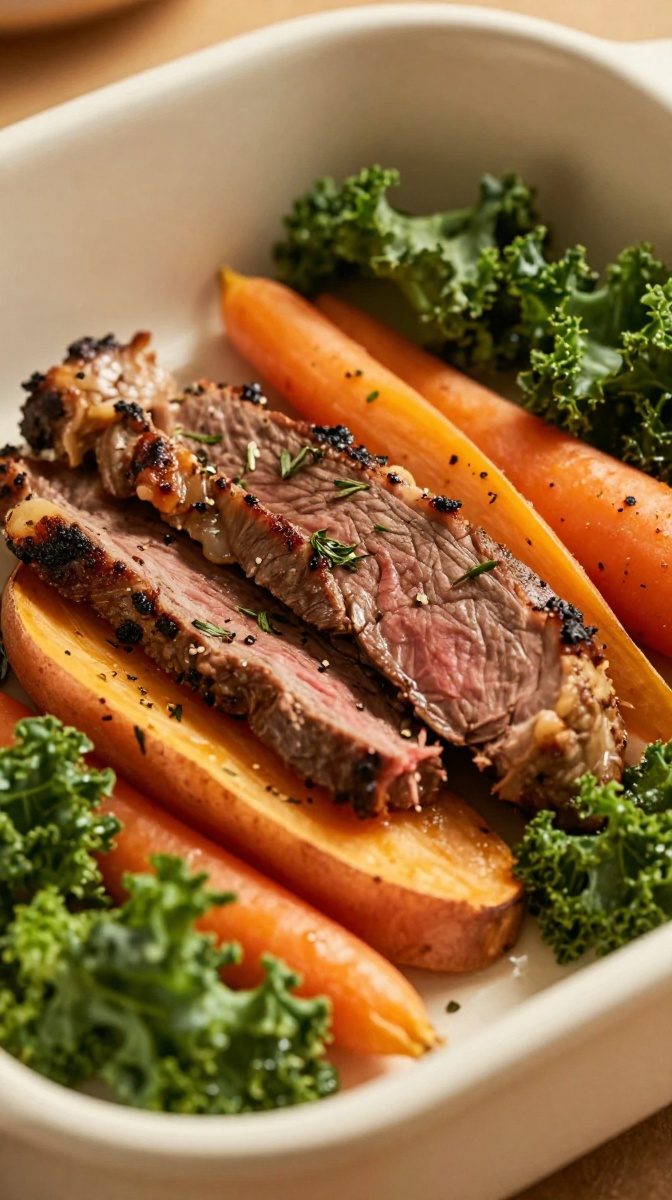
Okay, I know this one sounds fancy. But honestly? It’s just roasted vegetables with beef, and it’s easier than you’d think. This is what I make for Cooper on his birthday or after a particularly good vet visit.
Ingredients
- 2 pounds human-grade beef tenderloin (or sirloin steak)
- 2 large sweet potatoes, thinly sliced
- 2 parsnips, peeled and thinly sliced
- 2 carrots, thinly sliced
- 1 cup kale, chopped
- 2 tablespoons olive oil
- 1 teaspoon thyme (fresh or dried)
- 1 teaspoon rosemary (fresh or dried)
- 1 cup low-sodium beef broth
Step-by-Step Instructions
- Prep the vegetables. Preheat the oven to 375°F. Thinly slice sweet potatoes, parsnips, and carrots (a mandoline works great here, but a sharp knife is fine).
- Layer the gratin. Arrange the sliced vegetables in a baking dish in alternating layers—sweet potato, parsnip, carrot—with a sprinkle of thyme and rosemary between each layer.
- Add the broth. Pour the beef broth over the vegetables until it comes about halfway up. Cover with foil and bake for 40-45 minutes until tender.
- Cook the beef. While the gratin bakes, heat olive oil in a large skillet over medium-high heat. Season the beef with salt and pepper, and sear for 3-4 minutes per side for medium-rare. (You can cook it longer if your pup prefers well-done.)
- Rest and slice. Let the beef rest for 10 minutes, then slice into thin strips.
- Combine and serve. Top the vegetable gratin with sliced beef and chopped kale. The kale will wilt from the heat. Cool completely before serving.
Why You’ll Love It
This is the meal you make when your dog has been exceptionally good (or when you just want to spoil them). The tender beef is incredibly flavorful, and the root vegetables provide complex carbs and vitamins. I made this for Cooper’s last birthday, and he went absolutely insane. IMO, every dog deserves at least one truly gourmet meal in their life.
4. Turkey, Sweet Potato & Sage Skillet
The cozy, comfort-food meal that’s perfect for chilly evenings.
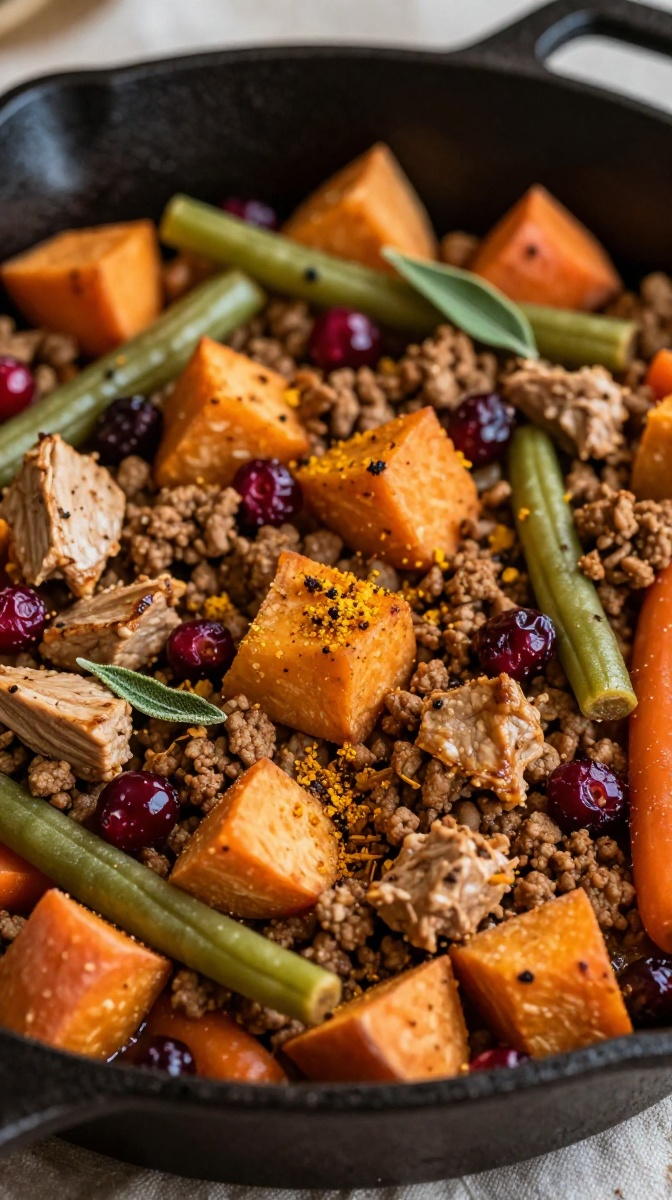
Turkey is lean and digestible, making it perfect for dogs with sensitive stomachs. Sweet potatoes add fiber and natural sweetness, while sage provides antioxidants and supports digestion.
Ingredients
- 2 pounds human-grade ground turkey (93/7)
- 2 large sweet potatoes, cubed
- 1 cup green beans, chopped
- 1 cup carrots, diced
- ½ cup cranberries (fresh or frozen—no sugar added)
- 2 tablespoons coconut oil
- 1 teaspoon sage (fresh or dried)
- 1 teaspoon turmeric
Step-by-Step Instructions
- Cook the sweet potatoes. Boil or steam sweet potato cubes until tender—about 15-20 minutes. Drain and set aside.
- Cook the turkey. Heat coconut oil in a large skillet over medium heat. Add ground turkey and cook until browned—about 8-10 minutes. Break it up with a spatula.
- Add the vegetables. Toss in the green beans and carrots. Cook for 7-8 minutes until tender.
- Add the cranberries. Stir in the cranberries and cook for 2-3 minutes until they start to pop and release their juice.
- Add the sweet potatoes. Gently fold in the cooked sweet potatoes.
- Add the herbs. Sprinkle with sage and turmeric. Stir well and heat through.
- Cool completely before serving.
Why You’ll Love It
This recipe is Thanksgiving in a bowl. The turkey is lean and gentle on digestion, while the sweet potatoes and cranberries add natural sweetness and antioxidants. Cooper’s tail wags faster for this one than almost any other recipe. The sage also helps with digestion, which is a bonus for sensitive pups.
5. Lamb, Peas & Mint Medley
The refreshing, novel-protein meal for dogs with allergies.
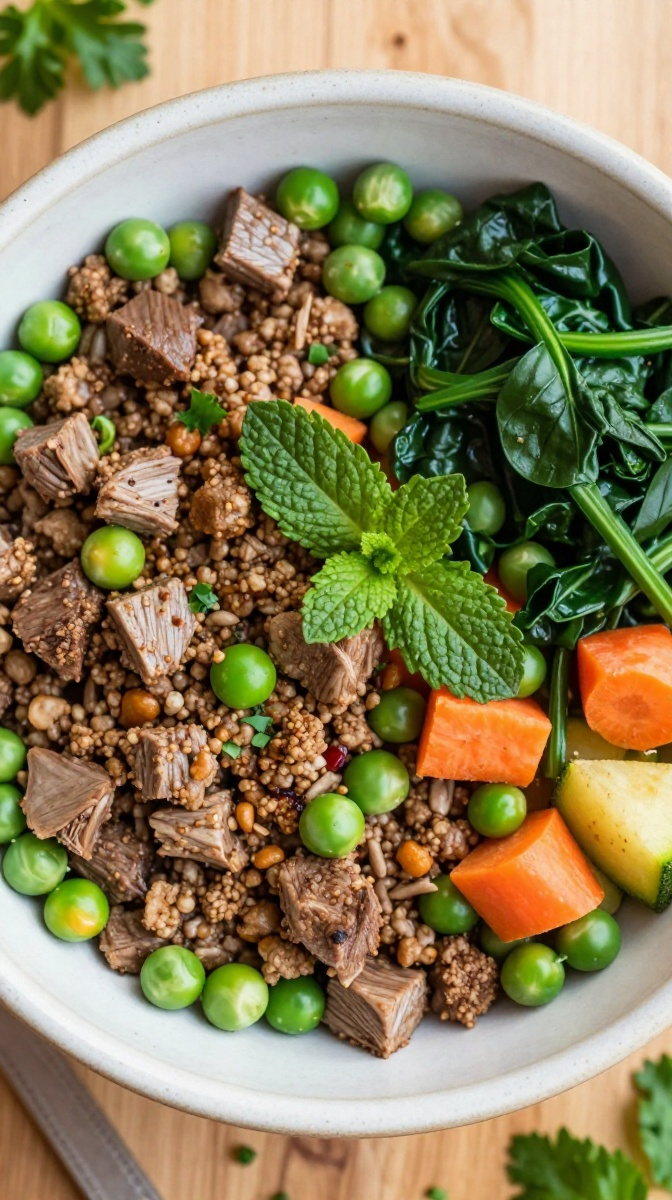
Lamb is a wonderful option for dogs with food sensitivities. Peas provide plant-based protein, and mint aids digestion and freshens breath. This recipe is light, refreshing, and incredibly flavorful.
Ingredients
- 2 pounds human-grade ground lamb
- 2 cups peas (fresh or frozen)
- 2 cups spinach, chopped
- 1 cup carrots, diced
- 1 zucchini, diced
- 2 tablespoons olive oil
- 1 teaspoon mint (fresh or dried)
- 1 teaspoon parsley
Step-by-Step Instructions
- Cook the lamb. Heat olive oil in a large skillet over medium heat. Add ground lamb and cook until browned—about 8-10 minutes. Break it up with a spatula.
- Add the vegetables. Toss in the carrots, zucchini, and peas. Cook for 8-10 minutes until tender.
- Add the spinach. Stir in the spinach during the last 2 minutes of cooking until wilted.
- Add the herbs. Sprinkle with mint and parsley, and stir well.
- Cool completely before serving.
Why You’ll Love It
This recipe is light, fresh, and perfect for dogs with food sensitivities. The lamb is a novel protein that’s less likely to trigger allergies. The mint is particularly nice—it helps with digestion and leaves your dog’s breath smelling surprisingly fresh. Cooper’s skin cleared up when I added this to his rotation.
6. Egg, Veggie & Cheese Breakfast Scramble
The protein-packed breakfast that’ll start your pup’s day right.
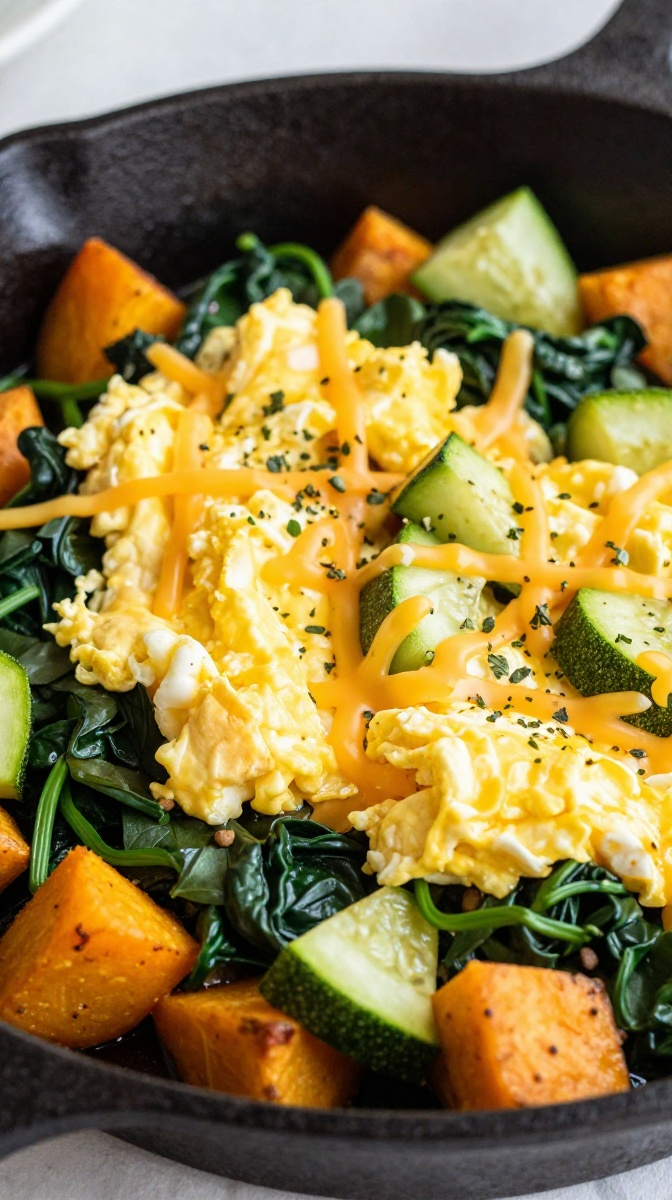
Sometimes you want something quick, and this scramble delivers in 15 minutes flat. Pasture-raised eggs are packed with protein and vitamins, while cheese (in moderation) adds calcium and a flavor boost.
Ingredients
- 6 large pasture-raised eggs
- 2 cups spinach, chopped
- 1 sweet potato, cooked and cubed
- 1 zucchini, diced
- ½ cup cheddar cheese, shredded (optional—skip for dairy-sensitive dogs)
- 2 tablespoons coconut oil
- 1 teaspoon parsley
- ½ teaspoon turmeric
Step-by-Step Instructions
- Prep the sweet potato. If you don’t have pre-cooked sweet potato, microwave or boil until tender, then cube.
- Sauté the zucchini. Heat coconut oil in a large skillet over medium heat. Add zucchini and cook for 5-6 minutes until tender.
- Add the spinach. Stir in the spinach and cook for 1-2 minutes until wilted.
- Scramble the eggs. Crack the eggs directly into the skillet and scramble until fully cooked.
- Add the sweet potato and cheese. Toss in the cooked sweet potato cubes and shredded cheddar. Cook for 2-3 minutes until heated through and the cheese is melted.
- Add the herbs. Sprinkle with parsley and turmeric, and stir well.
- Cool completely before serving.
Why You’ll Love It
This is the fastest meal in this guide—perfect for busy mornings or when you’ve forgotten to meal prep (it happens to the best of us). The eggs provide complete protein, the sweet potato adds fiber, and the cheese makes it extra special. Cooper starts doing his happy dance as soon as he hears the eggs crack.
Where to Buy Human-Grade Ingredients
Knowing where to shop saves time and money.
Grocery Stores
- Whole Foods – Excellent selection of organic, human-grade meat
- Local butchers – Can special-order human-grade cuts
- Farmers markets – Fresh, local, and often human-grade
- Costco – Great deals on human-grade chicken, beef, and fish
Online Options
- US Wellness Meats – Grass-fed, human-grade meats shipped to your door
- ButcherBox – Human-grade, grass-fed meat delivery
- Thrive Market – Organic, human-grade food delivered
What to Look For
- Meat – “Human-grade” or “USDA inspected” on the label
- Produce – “Organic” or “no pesticides”
- Eggs – “Pasture-raised” and “organic”
- Fish – “Wild-caught” is better than farmed
Saving Money
I buy human-grade meat when it’s on sale and freeze it. Cooper gets the good stuff, and I don’t go broke. FYI, buying in bulk is your best friend.
How to Transition to Human-Grade Food
A gentle transition prevents digestive upset.
The 7-Day Plan
| Day | Human-Grade | Old Food |
|---|---|---|
| 1-2 | 25% | 75% |
| 3-4 | 50% | 50% |
| 5-6 | 75% | 25% |
| 7+ | 100% | 0% |
Signs of a Successful Transition
- Eager eating
- Normal, firm stools
- Steady energy levels
- Bright eyes and coat
Signs to Slow Down
- Diarrhea
- Vomiting
- Loss of appetite
- Lethargy
What I’ve Learned
I transitioned Cooper in 10 days, and his digestion handled it perfectly. But I’ve seen friends try to do it in 3 days and end up with digestive disasters. Be patient—your dog’s health is worth the extra time.
FAQ: Human-Grade Dog Food
Is human-grade dog food really better?
Yes. Human-grade ingredients are subject to stricter safety standards and are generally higher quality. Your dog will benefit from the cleaner ingredients and better nutrition.
Can I eat the food myself?
Technically, yes, since all ingredients are human-grade. I don’t recommend eating dog food as a regular thing, but you could. (I’ve definitely tasted Cooper’s food. The salmon one is actually pretty good.)
What if I can’t afford human-grade meat?
Human-grade doesn’t mean the most expensive cuts. You can use affordable cuts like chicken thighs, ground turkey, or beef chuck. Look for sales and buy in bulk.
Is all organic food human-grade?
Not necessarily. Organic means the food was grown without pesticides. Human-grade means it meets safety standards for human consumption. They often overlap, but they’re not the same thing.
Can I feed human-grade to a puppy?
Yes, but puppies have different nutritional needs. Always consult your vet before making significant dietary changes for growing pups.
How long does homemade human-grade food last?
3-4 days in the fridge. Up to 3 months in the freezer. I portion Cooper’s food into daily containers and freeze half.
Related Articles:
- Holistic Dog Food Recipes for Overall Wellness
- Natural Homemade Dog Food Recipes with Organic Ingredients
- Complete Guide to Raw Dog Food Recipes for Balanced Nutrition
Conclusion
Feeding your dog human-grade food is one of the most loving things you can do. It’s not about being fancy—it’s about giving them the quality they deserve.
I’ve watched Cooper transform on human-grade food. His coat is silkier, his energy is steadier, and his eyes are brighter. He’s healthier at 8 years old than he was at 5. And honestly? He’s happier.
The best part? Making human-grade food for your dog isn’t much harder than cooking for yourself. It’s the same ingredients, the same techniques, just prepared with your furry friend in mind.
Start with the chicken and quinoa bowl. It’s simple, affordable, and Cooper guarantees it’s delicious. (Seriously, he’s sitting next to me right now, looking at the screen like, “Tell them about the chicken one!”)
Your dog doesn’t need to beg for better food. They trust you. And when you feed them human-grade ingredients, you’re telling them they’re worth it.
Which gourmet recipe will your pup try first? Cooper says the salmon, but honestly, he’s a bit biased toward fish.
Happy cooking, and give your finest pup a kiss from us! 😊