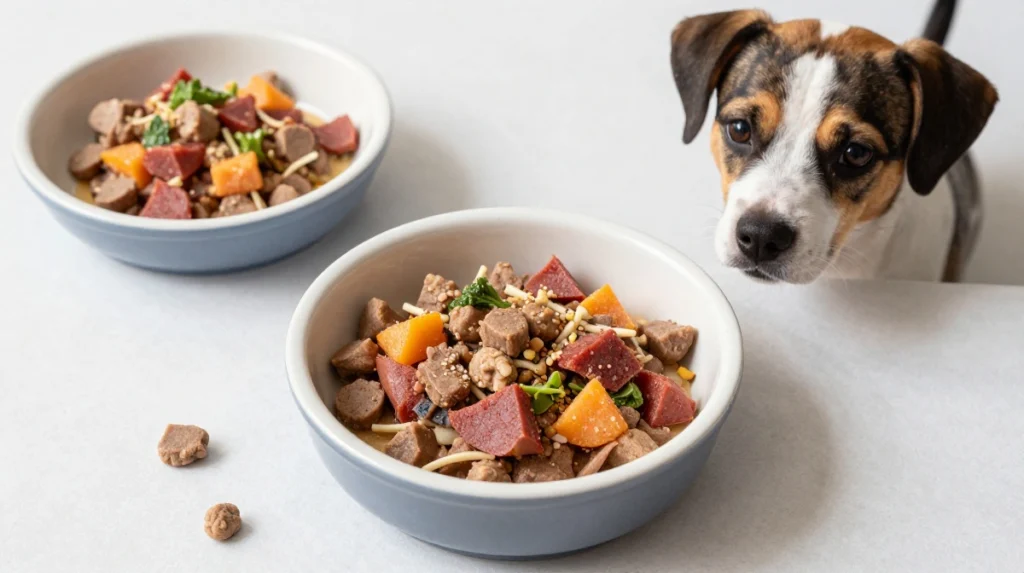
You’ve heard the buzz about raw feeding. Maybe your dog’s coat looks a little dull. Maybe they’re itching more than usual. Or maybe you’re just tired of feeding your best friend processed pellets that have been sitting on a shelf for months.
Whatever brought you here, you’re asking the right question: how do I feed raw properly?
Because let’s be honest—throwing a raw chicken leg in a bowl isn’t a balanced diet. Dogs need a precise combination of proteins, fats, vitamins, and minerals to thrive. Get it wrong, and you could be doing more harm than good.
I learned this the hard way with my German Shepherd, Ranger. I started raw feeding with enthusiasm but zero knowledge. His meals were a wild guess at best. He was fine… but fine isn’t good enough for my boy.
So I dove deep into the science. I consulted vets, studied canine nutrition, and tested dozens of recipes. Now I’m sharing everything I’ve learned so you can skip the trial-and-error phase.
This guide covers six balanced raw recipes that follow the 80/10/10 PMR (Prey Model Raw) ratio. Each one is designed to deliver complete nutrition for dogs at different life stages and activity levels.
But first, a disclaimer: always talk to your vet before switching to raw. This is especially important for puppies, seniors, or dogs with health conditions. I’m not a vet—just a passionate dog mom who loves good food.
Ready to become a raw feeding pro? Let’s go! 😀
The Science of Balanced Raw Nutrition
Before we dive into recipes, let’s understand what balance actually means.
The PMR 80/10/10 Ratio
This is the gold standard for balanced raw feeding:
- 80% muscle meat – Provides protein, amino acids, and healthy fats
- 10% raw meaty bones – Supplies calcium, phosphorus, and essential minerals
- 10% secreting organs – Delivers vitamins A, D, E, K, iron, copper, and B12
Half of the organ portion should be liver. The other half can be kidney, spleen, brain, or pancreas.
Essential Nutrients Your Dog Needs
A balanced raw diet must include:
| Nutrient | Source | Why It Matters |
|---|---|---|
| Protein | Muscle meat | Builds and repairs tissue |
| Calcium | Bones | Supports bone health and nerve function |
| Phosphorus | Bones | Works with calcium for strong bones |
| Vitamin A | Liver | Supports vision and immune function |
| Iron | Liver, spleen | Prevents anemia, supports energy |
| Taurine | Heart, tongue | Essential for heart health |
| Omega-3s | Fish, flaxseed | Reduces inflammation, supports brain health |
| Zinc | Meat, organs | Supports immune function and skin health |
Why Variety Matters
Feeding the same protein every day can lead to nutrient deficiencies. Each animal source offers a different nutritional profile:
- Chicken – Rich in B vitamins and selenium
- Beef – High in iron, zinc, and creatine
- Fish – Packed with omega-3 fatty acids
- Turkey – Lean protein with amino acids
- Lamb – Novel protein for allergy-prone dogs
- Pork – Affordable source of thiamine and B12
I rotate proteins every 3-5 days. Ranger gets chicken one week, beef the next, fish after that. It keeps his meals interesting and ensures he gets a wide range of nutrients.
What About Supplements?
High-quality raw diets often don’t need many supplements. But depending on your dog’s life stage and health, you might consider:
- Fish oil – For extra omega-3s (especially for seniors or dogs with joint issues)
- Vitamin E – A natural antioxidant (often added to balance fish oil)
- Probiotics – To support gut health during the transition
I’ve personally found that Ranger’s coat and energy levels improved dramatically when I added fish oil. But IMO, a well-balanced raw diet with variety usually covers most nutritional needs.
1. Chicken & Liver Complete Meal
The classic, budget-friendly recipe that follows PMR perfectly.
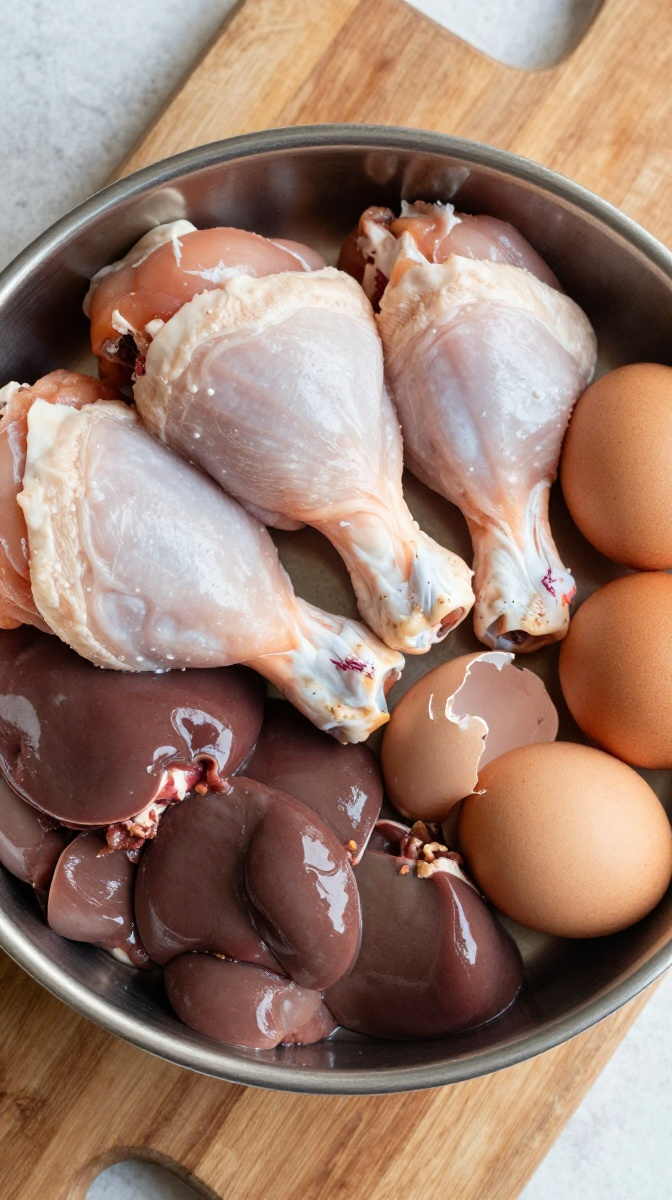
This is the recipe I recommend to every beginner. It’s affordable, easy to find ingredients, and delivers complete nutrition. Chicken is a fantastic protein for most dogs, and it’s gentle on sensitive stomachs.
Ingredients
- 4 pounds chicken thighs (bone-in, skin-on)
- 1 pound chicken necks (for calcium)
- ½ pound chicken liver
- ½ pound chicken gizzards
- 2 whole eggs (with shells, crushed)
- 1 tablespoon fish oil
- 1 teaspoon sea kelp (optional – adds trace minerals)
Step-by-Step Instructions
- Set up your workspace. Clean your counter, cutting board, and knives. Wash your hands thoroughly.
- Cut the meat. Chop chicken thighs into 2-inch chunks. Leave the skin on for healthy fats.
- Grind the bones. Run chicken necks through a meat grinder. If you don’t have one, offer them whole under supervision.
- Chop the organs. Dice livers and gizzards into small pieces.
- Crush the eggshells. Rinse eggs, crush shells, and add them to the mix.
- Combine everything. Mix all ingredients in a large bowl. Add fish oil and sea kelp (if using), and stir well.
- Portion and freeze. Divide into daily portions. Use within 3 days in the fridge or freeze for up to 3 months.
Why You’ll Love It
This recipe is the perfect starting point for raw feeding. It’s nutritionally complete, budget-friendly, and uses ingredients from any grocery store. Ranger’s coat went from dull to gleaming within three weeks of eating this. The raw bones also cleaned his teeth so effectively that my vet actually complimented his oral health.
2. Beef & Heart Protein Powerhouse
The iron-rich, muscle-building meal for active dogs.
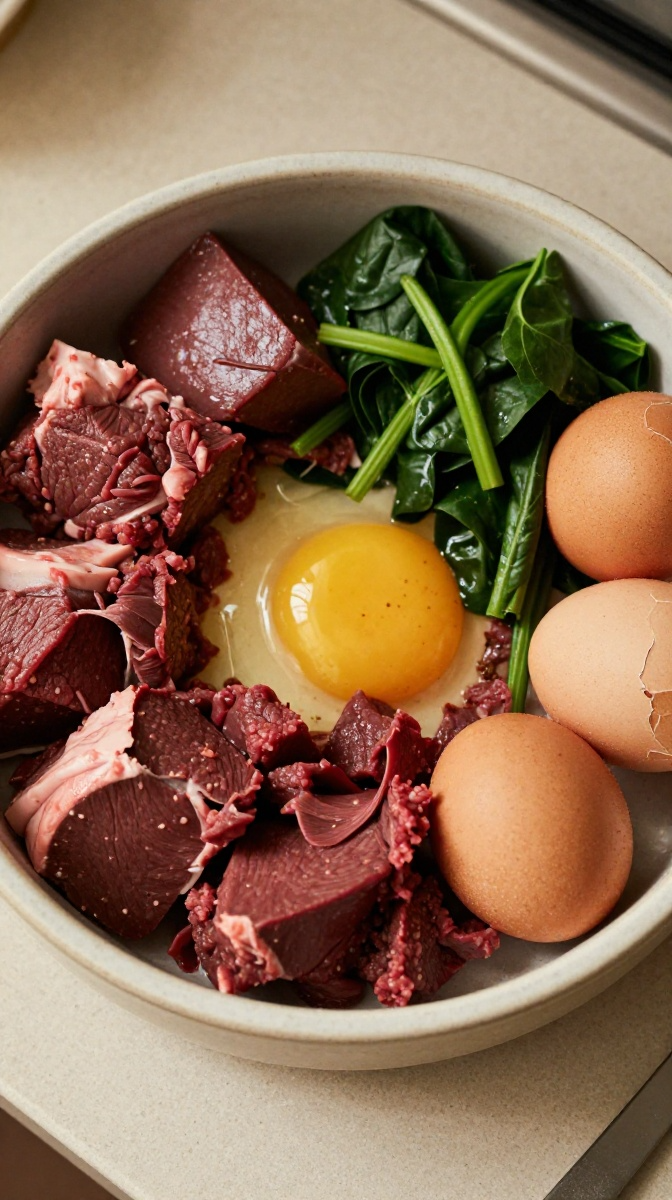
Beef is one of the most nutrient-dense proteins you can feed your dog. Combined with beef heart (packed with taurine and CoQ10), this recipe supports heart health, muscle development, and steady energy.
Ingredients
- 4 pounds beef chuck roast (cut into chunks)
- 1 pound beef heart
- ½ pound beef liver
- ½ pound beef kidney (or more liver if unavailable)
- 1 cup spinach, chopped (optional – adds trace minerals)
- 1 tablespoon flaxseed oil
- 2 eggs with shells, crushed
- 1 tablespoon powdered bone meal (if no bones)
Step-by-Step Instructions
- Prep the beef. Cut the chuck roast into 2-inch chunks. Leave some fat—it provides energy and supports skin health.
- Chop the heart. Dice beef heart into small pieces. Treat it as muscle meat, not an organ.
- Grind or chop bones. If using beef neck bones, grind them. Without a grinder, skip and use bone meal powder (1 tablespoon per pound of meat).
- Chop the organs. Dice the liver and kidney.
- Add the spinach. Chop it finely and mix in.
- Combine everything. Mix all ingredients in a large bowl with flaxseed oil.
- Portion and freeze. Store in the fridge for up to 3 days or freeze for 3 months.
Why You’ll Love It
Beef is a fantastic protein for building lean muscle and maintaining energy. The heart is one of the most nutrient-dense organs—it’s rich in taurine, which supports heart health, and CoQ10, which protects cells. Ranger’s stamina noticeably improved when I added this to his rotation.
3. Salmon & Sardine Omega-3 Boost
The joint-supporting, brain-boosting meal for senior dogs.
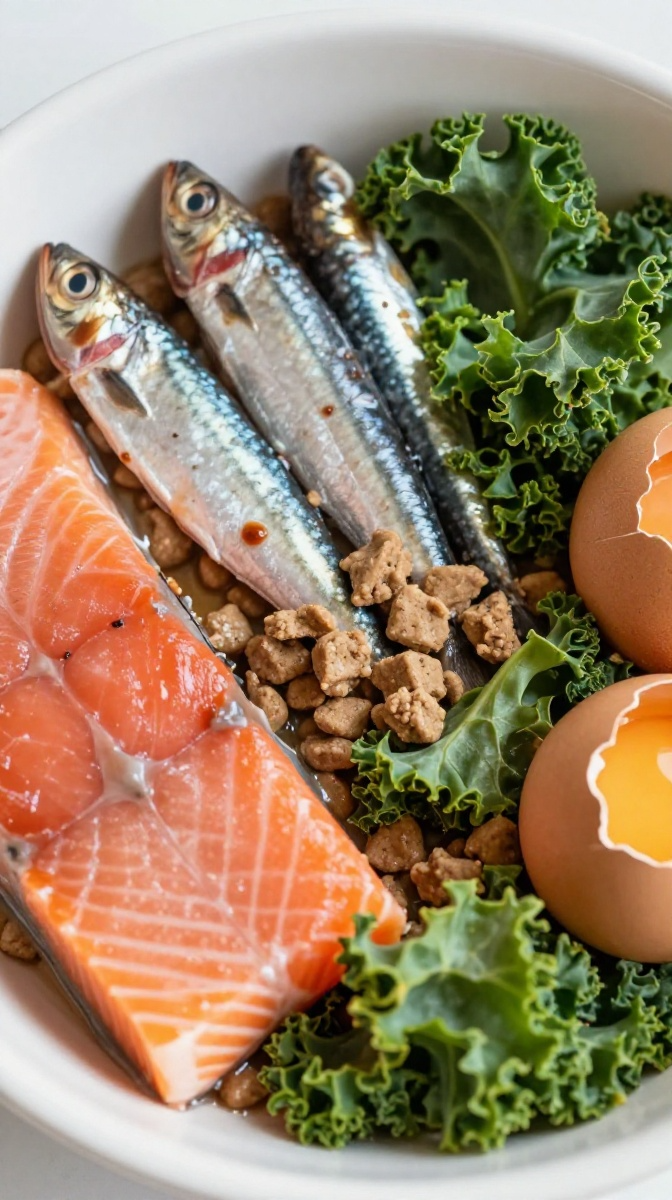
Fish is the ultimate source of omega-3 fatty acids. These essential fats reduce inflammation, support brain function, and keep skin and coats healthy. This recipe is perfect for older dogs or those with joint issues.
Ingredients
- 3 pounds fresh salmon fillets (or canned wild salmon)
- 1 pound sardines in water (no salt added)
- ½ pound fish liver (or chicken liver if unavailable)
- ½ pound fish roe or hearts
- 4 whole eggs with shells, crushed
- 1 cup kale, chopped (adds vitamins A, C, K)
- 1 tablespoon coconut oil
Step-by-Step Instructions
- Prep the fish. If using whole fish, remove the head and tail. Cut into chunks.
- Drain the sardines. Rinse to remove excess salt.
- Chop the organs. Dice fish liver and hearts.
- Chop the kale. Finely chop for easier digestion.
- Crush the eggshells. Add them for extra calcium.
- Combine everything. Mix all ingredients in a large bowl with coconut oil.
- Portion and freeze. Use within 2-3 days in the fridge or freeze for up to 2 months.
Why You’ll Love It
This recipe is a nutritional powerhouse for senior dogs or those with joint concerns. The omega-3s reduce inflammation, support mobility, and keep the brain sharp. Ranger’s vet noticed his joints were more flexible after a month of this recipe. FYI, the fish also makes his coat so shiny that strangers comment on it.
4. Turkey & Pumpkin Digestive Support
The gentle, low-fat meal for sensitive stomachs.

Turkey is a lean protein that’s easy on digestion. Pumpkin is a prebiotic that supports gut health and helps regulate bowel movements. This recipe is perfect for dogs with sensitive tummies or during the transition phase.
Ingredients
- 4 pounds ground turkey (with bone if possible)
- 1 pound turkey necks (for calcium)
- ½ pound turkey livers
- ½ pound turkey gizzards
- ½ cup pumpkin puree (plain—not pie filling)
- 2 eggs with shells, crushed
- 1 tablespoon olive oil
Step-by-Step Instructions
- Prep the turkey. If you have a grinder, grind turkey with bones. Otherwise, use ground turkey and add a separate calcium source.
- Grind or chop necks. Process turkey necks if possible. Offer whole if you don’t have a grinder.
- Chop the organs. Dice livers and gizzards.
- Add the pumpkin. Mix with olive oil for better absorption.
- Crush the eggshells. Add to the mix.
- Combine everything. Mix thoroughly in a large bowl.
- Portion and freeze. Use within 3 days or freeze for up to 3 months.
Why You’ll Love It
This recipe is incredibly gentle on the digestive system. The lean turkey provides high-quality protein without excess fat, while pumpkin soothes the gut and provides fiber. I wish I’d known about this recipe when I first switched Ranger to raw—it would have saved us both a lot of discomfort.
5. Lamb & Greens Novel Protein
The allergy-friendly meal for dogs with food sensitivities.
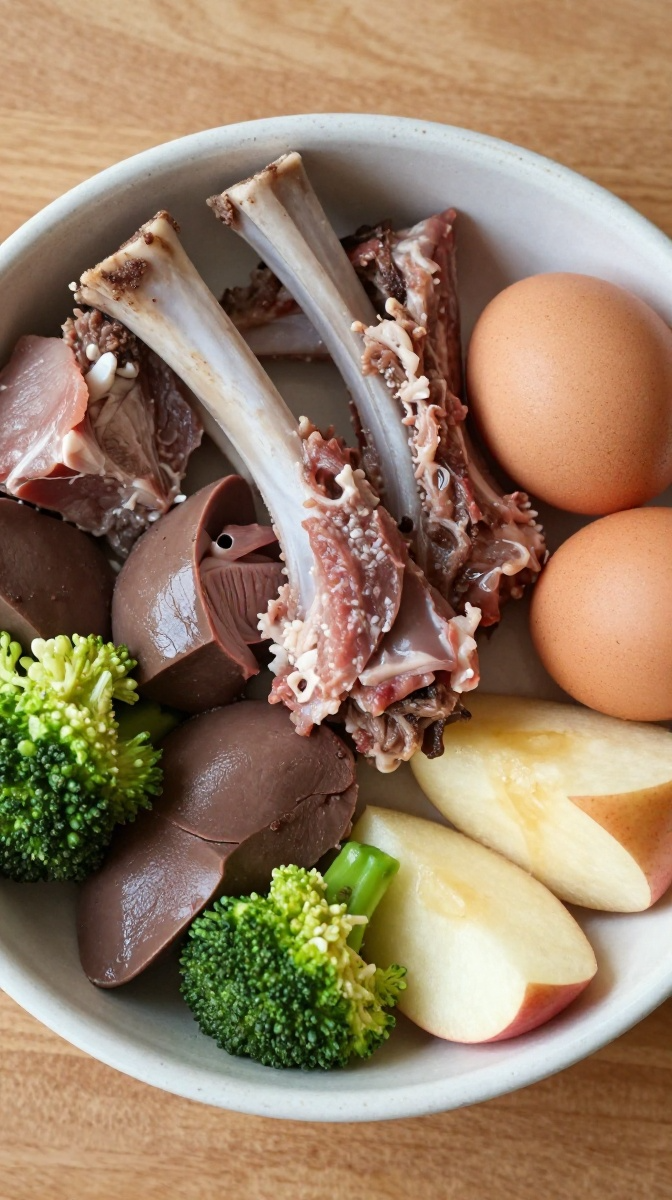
Lamb is a “novel” protein, meaning most dogs haven’t been exposed to it, so it’s less likely to trigger allergies. Combined with leafy greens, this recipe is packed with vitamins and minerals.
Ingredients
- 4 pounds lamb shoulder (bone-in if possible)
- 1 pound lamb bones (necks or ribs)
- ½ pound lamb liver
- ½ pound lamb kidney (or extra liver)
- 1 cup broccoli, chopped small
- 1 apple, cored and chopped
- 2 eggs with shells, crushed
- 1 tablespoon coconut oil
Step-by-Step Instructions
- Cut the lamb. Cube lamb shoulder into 2-inch pieces. Leave some fat.
- Grind the bones. Process lamb bones if you have a grinder. Offer whole if not.
- Chop the organs. Dice liver and kidney.
- Chop the veggies and apple. Make small pieces for easier digestion.
- Crush the eggshells. Add to the mix.
- Combine everything. Mix all ingredients with coconut oil.
- Portion and freeze. Store in the fridge for up to 5 days or freeze for 3 months.
Why You’ll Love It
Lamb is a fantastic option for dogs with sensitive skin or food allergies. The apple adds natural sweetness and enzymes, while the broccoli provides vitamins and fiber. Ranger’s skin improved dramatically when I added lamb to his rotation—no more itching or hot spots.
6. Pork & Veggie Complete Meal
The budget-friendly, nutrient-dense option for everyday feeding.
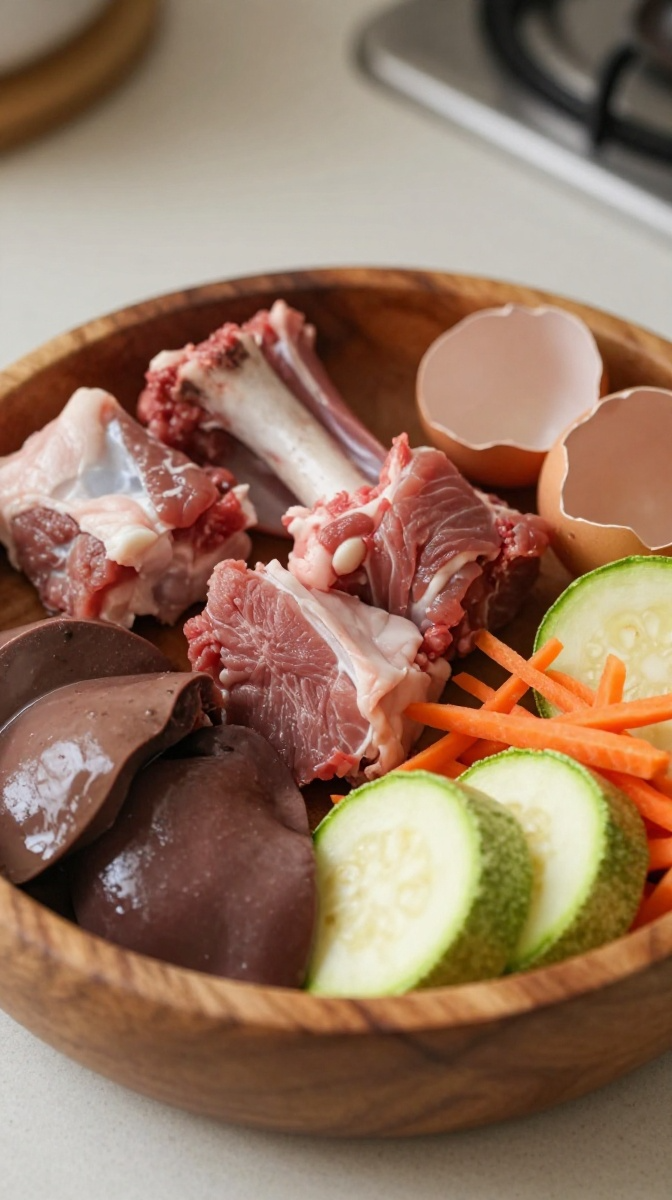
Pork is often cheaper than other proteins but just as nutritious. It’s rich in thiamine, B12, and zinc. This recipe delivers complete nutrition at a wallet-friendly price.
Ingredients
- 4 pounds pork shoulder (boneless or with bones)
- 1 pound pork bones (necks or ribs)
- ½ pound pork liver
- ½ pound pork kidney
- 1 cup carrots, grated
- 1 zucchini, diced
- 2 eggs with shells, crushed
- 1 tablespoon flaxseed oil
Step-by-Step Instructions
- Cut the pork. Cube pork shoulder into 2-inch chunks.
- Grind the bones. Process pork bones if possible. Offer whole if you don’t have a grinder.
- Chop the organs. Dice liver and kidney.
- Grate the veggies. Carrots and zucchini should be small for easy digestion.
- Crush the eggshells. Add to the mix.
- Combine everything. Mix all ingredients with flaxseed oil.
- Portion and freeze. Use within 3 days or freeze for up to 3 months.
Why You’ll Love It
Pork is an underrated protein that’s often more affordable than beef or lamb. The zinc and B vitamins support immune function and energy metabolism. I love that I can make this recipe for under $10—it’s my budget-friendly staple while still being nutritionally complete.
How to Calculate Daily Portions
Feeding the right amount is just as important as feeding the right things.
The 2-3% Rule
A general guideline: feed 2-3% of your dog’s ideal body weight per day.
- Less active dogs → 2%
- Average activity → 2.5%
- Working or very active dogs → 3-4%
Example Calculations
| Dog’s Weight | Daily Portion at 2% | Daily Portion at 3% |
|---|---|---|
| 25 lbs | 8 oz (0.5 lb) | 12 oz (0.75 lb) |
| 50 lbs | 16 oz (1 lb) | 24 oz (1.5 lb) |
| 75 lbs | 24 oz (1.5 lb) | 36 oz (2.25 lb) |
| 100 lbs | 32 oz (2 lb) | 48 oz (3 lb) |
Adjusting Up or Down
Look at your dog’s body condition, not just the number on the scale:
- Can you easily feel the ribs with slight fat cover? → Perfect
- Ribs are visible or feel sharp → Need more food
- Can’t feel the ribs → Need less food
Portioning Tips
I portion Ranger’s food into daily bags or containers. Each morning, I grab a bag, thaw it in the fridge overnight, and serve. It takes 2 minutes and saves so much time.
Supplementing for Complete Nutrition
While balanced raw food provides most nutrients, some dogs benefit from supplements.
When to Add Supplements
- For senior dogs – Joint support and extra omega-3s
- For puppies – Higher calcium needs (discuss with your vet)
- For allergies – Omega-3s to reduce inflammation
- For finicky eaters – Probiotics for digestive support
Recommended Supplements
- Fish oil – 1,000 mg per 20 lbs of body weight daily
- Vitamin E – 50-100 IU per 20 lbs (balances fish oil)
- Probiotics – As directed on the package
- Sea kelp – ½ teaspoon per 20 lbs (provides iodine and trace minerals)
My Honest Opinion
I used to over-supplement. Then I learned that balanced raw food already provides most nutrients. Now, I only add fish oil for Ranger’s joints and a probiotic when he’s transitioning to a new protein. Less is often more.
How to Transition to Raw Successfully
A slow, careful transition prevents digestive upset.
The 7-Day Transition Plan
| Day | Raw Portion | Old Food Portion |
|---|---|---|
| 1-2 | 25% | 75% |
| 3-4 | 50% | 50% |
| 5-6 | 75% | 25% |
| 7+ | 100% | 0% |
What to Watch For
Normal adjustment symptoms:
- Slight soft stool (normal in the first week)
- Mild gas (their digestive system is adapting)
- Reduced appetite (some dogs are cautious at first)
When to slow down:
- Diarrhea lasting more than 24 hours
- Vomiting
- Loss of appetite for more than 24 hours
If you see these signs, slow down the transition. Give more of the old food until their system adjusts.
My Transition Story
I learned this the hard way. I went too fast with Ranger, and he had diarrhea for three days. It was messy. So messy. Now I always tell people: take it slow. There’s no rush. Your dog’s health isn’t a race.
Raw Feeding FAQs for Balanced Nutrition
Quick answers to the most common questions.
Does raw food provide all the nutrients my dog needs?
Yes! A properly balanced raw diet following the 80/10/10 PMR ratio provides complete and balanced nutrition. The variety of proteins ensures a full spectrum of vitamins and minerals.
Is a raw diet safe for my dog?
Yes, when handled properly. Raw diets have been shown to be safe for healthy dogs. Follow basic food safety protocols, and your dog’s digestive system will do the rest.
Can I feed raw to an older dog?
Absolutely. Raw food can support joint health, improve skin and coat condition, and boost energy in senior dogs. Many vets recommend raw for older dogs with arthritis or dental issues.
How do I know my dog is getting enough calcium?
Raw meaty bones are the best source. Follow the 10% bone guideline. If you can’t feed bones, add bone meal powder (1 tablespoon per pound of meat).
What if I can’t find organ meat?
Organ meat is essential for balanced nutrition. Most grocery stores carry chicken livers and beef liver. For other organs, try local butchers or ethnic markets. If you absolutely can’t find them, use a supplement designed for raw feeders.
Can I feed the same recipe every day?
No! Rotation is essential for balanced nutrition. Each protein source offers different nutrients. I recommend rotating through at least 3-4 different proteins over time.
Related Articles:
- The Ultimate Raw Dog Food Recipe Guide for Beginners
- Keto Dog Food Recipes for Weight Management
- High-Protein Homemade Dog Food for Working Dogs
Conclusion
Congratulations—you’ve made it through the complete guide to balanced raw feeding! 🎉
Let me leave you with the most important things I’ve learned on this journey:
Start simple. The chicken recipe is your best friend. It’s affordable, easy to make, and nutritionally complete.
Rotate proteins. Variety is the key to balanced nutrition. Don’t get stuck feeding the same thing every day.
Trust your dog’s body condition. The scale is helpful, but your hands are better. Can you feel the ribs? Can you see a waistline? Those are better indicators than a number.
Don’t stress about perfection. When I started raw feeding, I was so worried about getting every ratio exactly right. Then I realized that nature is forgiving. Dogs evolved to eat varied diets. Your dog will be fine with some wiggle room.
Watch the transformation. This is the fun part. Watch your dog’s coat get shinier, their teeth get cleaner, their energy get stronger. It’s amazing to witness.
Ranger’s energy, coat, and overall health have never been better. He’s proof that raw feeding works when done right.
So go ahead. Try one of these recipes. Start slowly. And get ready to watch your dog thrive.
Which recipe will you try first? I’d love to hear about your journey—drop me a comment and let me know how it goes! 😊