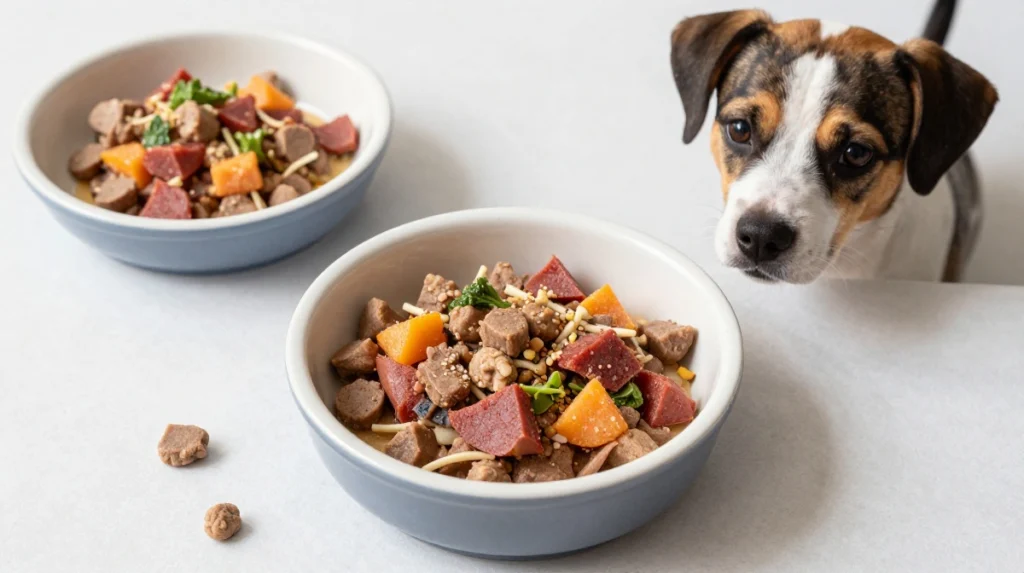
Let me guess. You’ve been staring at bags of kibble wondering what’s actually inside them. The ingredient list looks like a chemistry experiment, and your dog is… fine. Just fine. But you can’t shake the feeling that they could be thriving, not just surviving.
I felt exactly the same way.
When I first started researching raw feeding for my German Shepherd, Ranger, I felt completely overwhelmed. There was so much conflicting advice. “Feed bones!” “Never feed bones!” “You need organ meat!” “Actually, you need SEVEN types of organ meat!” The internet is a wild place, isn’t it? :/
So I did what any reasonable person would do. I bought a bunch of raw meat, made a huge mess in my kitchen, and hoped for the best.
And honestly? It worked.
Ranger went from having a dull coat and “meh” energy levels to looking like he just stepped off a dog food commercial. His teeth got cleaner. His poops got smaller and less smelly (yes, this is a thing). And he started doing this happy dance every time I opened the fridge—you know the one.
Now I’m here to save you from the chaos I went through. This guide is for absolute beginners who want to feed raw but don’t know where to start. We’ll cover the basics, address your fears (I had them too), and give you six simple, balanced recipes that actually work.
FYI, always talk to your vet before switching to raw. Some dogs have health conditions that require special diets. This is especially important for puppies, seniors, or dogs with compromised immune systems.
Ready to join the raw feeding club? Let’s get into it!
The Raw Feeding Basics: What Every Beginner Needs to Know
Before we dive into the recipes, let’s cover the essentials.
Why Feed Raw?
Let’s be real—dogs didn’t evolve eating kibble. They evolved eating whole prey. That means meat, bones, organs, and whatever plants happened to be in the stomach. A raw diet aims to mimic that natural eating pattern.
The benefits I’ve seen with Ranger:
- Shinier coat—seriously, people comment on it all the time
- Cleaner teeth—no more “dog breath” that clears a room
- Better energy—he’s got stamina for days
- Smaller poops—because he’s actually absorbing the nutrients
- Improved skin—no more itchy spots
The 80/10/10 Rule Explained
This is the golden ratio of raw feeding. It’s not set in stone, but it’s a fantastic starting point.
- 80% muscle meat (chicken, beef, turkey, fish)
- 10% raw meaty bones (necks, wings, ribs—for calcium)
- 10% organs (liver is essential; other organs like kidney, spleen, or heart are optional)
I’ll be honest—the first time I weighed out organ meat, I felt like a mad scientist. But you get used to it quickly. And your dog will love you for it.
Safety Protocol (Don’t Skip This)
Raw feeding comes with responsibilities. Here’s what I’ve learned:
- Wash everything—your hands, cutting boards, bowls, counters. Use hot soapy water.
- Designate a cutting board—keep one board just for raw meat
- Thaw in the fridge—never on the counter
- Keep it cold—raw food goes bad fast. Prep in batches and freeze what you won’t use in 3 days
- No cooked bones—this is non-negotiable. Cooked bones splinter and can be deadly. Raw bones are safe.
I used to be so paranoid about bacteria. But honestly? Treat raw meat the same way you would when cooking for yourself, and you’ll be fine. Dogs’ digestive systems are designed to handle bacteria that would make us sick.
What You’ll Need to Get Started
You don’t need fancy equipment. Here’s what I use:
- A large cutting board (designated for raw meat)
- Sharp knives
- A meat grinder (optional but helpful for bone-in meats)
- Freezer-safe containers or Ziploc bags
- A kitchen scale for weighing portions
- Paper towels (you’ll use a lot)
How Much to Feed
A general rule of thumb: feed 2-3% of your dog’s ideal adult body weight per day.
For example:
- 50-pound dog → 1 to 1.5 pounds per day
- 75-pound dog → 1.5 to 2.25 pounds per day
- 100-pound dog → 2 to 3 pounds per day
Adjust up or down based on your dog’s activity level and body condition. Working dogs need more. Couch potatoes need less.
1. Beginner’s Chicken & Bone Meal
The easiest, most affordable raw meal to start with—practically foolproof.
This is where I started, and it’s still my go-to recipe. Chicken is cheap, widely available, and dogs go absolutely bonkers for it. The chicken necks provide natural calcium and help scrape plaque off teeth.
Ingredients
- 4 pounds chicken thighs (bone-in, skin-on for healthy fat)
- 1 pound chicken necks (or wings for calcium)
- ½ pound chicken livers
- ½ pound chicken gizzards
- 2 eggs (shells included for extra calcium)
- 1 tablespoon fish oil (omega-3 boost)
Step-by-Step Instructions
- Set up your workspace. Clean your counter, cutting board, and knives. Wash your hands thoroughly.
- Cut the meat. Chop the chicken thighs into chunks about 2 inches wide. Bigger pieces are fine for larger dogs; smaller dogs need smaller chunks.
- Add the necks. If you have a meat grinder, grind the chicken necks. If not, you can offer them whole or chopped—always supervise your dog with whole bones.
- Chop the organs. Cut the livers and gizzards into small pieces. The strong smell might bother you, but your dog will love it.
- Crush the eggshells. Rinse the eggs, crush the shells with your fingers, a rolling pin, or a mortar, and add them to the mix.
- Combine everything. Mix all ingredients in a large bowl. Add the fish oil and stir until evenly distributed.
- Portion and freeze. Divide the mixture into daily portions. Freeze what you won’t use in the next 3 days.
Why You’ll Love It
This recipe follows the 80/10/10 rule perfectly, making it nutritionally balanced. It’s affordable and uses ingredients from any grocery store. Ranger literally spins in circles when he sees me getting this out. The raw bones cleaned his teeth within weeks, and his breath improved so much that I actually let him give me kisses again.
2. Beef & Organ Mix with Greens
The iron-rich red meat option for dogs who need extra energy.
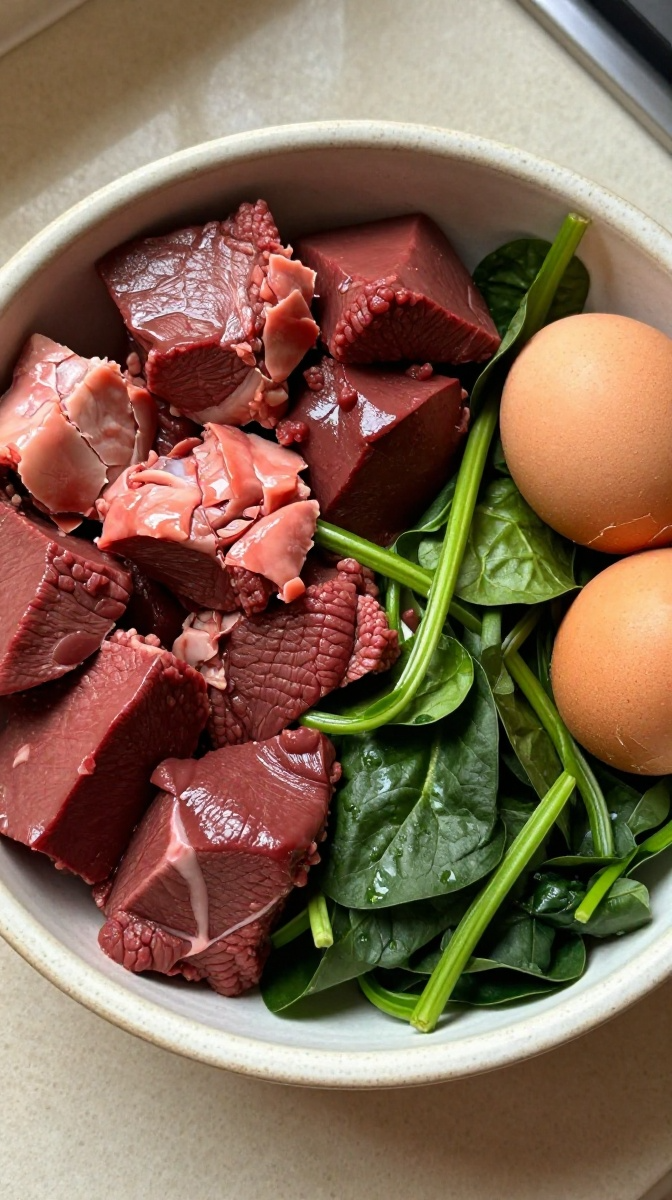
Beef is packed with iron, zinc, and B vitamins. It’s a fantastic muscle-building protein that keeps your dog strong and energized. I add a little spinach for extra nutrients, though dogs don’t need many veggies—think of them as a tiny bonus.
Ingredients
- 4 pounds beef chuck roast (cut into chunks—look for sales)
- 1 pound beef heart (cheap and loaded with nutrients)
- ½ pound beef liver
- ½ pound beef kidney (or more liver if you can’t find kidney)
- 1 cup fresh spinach, chopped
- 1 tablespoon flaxseed oil
- 2 eggs with shells
Step-by-Step Instructions
- Prep the beef. Cut the chuck roast into 2-inch chunks. Leave some fat—dogs need it.
- Chop the organs. Dice the beef heart, liver, and kidney into small pieces. Heart is actually a muscle, so you can treat it like regular meat.
- Grind or chop bones. If you want to add bone, use beef neck bones or ground bone meal. Without a grinder, skip beef bones and use bone meal powder (1 tablespoon per pound of meat).
- Add the spinach. Chop it finely so it blends in easily.
- Crush the eggshells. Add them for extra calcium.
- Combine everything. Mix all ingredients in a large bowl with the flaxseed oil.
- Portion and freeze. Use within 3-5 days in the fridge or freeze for up to 3 months.
Why You’ll Love It
Beef builds muscle and provides lasting energy for active dogs. The heart is one of the most nutrient-dense foods you can give your dog—it’s packed with taurine and CoQ10. Ranger’s coat became so shiny after I added beef to his rotation that strangers would stop me on walks to ask what I was feeding him.
3. Turkey & Sardine Feast
The lean protein and omega-3 combo for joint health and a glossy coat.
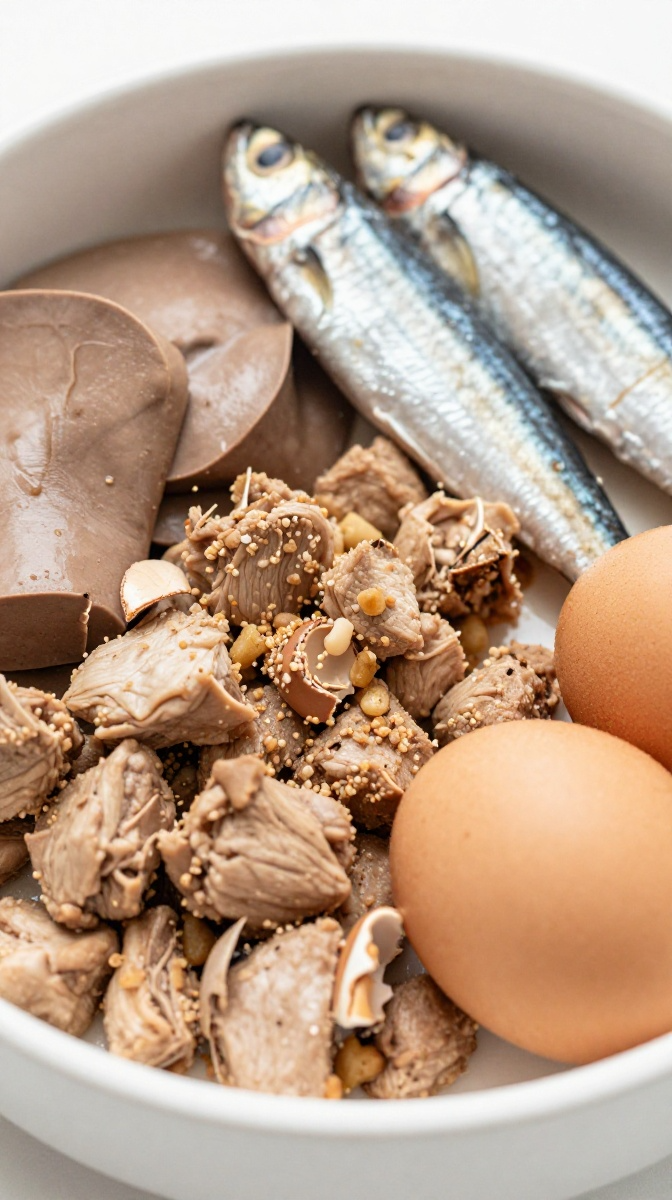
Turkey is leaner than beef, making it perfect for dogs who need to maintain a healthy weight. Sardines are a budget-friendly superfood packed with omega-3s that reduce inflammation and support brain health.
Ingredients
- 4 pounds ground turkey (with bones is ideal if you can find it)
- 2 cans sardines in water (no salt added)
- ½ pound turkey livers
- ½ pound turkey gizzards
- 2 eggs with shells
- 1 tablespoon coconut oil
Step-by-Step Instructions
- Prep the turkey. If you have a grinder, grind your own turkey with bones. If not, use ground turkey and add a separate calcium source.
- Drain the sardines. Rinse them to remove any excess salt. No chopping needed—they’re already soft.
- Chop the organs. Dice the turkey livers and gizzards into small pieces.
- Crush the eggshells. Add them to the mix for calcium.
- Combine everything. Mix ground turkey, sardines, organs, eggshells, and coconut oil in a large bowl.
- Mix well. Use your hands (gloved!) to combine thoroughly.
- Portion and freeze. Keep in the fridge for up to 3 days or freeze for up to 3 months.
Why You’ll Love It
This is the ultimate joint-supporting meal. The omega-3s from sardines reduce inflammation, and the lean turkey provides high-quality protein without excess fat. Ranger’s vet noticed the difference in his mobility within a month of adding this to his rotation. I also love that sardines are cheap—canned fish is an affordable superfood.
4. Pork & Pumpkin Protein Bowl
The budget-friendly, digestion-friendly option for sensitive stomachs.
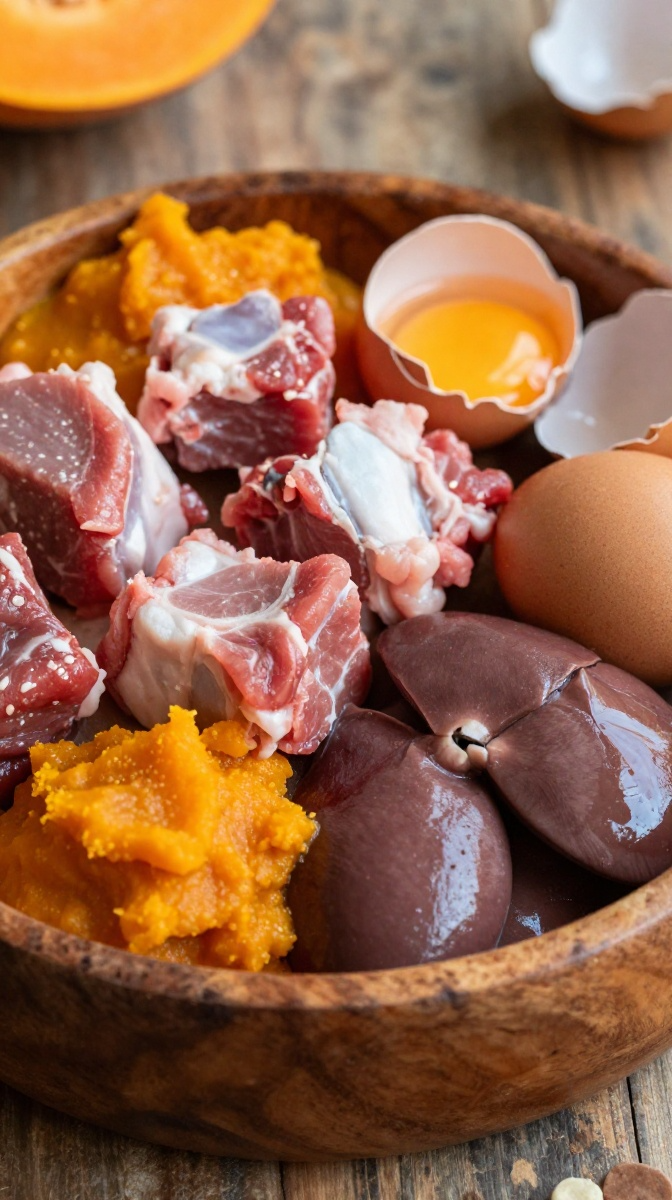
Pork is criminally underrated in dog food. It’s often cheaper than beef or chicken, and it’s delicious. Pumpkin adds fiber that supports digestion, making this perfect for dogs with sensitive stomachs.
Ingredients
- 4 pounds boneless pork shoulder (or pork chops)
- 1 pound pork bones (necks or ribs)
- ½ pound pork liver
- ½ pound pork kidney (or extra liver)
- ½ cup pumpkin puree (plain—not pie filling!)
- 2 eggs with shells
- 1 tablespoon olive oil
Step-by-Step Instructions
- Cut the pork. Cube the pork shoulder into 2-inch chunks. Keep some fat—it’s good for them.
- Grind or chop the bones. If you have a grinder, process the pork bones. If not, offer them whole under supervision.
- Chop the organs. Dice the liver and kidney into small pieces.
- Mix the pumpkin. Combine the pumpkin puree with the olive oil.
- Crush the eggshells. Add them to the mix.
- Combine everything. Mix all ingredients thoroughly in a large bowl.
- Portion and freeze. Use within 3 days or freeze for up to 3 months.
Why You’ll Love It
Pork is often cheaper than other proteins, making it a budget-friendly option for raw feeders. The pumpkin is a digestive superstar—it helps with both constipation and diarrhea. Ranger had some tummy issues when I first switched to raw, and this recipe was the one that finally settled his stomach. FYI, the pumpkin also makes his coat super glossy.
5. Fish & Egg Protein Mix
The seafood option that supports brain function and reduces inflammation.
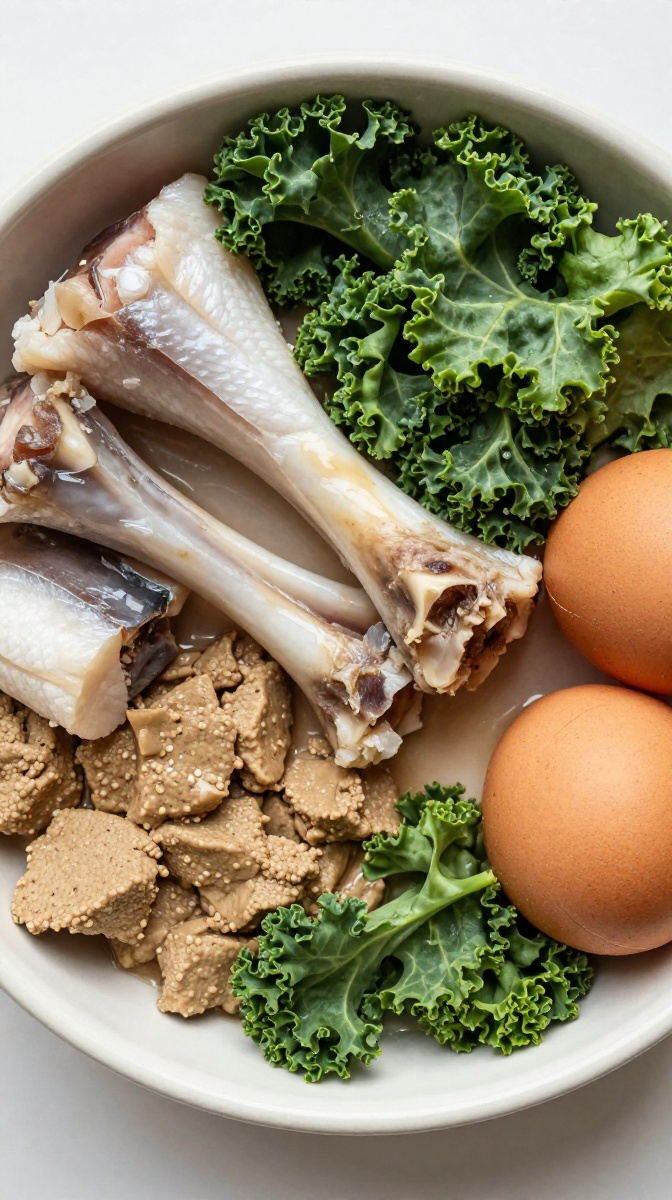
Variety is crucial in a raw diet. Different proteins offer different nutrients. This fish and egg combo gives your dog a break from land animals and adds those brain-boosting, coat-shining omega-3s.
Ingredients
- 4 pounds fresh fish (salmon, sardines, mackerel—any oily fish)
- 1 pound fish bones (grind or skip if using bone-in fish)
- ½ pound fish liver (or use chicken liver if unavailable)
- ½ pound fish roe or hearts
- 4 eggs with shells
- 1 tablespoon fish oil (extra omega-3 boost)
- 1 cup kale, chopped
Step-by-Step Instructions
- Prep the fish. If using whole fish, remove the head and tail. Cut into chunks.
- Grind the bones. Fish bones are softer than land animal bones. A grinder works well.
- Chop the organs. Dice the fish liver and hearts into small pieces.
- Chop the kale. Finely chop the kale (spinach works too).
- Crush the eggshells. Add them to the mix.
- Combine everything. Mix the fish, organs, kale, eggshells, and fish oil together.
- Portion and freeze. Fish is best used within 2-3 days or frozen for up to 2 months.
Why You’ll Love It
Fish is the ultimate brain and coat food. The omega-3s support cognitive function, reduce inflammation, and create that beautiful glossy coat. Ranger gets so many compliments on his shiny fur now that people think he’s a show dog. It’s also fantastic for older dogs who need joint support—I wish I’d started this earlier.
6. Lamb & Veggie Mix
The novel protein for dogs with food allergies or sensitivities.
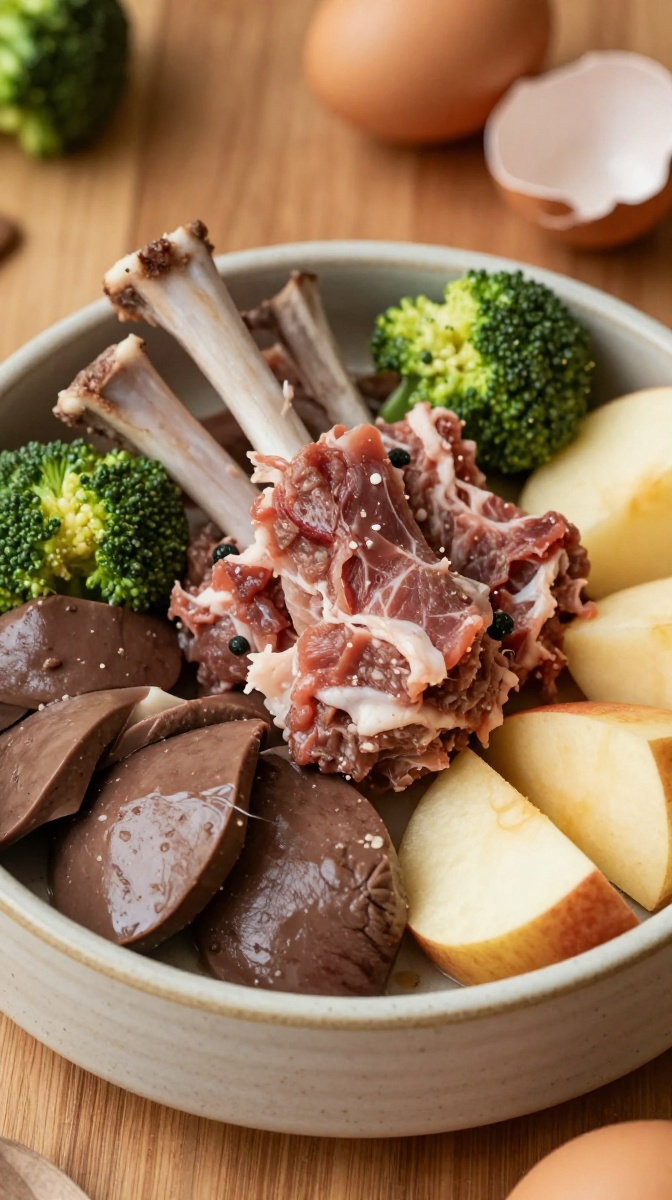
If your dog has food allergies, lamb is often recommended as a “novel” protein—meaning most dogs haven’t been exposed to it, so they’re less likely to react. The apple adds a touch of sweetness that dogs love.
Ingredients
- 4 pounds lamb shoulder (bone-in if possible)
- 1 pound lamb bones (necks or ribs)
- ½ pound lamb liver
- ½ pound lamb kidney (or extra liver)
- 1 cup broccoli, chopped
- 1 apple, cored and chopped
- 2 eggs with shells
- 1 tablespoon coconut oil
Step-by-Step Instructions
- Cut the lamb. Cube the lamb shoulder into 2-inch pieces. Lamb fat is rich and flavorful.
- Grind the bones. Process the lamb bones if you have a grinder. Offer them whole if not.
- Chop the organs. Dice the liver and kidney into small pieces.
- Chop the veggies and apple. Make them small enough for easy digestion.
- Crush the eggshells. Add them to the mix.
- Combine everything. Mix all ingredients thoroughly with coconut oil.
- Portion and freeze. Use within 3-5 days or freeze for up to 3 months.
Why You’ll Love It
Lamb is a fantastic option for dogs with sensitive skin or food allergies. The apple adds natural sweetness, and the broccoli provides essential vitamins and fiber. Ranger’s skin improved dramatically when I added lamb to his rotation. Just be prepared for your kitchen to smell like… well, lamb. It’s a distinct aroma. But your dog won’t care one bit.
How to Transition Your Dog to Raw Food
Don’t just switch overnight. Your dog’s stomach needs time to adjust.
The Safe Transition Method
- Days 1-3: 25% raw, 75% current food
- Days 4-6: 50% raw, 50% current food
- Days 7-9: 75% raw, 25% current food
- Day 10: 100% raw
Signs You’re Moving Too Fast
- Diarrhea or very loose stools
- Vomiting
- Lack of appetite
- Excessive gas (some is normal—a lot isn’t)
What I Learned from My Mistakes
I switched Ranger too fast. I was so excited about raw feeding that I went from 0 to 100 in three days. Big mistake. Huge. Let’s just say I spent a lot of time cleaning up after him. Take it slow. Your dog’s gut needs time to adjust to digesting raw meat. Patience really is a virtue here.
Related Articles:
- Keto Dog Food Recipes for Weight Management
- High-Protein Homemade Dog Food for Working Dogs
- Easy Vegan Dog Food Recipes for Plant-Based Pups
Raw Feeding FAQs for Beginners
Are raw bones safe?
Yes! Raw bones are soft and flexible. They provide essential calcium and scrape plaque off teeth. Never feed cooked bones—they become brittle and can splinter. Always supervise your dog with raw bones.
Can I feed grocery store meat?
Absolutely. I buy most of my meat from the grocery store or local butcher. Look for sales and buy in bulk to save money. Just avoid anything with added salt or seasonings.
Do dogs need vegetables?
No, dogs don’t need vegetables, but small amounts are fine. Think of them as a nutritional bonus, not a necessity. Stick to low-carb options like leafy greens, broccoli, green beans, and pumpkin.
How much should I feed my dog?
Feed 2-3% of your dog’s ideal adult weight per day. Adjust based on activity level and body condition. Active working dogs may need up to 4%.
Will raw feeding make my dog aggressive?
Nope. That’s a myth. There’s no evidence that raw feeding causes aggression. My friend’s husky eats raw and still acts like a giant baby who wants to be held.
Can I switch proteins every day?
Variety is good, but introduce new proteins slowly—especially with dogs who have sensitive stomachs. Stick with one protein for 3-5 days before introducing a new one.
Conclusion
Welcome to the raw feeding club! You’ve just taken the first step toward feeding your dog a more natural, nutrient-dense diet.
Here’s what I want you to take away from this guide:
Start with the chicken recipe. It’s the cheapest, easiest, and most universally loved. See how your dog responds for a week or two.
Rotate proteins. Once your dog adjusts, introduce new proteins gradually. Rotate through chicken, beef, turkey, fish, pork, and lamb.
Be patient with the transition. Your dog’s digestive system needs time to adjust. Go slow and watch for signs that you’re moving too fast.
Trust the process. Raw feeding is one of the best things you can do for your dog’s health. The benefits—coat, teeth, energy, digestion—are worth the extra effort.
Don’t be afraid to mess up. I’ve made so many mistakes on this journey. I once bought the wrong type of bones and had to start over. I’ve spilled raw meat on my floor more times than I want to admit. It’s fine. You’ll learn as you go.
Ranger’s tail hasn’t stopped wagging since we made the switch. He’s healthier, happier, and definitely more enthusiastic about mealtime. If I can do it, so can you.
So go ahead. Buy that chicken. Grind those bones. Watch your dog experience food the way nature intended.
Which recipe will your pup try first? Drop a comment and let me know—I’d love to hear about your raw feeding journey! 😊