Let’s be real for a second—you didn’t get a French Bulldog because you wanted a quiet, low-maintenance couch potato. You got one because those bat ears, smooshy faces, and ridiculous personalities are absolutely irresistible. But here’s the thing nobody tells you when you’re scrolling through adorable puppy photos: Frenchies can be stubborn little gremlins if you don’t socialize them properly.
I learned this the hard way when my own Frenchie, Gizmo, decided that the mailman was his mortal enemy and that every dog at the park was apparently plotting against us. Cue the embarrassing drag-across-the-pavement moments and neighbors peeking through their blinds. 😅
But here’s the good news: socialization isn’t some complicated science experiment. It’s actually a lot like cooking—follow the right recipe, add a dash of patience, and you’ll end up with something pretty spectacular. Think of these six tips as your secret sauce for raising a Frenchie that everyone adores (instead of the one that causes chaos at the dog park).
Ready to turn your little potato into a well-mannered superstar? Let’s get into it!
1. The Puppy Smoothie: Start Socialization Early (But Make It Gentle)
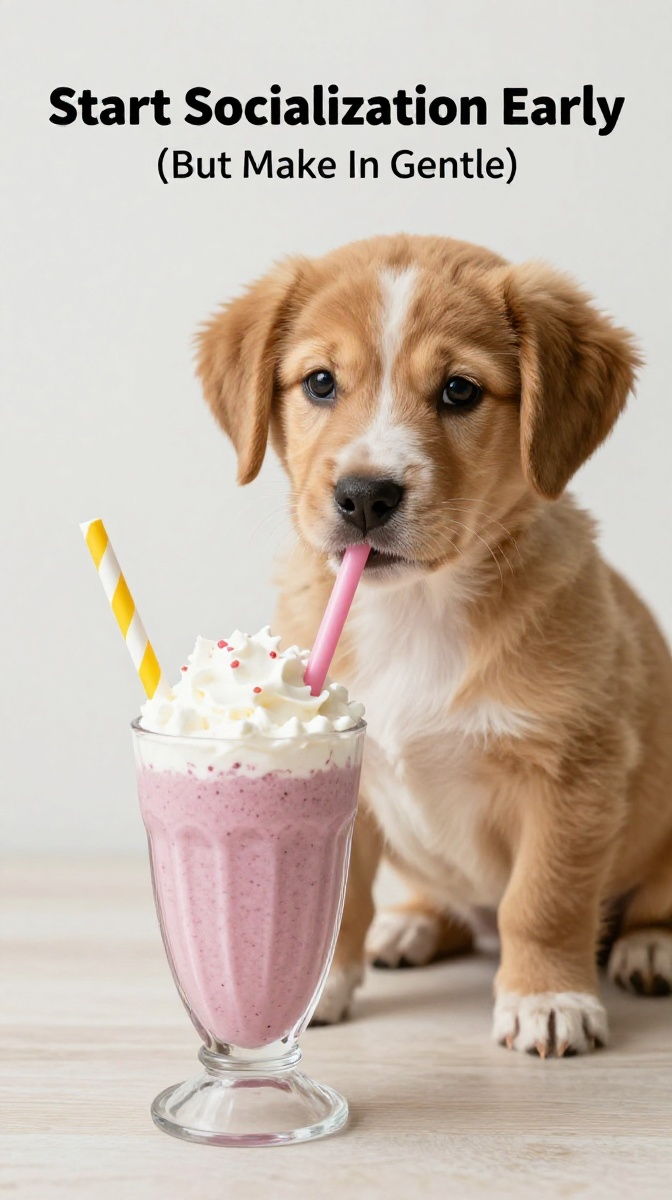
Why It’s Awesome: Just like you wouldn’t throw a raw onion into a blender and expect a delicious smoothie, you shouldn’t throw your puppy into overwhelming situations and expect them to handle it gracefully.
Ingredients:
- Patience (lots of it)
- A calm, quiet space at home
- Low-stakes exposure (new sounds, different surfaces)
- High-value treats (think real chicken, not that dry biscuit stuff)
- Your undivided attention
Step-by-Step Instructions:
- Start in your safe zone. Before you ever hit the streets, get your Frenchie comfortable in your home. Play recordings of different sounds—doorbells, traffic, kids laughing—at a super low volume.
- Introduce one new thing at a time. A new texture? Great. A new sound? Cool. Both at once? That’s a recipe for an overwhelmed puppy. Keep it simple.
- Pair every new experience with something amazing. Every time your puppy sees something new, give them a treat. I’m talking like you just won the lottery level of treat.
- Watch their body language like a hawk. If those bat ears pin back or they try to hide, you’ve moved too fast. Back it up. This isn’t a race.
- Keep sessions short and sweet. We’re talking 5-10 minutes max. They’re babies—their little brains can only handle so much.
Why You’ll Love It:
This approach builds confidence without trauma. Your puppy learns that the world is a fun, treat-filled place rather than a scary monster factory. Plus, you’ll avoid the guilt of pushing them too far too fast. I did this with Gizmo and he went from hiding behind my legs to greeting new people with a wagging tail in about two weeks flat. Baby steps, people.
2. The Balanced Entrée: Combine Playdates with Structured Walk Time
Why It’s Awesome: Free-for-all playtime is great—until it isn’t. This recipe gives you the best of both worlds: fun and structure.
Ingredients:
- 1-2 calm, vaccinated adult dogs (BFFs only)
- A 6-foot leash (retractable ones are the devil, fight me)
- High-value treats (keep those close)
- A quiet walking route (more on this later)
Step-by-Step Instructions:
- Start with parallel walking. Instead of letting them meet nose-to-nose immediately, walk side-by-side with another dog owner. Keep enough distance that they can see each other but aren’t overwhelmed.
- Move closer gradually. If both dogs seem relaxed, close the gap by about a foot. Watch for loose, wiggly body language (that’s good!) versus stiff, tall postures (not good).
- Reward the calm moments. Every time your Frenchie looks at the other dog and then looks back at you? 🎉 Treat party! They’re choosing you over the chaos—that’s huge.
- Then let them play—with rules. If the meet-and-greet goes well, let them have a supervised play session. But here’s my rule: no more than 3-5 minutes of full-on play before calling them back for a quick check-in.
- Walk it off after playtime. After they’ve sniffed and wrestled to their hearts’ content, do a cool-down walk where they’re back on leash, practicing focus around their new friend.
Why You’ll Love It:
This structured approach prevents playtime from turning into chaos. You get a dog who knows how to have fun AND how to follow directions. FYI, I used to let Gizmo just wrestle for 20 minutes straight and wondered why he couldn’t calm down afterward. Once I started breaking it up with structured walking, he became WAY easier to manage. Mind blown.
3. The Exposure Tapas: Small Bites of New Environments
Why It’s Awesome: You wouldn’t eat a whole paella in one bite (okay, maybe I would, but you get the point). Same goes for new places—take it in small doses.
Ingredients:
- A carrier (for those early, overwhelming days)
- A list of 5-10 low-traffic locations (hardware stores, outdoor malls, quiet parking lots)
- An exit strategy for every location
- Kongs stuffed with peanut butter (the nuclear option for stress)
Step-by-Step Instructions:
- Start with the quietest spot first. A sleepy outdoor shopping center on a Tuesday morning beats a Saturday afternoon farmer’s market every single time.
- Set a timer. Start with 5 minutes. That’s it. You’re not committing to a whole errand run; you’re just letting them absorb the vibes.
- Stay on the edges. Don’t charge into the middle of everything. Hang out near the entrance, let them watch things from a distance, and reward every calm look.
- Gradually increase time and chaos. Once they’ve nailed 5 minutes, bump it to 10. Once they’re good at 10, try a busier time of day. But keep those sessions short!
- Always end on a high note. Leave before they get overwhelmed. I’d rather have 5 minutes of perfection than 10 minutes with a meltdown at the end.
Why You’ll Love It:
Short, positive experiences build a dog who thinks, “New place? Cool, I got this!” not, “New place? WHERE’S THE EXIT?!” It’s honestly kind of magical watching their confidence grow. Some people drag their dogs to Home Depot for an hour and wonder why they’re panting and drooling. Don’t be that person. Small doses. Trust me.
4. The Confidence Casserole: Baked-in Bravery Through New Objects
Why It’s Awesome: Frenchies can be weird about stuff. A garbage can. A skateboard. A weird statue. This recipe makes those things totally boring.
Ingredients:
- Random objects (an umbrella, a bike, a rolling suitcase)
- A clicker (optional but game-changing, IMO)
- Treats. So many treats.
- A comfortable distance from the “scary” object
Step-by-Step Instructions:
- Start far away. Put the bike at the other end of the yard. If your dog is still looking at it nervously, move farther. You’re aiming for “Huh, what’s that?” not “AAAAAAAAAHHHHH!”
- Click and treat for looking at it. Every time your Frenchie glances at the object, click and treat. You’re literally paying them to notice scary things. Love it.
- Move a step closer. Still getting glances? Great! Move up one step and repeat. Still getting check-ins? Move another step.
- Touch the object yourself. Pick up the umbrella, open it slowly, make it boring. Show your dog that it’s just a thing—no big deal.
- Repeat until your dog doesn’t care. You know you’ve succeeded when they glance at the object and then immediately look for the treat. The object is officially nothing burger.
Why You’ll Love It:
This approach turns your Frenchie into a “seen it all” kind of dog. Walk past a construction site? Please. I once spent an entire afternoon just clicking and treating for looks at a Roomba. Now Gizmo literally doesn’t care if the vacuum eats his toy—he’ll just stare at me like, “TREAT, PLEASE.”
5. The “Yes” Menu: Master the Art of Rewarding Everything Good
Why It’s Awesome: This is the cornerstone of all good dog training. If you nail this, everything else gets easier. Seriously.
Ingredients:
- A marker word (“Yes!” works great) or a clicker
- Treats that are 10/10 delicious (real chicken, cheese, hot dog bits—none of that dry biscuit nonsense)
- Super fast reaction time
- Lots of opportunities for good choices
Step-by-Step Instructions:
- Charge your marker. Say “Yes!” and give a treat. Do this 20 times. Your dog should look at you like, “When you say that word, good things happen!”
- Watch for good behavior. Is your dog sitting quietly? “Yes!” + treat. Looking at a person without barking? “Yes!” + treat. Existing nicely? “Yes!” + treat.
- Capture calmness. This is my favorite hack. Reward your Frenchie for just… chilling. Lying down quietly? Treat. Not losing their mind when the doorbell rings? Jackpot treat.
- Be faster than the bad behavior. If you see them gearing up to lunge, bark, or otherwise act a fool, redirect BEFORE it happens. Get their attention, ask for a simple behavior, and reward.
- Practice everywhere. Not just in the living room. In the driveway. At the park. At your mom’s house. Generalize that “Yes!” to mean “treats are coming, no matter where we are!”
Why You’ll Love It:
Suddenly, your dog is offering good behavior ALL THE TIME because they’re trying to cash in those treats. It’s like they’re ordering off the menu—good choices get served. I literally keep a treat pouch on me at all times now because I’ve become addicted to rewarding Gizmo for being a good boy. And honestly? He’s so much easier to live with.
6. The Patience Pudding: Dealing with Setbacks Like a Pro
Why It’s Awesome: Because there WILL be setbacks. Your dog will react to something they were fine with yesterday. This recipe helps you handle it without losing your cool.
Ingredients:
- A healthy dose of self-compassion
- Lots of distance from the trigger
- Your dog’s favorite, highest-value treats (pull out the stops—we’re talking steak bites)
- A game plan for when things go sideways
Step-by-Step Instructions:
- Spot the trigger early. Your dog’s body language will tell you everything—ears back, lip lick, tail tucked, whale eyes. If you see these signs, you’re too close. Move back.
- Don’t force the interaction. Ever. If your dog is nervous about someone, don’t let that person approach them. This is about building trust, not making them “get over it.”
- Create space immediately. Walk away from the trigger like it’s no big deal. Change direction. Cross the street. Your dog will appreciate the rescue.
- Make it rain treats. Once you’re at a comfortable distance, feed them like there’s no tomorrow. You want them to think, “That scary thing is actually awesome because it made treats happen!”
- Don’t dwell on the “bad” moment. Dogs live in the present. If you’re still thinking about how they lunged at that jogger 10 minutes ago, you’re bringing negative energy. Let it go. Try again tomorrow.
Why You’ll Love It:
This approach keeps training positive for both of you. No guilt, no frustration, just “okay, we’ll try again later.” I had a day where Gizmo reacted to a statue he’d seen 50 times before. I was so confused. But instead of forcing him to walk past it, I crossed the street and called it a day. Next morning? He walked right by it like it was his long-lost friend. Dogs have off days. So do we. Let it go. 😉
BONUS: The Socialization Smoothie (What to Do When It All Goes Wrong)
Why It’s Awesome: Because sometimes everything goes sideways and you need a quick reset.
Ingredients:
- A quiet room or vehicle
- Frozen Kong or long-lasting chew
- Your calm, neutral energy
- 10 minutes of uninterrupted decompression time
Step-by-Step Instructions:
- Remove them from the situation immediately. Don’t try to “work through it.” That’s how you get a dog who’s terrified AND has a negative association with you. Just bail.
- Find a quiet space. The car. A bathroom. Somewhere dark and quiet.
- Give them something to chew. Chewing releases stress for dogs. That Kong will save the day, trust me.
- Breathe. You can’t help your dog if you’re amped up. Your energy is contagious. Take a few deep breaths and release the tension.
- Just sit with them. Don’t ask for anything. No commands. Just be their safe person for 10 minutes.
Why You’ll Love It:
Quick resets prevent meltdowns from becoming full-blown traumas. And honestly? Sometimes you need to remind yourself that socialization isn’t about “getting it right” every single time. It’s about consistently showing up and making the world a less scary place, one interaction at a time.
Related Articles:
- 6 Siberian Husky Behavior Problems
- 6 Border Collie Exercise Tips That’ll Tire Out Your Energizer Pup
- 6 Poodle Grooming Rules Every Owner Must Follow
A Note About Treats (Because This Matters)
Look, I’m going to be totally honest with you: your dog’s favorite treats matter more than almost anything else in this process. Dry biscuits from the grocery store aisle? Those are for casual daily living. For socialization? You need the good stuff.
I’m talking:
- Real cooked chicken (plain, unseasoned)
- Hot dog pieces (microwave them for 30 seconds to make them extra smelly)
- Cheese cubes (my Frenchie would sell me out for a string cheese)
- Freeze-dried liver (like crack for dogs, honestly)
The stinkier and more novel, the better. Your dog needs to think, “OH MY GOD, THAT’S THE BEST THING I’VE EVER TASTED!” so that the scary thing becomes “THE PLACE WHERE THE BEST THINGS HAPPEN.” It’s simple psychology, really.
FAQ’s
Raising a well-socialized French Bulldog isn’t about checking boxes. It’s not about hitting that 100-dog goal before they’re 16 weeks old or whatever nonsense people push. It’s about building a dog who feels safe and confident in their world, so they can be the chill, lovable little weirdo they were born to be.
Every Frenchie is different. Some are social butterflies from day one. Others need more time, patience, and hot dogs. And that’s okay.
The best advice I ever got was from a trainer who said, “Your dog isn’t giving you a hard time—they’re having a hard time.” And honestly? That changed everything for me. When Gizmo lost his mind over a garbage truck, I stopped getting frustrated and started thinking, “Okay, what’s this about? What does he need right now?”
Nine times out of ten, he just needed me to slow down, create space, and let him know the world wasn’t ending.
So go easy on yourself. Go easy on your Frenchie. Celebrate the small wins. And remember: socialization is a marathon, not a sprint. You’ve got this.
Now go grab some chicken, your dog’s favorite treats, and get out there. The world is waiting for your well-behaved little bat-eared buddy. 🐾