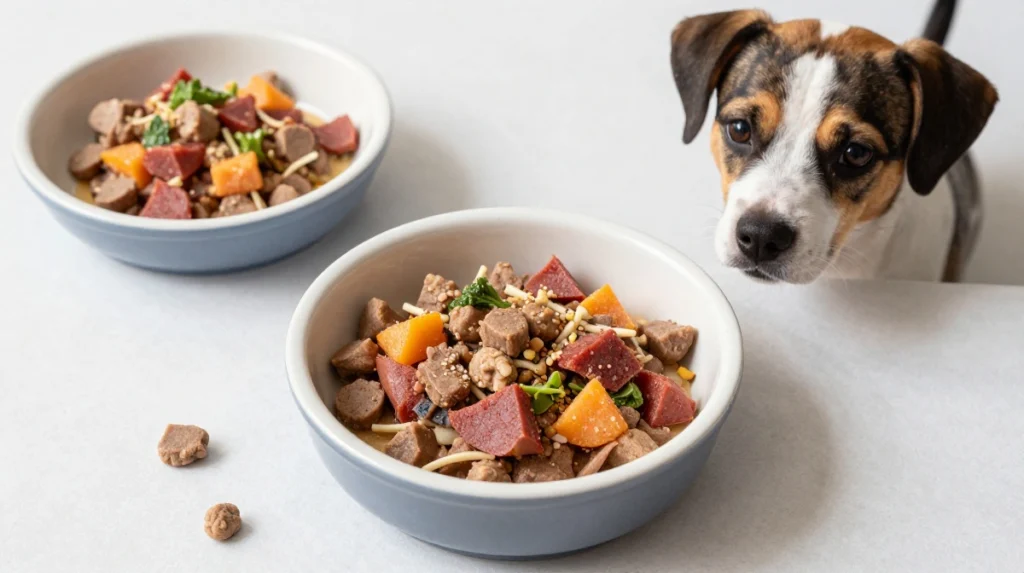
Your dog’s bowl should do more than just fill them up. When the tummy is off, the joints creak, the weight creeps up, or the skin gets itchy, the right food can make a noticeable difference. Commercial options help, but sometimes you want to cook something targeted, fresh, and free of the mystery fillers.
These six recipes follow patterns that veterinarians and veterinary nutritionists commonly recommend for specific needs. They’re approachable, use everyday ingredients, and stay free of onion, garlic, and other toxins. Important reality check: homemade food is only “vet-approved” when it’s properly balanced with the right supplements and tailored to your individual dog. Talk to your vet or a board-certified veterinary nutritionist before making any of these a long-term diet, especially for kidney disease, allergies, or seniors. Add a complete canine multivitamin/mineral supplement designed for homemade diets unless your vet says otherwise.
I tested versions of these in my own kitchen. Some dogs lit up. Others needed a slow transition. Ready? Let’s match the meal to the need.
1. Classic Chicken & White Rice for Sensitive Stomachs
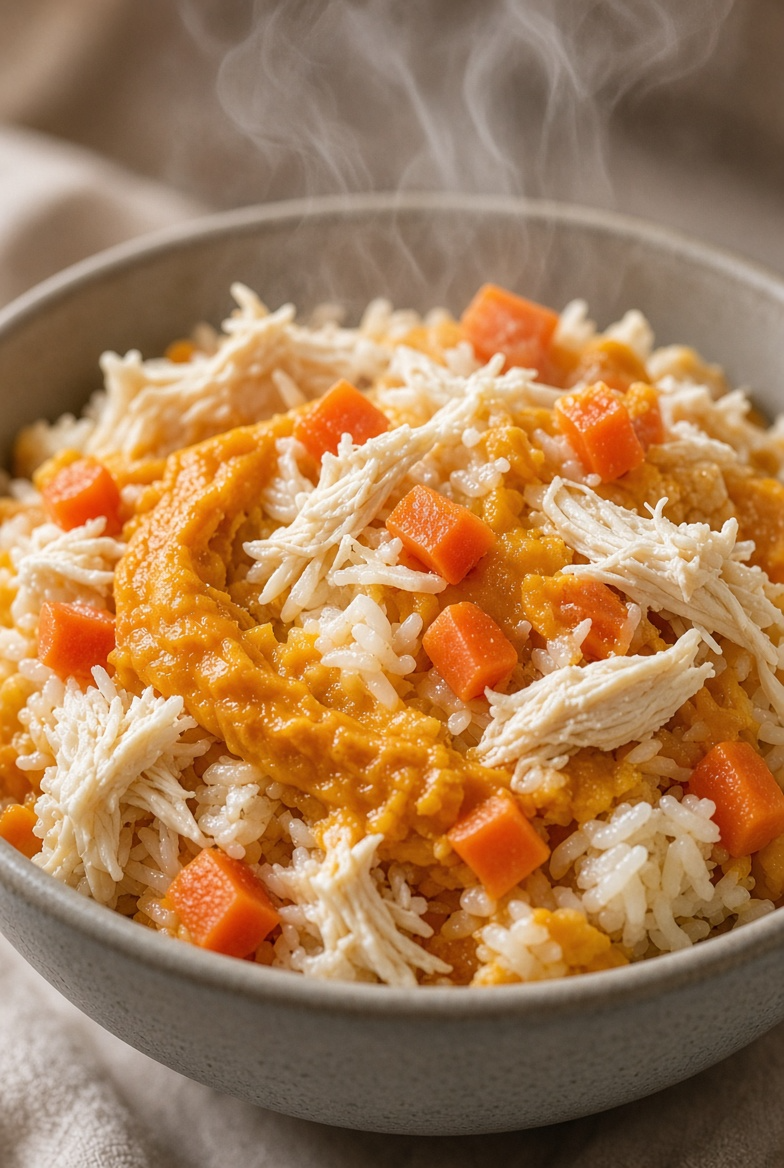
This is the go-to when your dog has an upset tummy, loose stools, or just needs a gentle reset. White rice is easier to digest than brown during flare-ups, and chicken stays lean and mild.
Ingredients
- 1 lb boneless, skinless chicken breast
- 2 cups cooked white rice (jasmine or plain)
- ½ cup pure pumpkin puree (not pie filling)
- ½ cup cooked carrots, finely chopped
- 1–2 tsp plain sunflower or canola oil (optional)
- Canine multivitamin/mineral supplement (per vet guidance)
Step-by-Step Instructions
- Boil or poach the chicken in plain water until fully cooked (no pink). Shred it finely.
- Cook the white rice according to package directions with plain water.
- Steam or boil the carrots until soft.
- Mix the shredded chicken, rice, pumpkin, and carrots in a large bowl.
- Cool completely, then stir in the oil and supplement.
- Serve small portions and store leftovers in the fridge for up to 3–4 days or freeze.
Why You’ll Love It
This recipe has saved more than one weekend when my dog decided the world was ending via his digestive system. The pumpkin firms things up without harshness, and the mild flavors rarely trigger further issues. Start by mixing a little with their regular food if they’re picky. It’s simple, cheap, and works fast.
2. Lean Turkey & Green Bean Mix for Weight Management
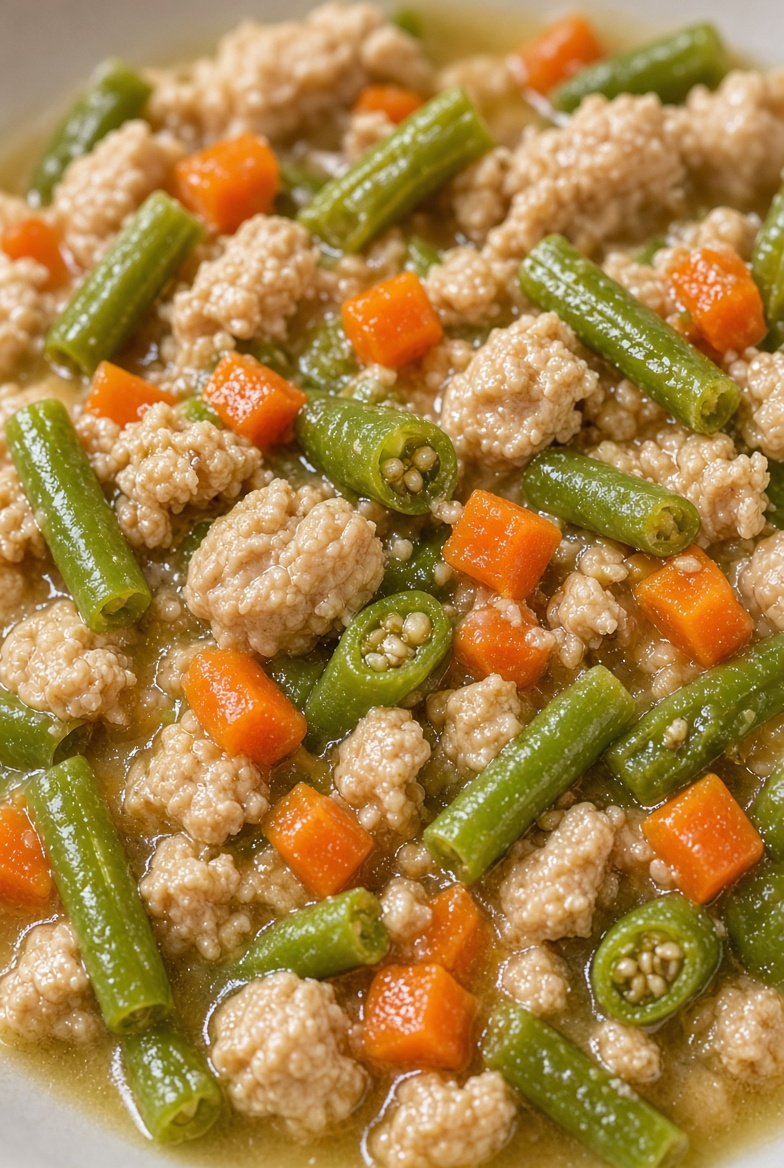
When the scale (or the vet) says “time to lighten up,” this high-protein, high-fiber bowl keeps them full without the extra calories. Green beans add volume that dogs actually enjoy.
Ingredients
- 1 lb lean ground turkey (93% lean or higher)
- 2 cups chopped green beans
- 1 cup diced carrots
- 1 cup cooked white or brown rice (optional for energy)
- 1 tsp fish oil
- Canine supplement powder
Step-by-Step Instructions
- Brown the ground turkey in a skillet, breaking it up as it cooks. Drain any excess fat.
- Steam the green beans and carrots until just soft.
- Mix the turkey, veggies, and rice (if using) in a bowl.
- Cool fully, then add the fish oil and supplement.
- Portion according to your dog’s calorie needs (your vet can help calculate).
- Store in the fridge or freeze in meal-sized containers.
Why You’ll Love It
Dogs stay satisfied longer with the fiber from the green beans. I watched one chunky Lab go from “always hungry” to content after a few weeks on a similar mix. Keep the fat low and measure portions carefully. It feels like a real meal instead of a diet ration.
3. Senior Chicken Thigh & Sweet Potato Bowl for Joint & Cognitive Support
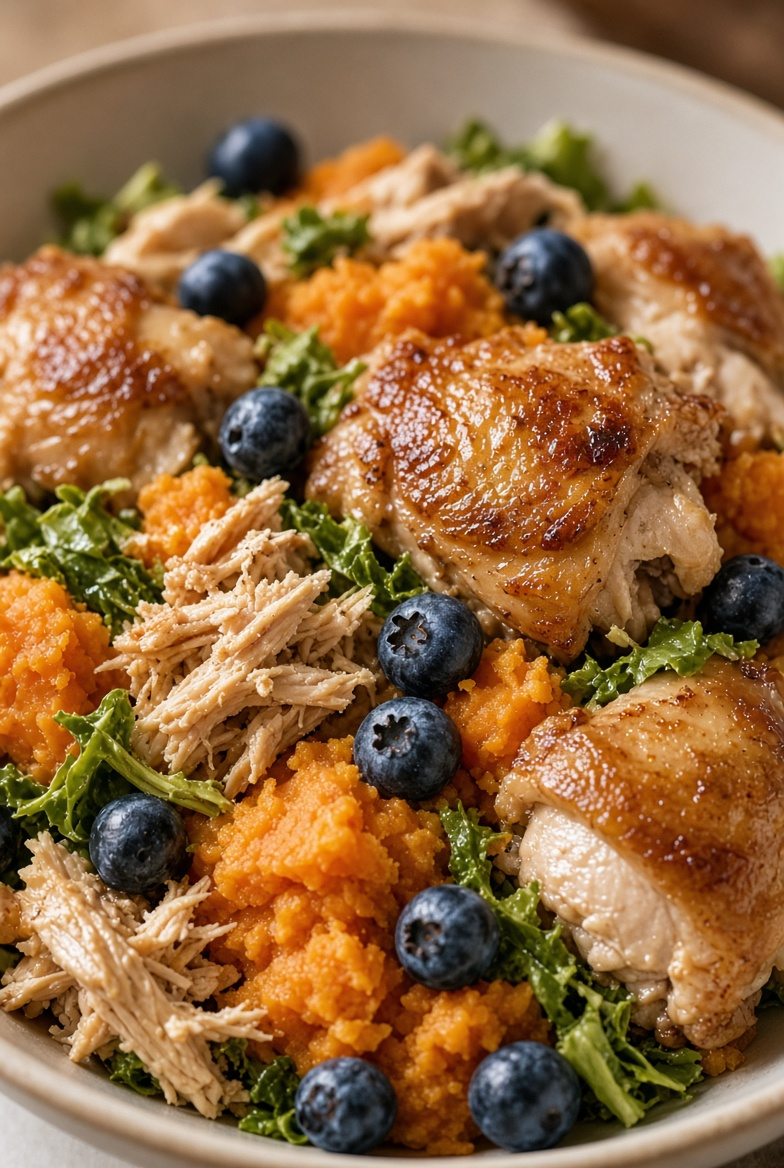
Older dogs need quality protein to protect muscle, plus omega-3s and antioxidants for joints and brain. Chicken thighs stay moist and palatable for seniors who can get picky.
Ingredients
- 1.5 lbs boneless, skinless chicken thighs
- 2 cups cooked mashed sweet potato
- ½ cup blueberries (fresh or frozen)
- ½ cup steamed green beans or spinach
- 2–3 tbsp fish oil (higher dose for joints, per vet)
- Optional: tiny pinch of turmeric (only if your vet approves)
- Canine supplement + calcium source if needed
Step-by-Step Instructions
- Bake or poach the chicken thighs until fully cooked. Shred or chop.
- Mash the cooked sweet potato.
- Lightly steam the greens.
- Combine chicken, sweet potato, blueberries, and greens.
- Cool completely, then mix in the fish oil, turmeric (if using), and supplements.
- Serve at room temperature or slightly warm. Store properly.
Why You’ll Love It
The soft texture is easy for older mouths, and the fish oil supports joint comfort. Blueberries add antioxidants without fuss. My older dog’s energy and mobility looked better after consistent omega-rich meals like this. Just don’t skip the vet check on supplements.
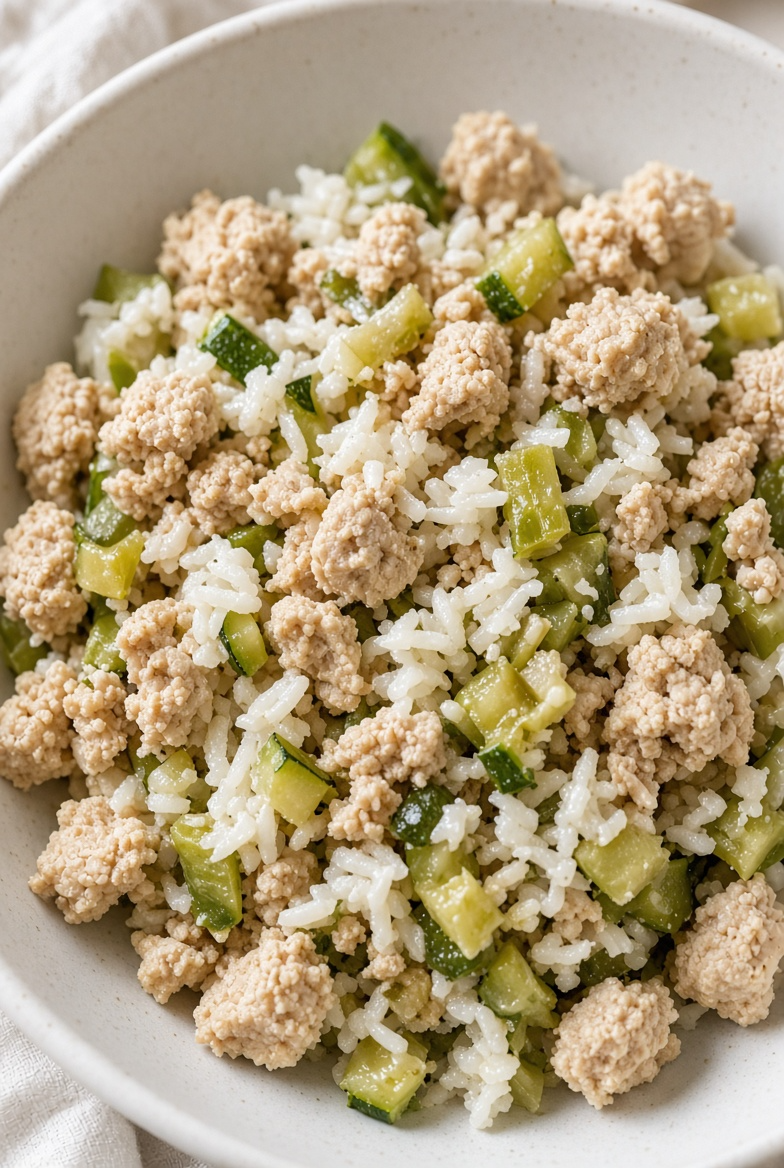
4. Limited-Ingredient Turkey & Rice for Food Allergies & Itchy Skin
When chicken or beef seems to trigger itching or ear issues, a novel or limited protein like turkey with simple carbs can help identify and calm sensitivities.
Ingredients
- 1 lb lean ground turkey
- 2 cups cooked white or brown rice
- 1 cup cooked zucchini or green beans, chopped
- 1 tbsp fish oil or flaxseed oil
- Canine multivitamin/mineral supplement
Step-by-Step Instructions
- Cook the ground turkey thoroughly and drain.
- Prepare the rice and steam the vegetables until soft.
- Mix everything together once cooled.
- Stir in the oil and supplement.
- Feed as a trial diet for 6–8 weeks if doing an elimination test (under vet guidance).
- Store in fridge or freezer.
Why You’ll Love It
Fewer ingredients mean fewer variables when you’re troubleshooting allergies. The mild flavor still appeals to most dogs. I once ran a similar limited diet and the constant scratching finally calmed down. Patience and consistency matter more than fancy extras here.
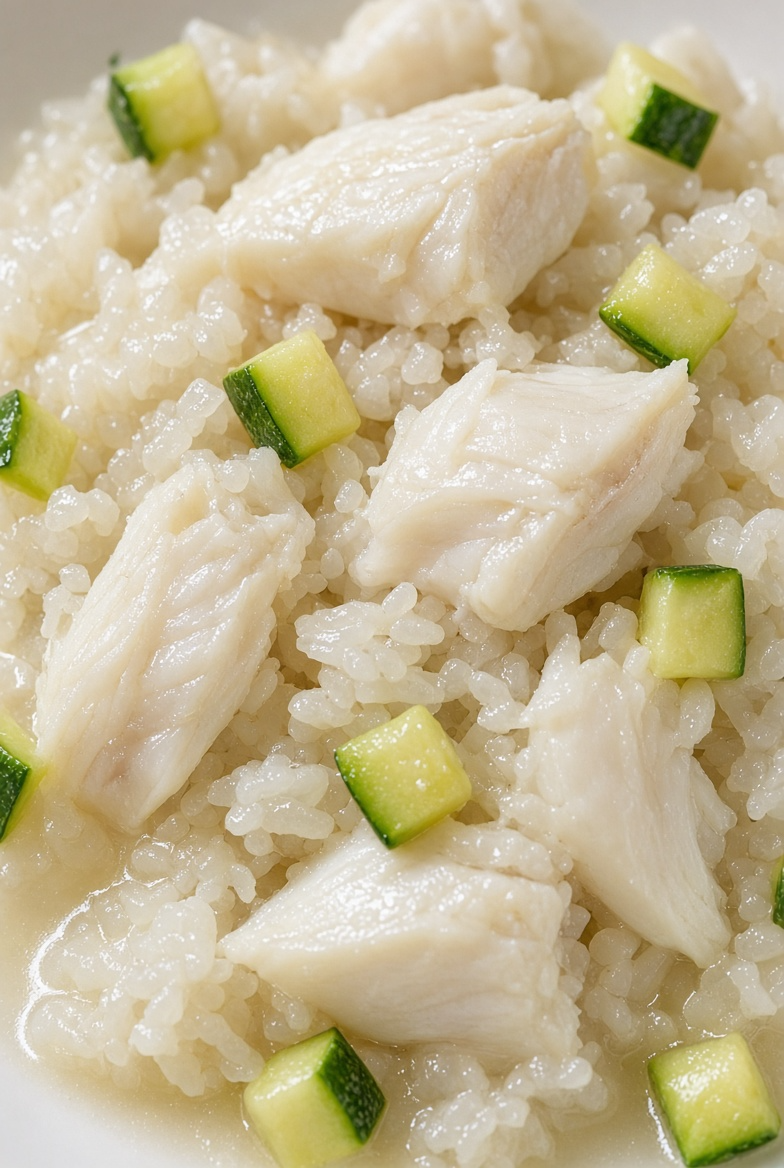
5. White Fish & Rice Porridge Style for Kidney Support (High Moisture, Controlled Protein)
Kidney issues need lower phosphorus, high moisture, and carefully managed protein. White fish and egg whites are common starting points in renal-friendly approaches, but this must be customized by your vet.
Ingredients
- 1 lb boneless, skinless white fish (tilapia, cod, or similar), cooked and flaked
- 2 cups cooked white rice
- 1 cup finely diced zucchini or cauliflower
- Extra water or low-sodium broth to create a moist porridge consistency
- Fish oil (omega-3 support)
- Renal-specific or vet-prescribed supplement only
Step-by-Step Instructions
- Poach or bake the fish until fully cooked. Flake carefully and remove any bones.
- Cook the rice and steam the zucchini until very soft.
- Combine fish, rice, and veggies. Add extra liquid to keep it moist and easy to eat.
- Cool completely.
- Mix in fish oil and only the supplement your vet recommends for kidney disease.
- Serve fresh and store carefully.
Why You’ll Love It
The high moisture helps with hydration, which is huge for kidney dogs. The soft texture works well when appetite dips. This is strictly an illustrative starting point—never use a generic recipe long-term for CKD without your vet’s exact formula and monitoring. Phosphorus control is non-negotiable.
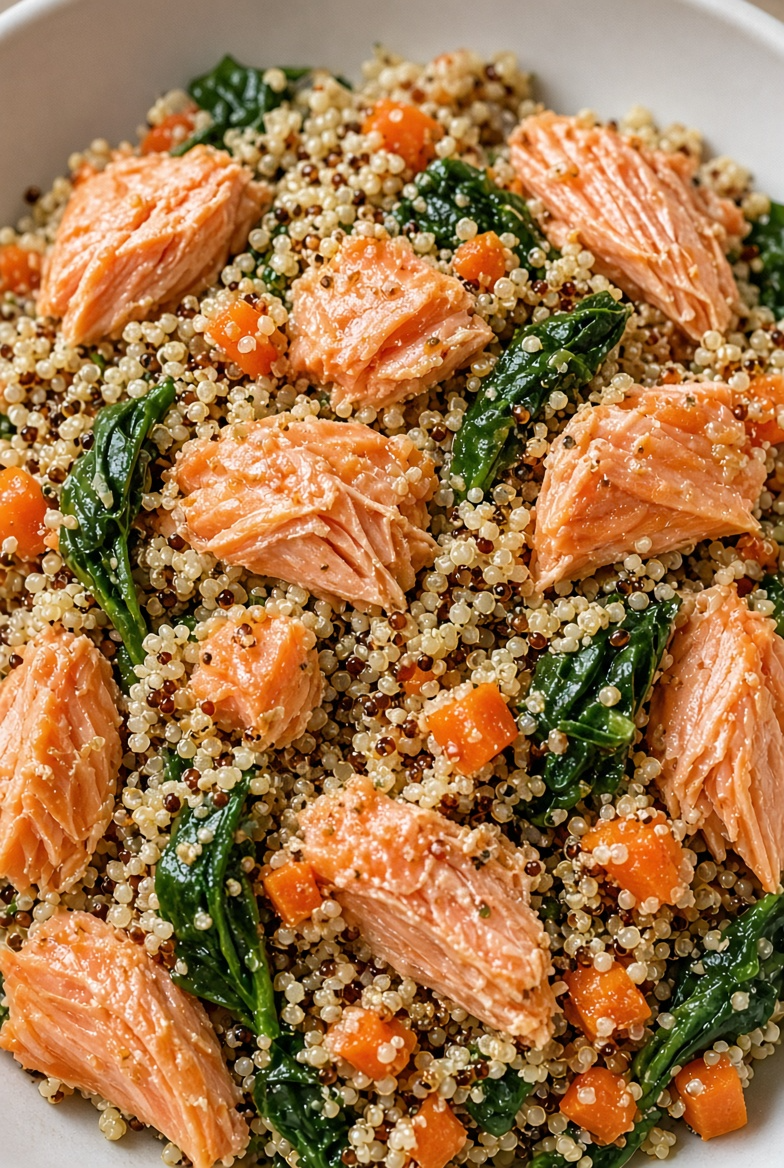
6. Salmon & Quinoa Omega Bowl for Skin, Coat & Joints
When the coat looks dull or joints need extra love, marine omega-3s shine. Salmon delivers them naturally along with high-quality protein.
Ingredients
- 1–1.5 lbs boneless, skinless salmon fillet, cooked and flaked (bones removed)
- 1½ cups cooked quinoa
- 1 cup steamed spinach or kale
- ½ cup cooked carrots
- 1–2 tbsp additional fish oil if needed
- Canine supplement
Step-by-Step Instructions
- Bake or poach the salmon until just cooked. Flake thoroughly and check for bones.
- Cook the quinoa according to package directions.
- Steam the greens and carrots until soft.
- Gently mix the salmon, quinoa, and vegetables.
- Cool, then add fish oil and supplement.
- Portion and store.
Related Articles:
- Dry Dog Food Recipes: How to Make Your Own Kibble
- Cooked Dog Food Recipes vs Raw: A Comparison
- Dog Soup Recipes for a Warm, Nutritious Meal
Why You’ll Love It
The coat often looks shinier within a few weeks, and many dogs with mild joint stiffness move more comfortably. Salmon smells (and tastes) special enough that even picky eaters usually finish the bowl. Just source good-quality fish and cook it fully.
These recipes give you practical starting points for the most common health situations. The real power comes from matching the food to your dog’s specific needs, adding the right supplements, and staying in close contact with your veterinarian. Homemade meals let you control quality and freshness in a way bags can’t always match, but only when they’re done thoughtfully.
Start with the recipe that fits your dog’s current challenge. Make a small batch. Watch energy, stool quality, coat, and overall vibe. Adjust with professional guidance. Your dog doesn’t need a gourmet restaurant—they need food that supports how they actually feel. These bowls deliver exactly that when used wisely. Now go grab a pot and give them something that works as hard as they do.